Articles | Volume 75, issue 1
https://doi.org/10.5194/egqsj-75-107-2026
© Author(s) 2026. This work is distributed under
the Creative Commons Attribution 4.0 License.
https://doi.org/10.5194/egqsj-75-107-2026
© Author(s) 2026. This work is distributed under
the Creative Commons Attribution 4.0 License.
Postglacial water level changes of a drowned lake and river system in northeastern Mecklenburg Bay, southern Baltic Sea

Julian Granzow
Leibniz Institute for Baltic Sea Research Warnemünde, 18119 Warnemünde, Rostock, Germany
Franz Tauber
Leibniz Institute for Baltic Sea Research Warnemünde, 18119 Warnemünde, Rostock, Germany
Helge W. Arz
Leibniz Institute for Baltic Sea Research Warnemünde, 18119 Warnemünde, Rostock, Germany
Jacob Geersen
Leibniz Institute for Baltic Sea Research Warnemünde, 18119 Warnemünde, Rostock, Germany
Peter Feldens
CORRESPONDING AUTHOR
Leibniz Institute for Baltic Sea Research Warnemünde, 18119 Warnemünde, Rostock, Germany
Related authors
No articles found.
Werner Ehrmann, Paul A. Wilson, Helge W. Arz, and Gerhard Schmiedl
Clim. Past, 21, 1025–1041, https://doi.org/10.5194/cp-21-1025-2025, https://doi.org/10.5194/cp-21-1025-2025, 2025
Short summary
Short summary
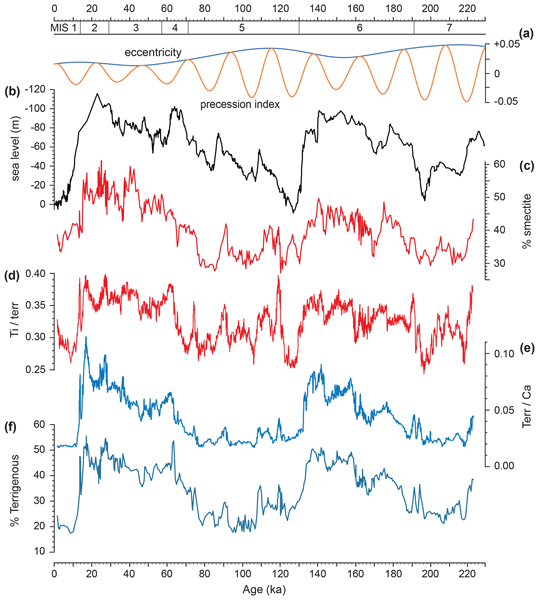
We report palaeoclimate and sediment provenance records for the last 220 kyr from a sediment core from the northern Red Sea. They comprise high-resolution grain size, clay mineral, and geochemical data, together with Nd and Sr isotope data. The data sets document a strong temporal variability in dust influx on glacial–interglacial timescales and several shorter-term strong fluvial episodes. A key finding is that the Nile delta became a major dust source during glacioeustatic sea-level lowstands.
Isabell Hochfeld, Ben A. Ward, Anke Kremp, Juliane Romahn, Alexandra Schmidt, Miklós Bálint, Lutz Becks, Jérôme Kaiser, Helge W. Arz, Sarah Bolius, Laura S. Epp, Markus Pfenninger, Christopher A. Klausmeier, Elena Litchman, and Jana Hinners
Biogeosciences, 22, 2363–2380, https://doi.org/10.5194/bg-22-2363-2025, https://doi.org/10.5194/bg-22-2363-2025, 2025
Short summary
Short summary
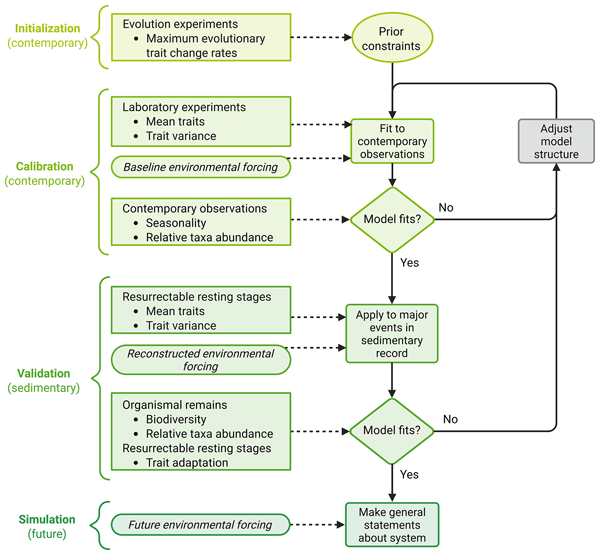
Marine ecosystem models (MEMs) are valuable for assessing the threats of global warming to biodiversity and ecosystem functioning, but their predictions vary widely. We argue that MEMs should consider evolutionary processes and undergo independent validation. Here, we present a novel framework for MEM development using validation data from sediment archives, which map long-term environmental and evolutionary change. Our approach is a crucial step towards improving the predictive power of MEMs.
Raphaël Hubert-Huard, Nils Andersen, Helge W. Arz, Werner Ehrmann, and Gerhard Schmiedl
Clim. Past, 20, 267–280, https://doi.org/10.5194/cp-20-267-2024, https://doi.org/10.5194/cp-20-267-2024, 2024
Short summary
Short summary
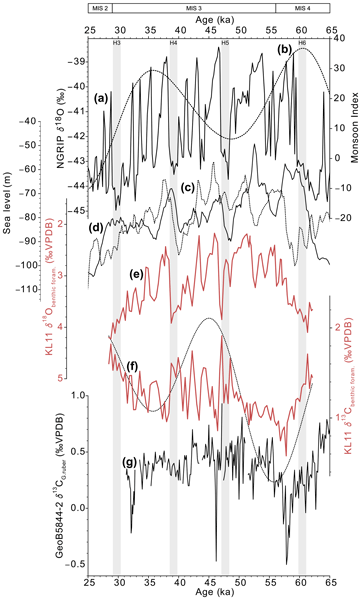
We have studied the geochemistry of benthic foraminifera (micro-fossils) from a sediment core from the Red Sea. Our data show that the circulation and carbon cycling of the Red Sea during the last glacial period responded to high-latitude millennial-scale climate variability and to the orbital influence of the African–Indian monsoon system. This implies a sensitive response of the Red Sea to climate changes.
Werner Ehrmann, Paul A. Wilson, Helge W. Arz, Hartmut Schulz, and Gerhard Schmiedl
Clim. Past, 20, 37–52, https://doi.org/10.5194/cp-20-37-2024, https://doi.org/10.5194/cp-20-37-2024, 2024
Short summary
Short summary
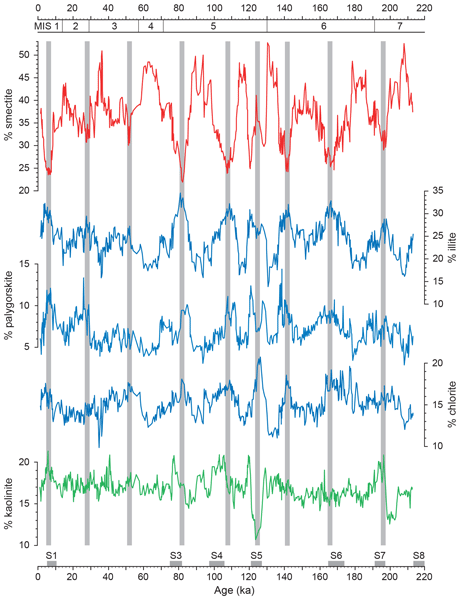
Climatic and associated hydrological changes controlled the aeolian versus fluvial transport processes and the composition of the sediments in the central Red Sea through the last ca. 200 kyr. We identify source areas of the mineral dust and pulses of fluvial discharge based on high-resolution grain size, clay mineral, and geochemical data, together with Nd and Sr isotope data. We provide a detailed reconstruction of changes in aridity/humidity.
Julia Rieke Hagemann, Lester Lembke-Jene, Frank Lamy, Maria-Elena Vorrath, Jérôme Kaiser, Juliane Müller, Helge W. Arz, Jens Hefter, Andrea Jaeschke, Nicoletta Ruggieri, and Ralf Tiedemann
Clim. Past, 19, 1825–1845, https://doi.org/10.5194/cp-19-1825-2023, https://doi.org/10.5194/cp-19-1825-2023, 2023
Short summary
Short summary
Alkenones and glycerol dialkyl glycerol tetraether lipids (GDGTs) are common biomarkers for past water temperatures. In high latitudes, determining temperature reliably is challenging. We analyzed 33 Southern Ocean sediment surface samples and evaluated widely used global calibrations for both biomarkers. For GDGT-based temperatures, previously used calibrations best reflect temperatures >5° C; (sub)polar temperature bias necessitates a new calibration which better aligns with modern values.
Markus Czymzik, Rik Tjallingii, Birgit Plessen, Peter Feldens, Martin Theuerkauf, Matthias Moros, Markus J. Schwab, Carla K. M. Nantke, Silvia Pinkerneil, Achim Brauer, and Helge W. Arz
Clim. Past, 19, 233–248, https://doi.org/10.5194/cp-19-233-2023, https://doi.org/10.5194/cp-19-233-2023, 2023
Short summary
Short summary
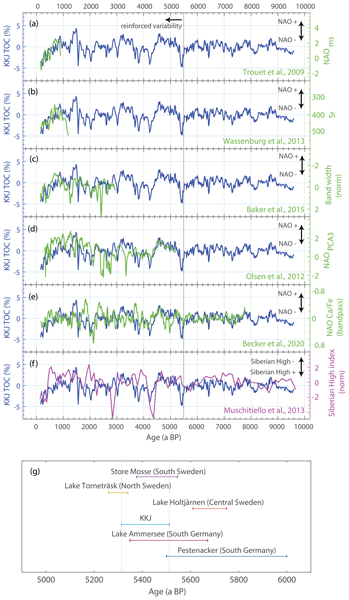
Productivity increases in Lake Kälksjön sediments during the last 9600 years are likely driven by the progressive millennial-scale winter warming in northwestern Europe, following the increasing Northern Hemisphere winter insolation and decadal to centennial periods of a more positive NAO polarity. Strengthened productivity variability since ∼5450 cal yr BP is hypothesized to reflect a reinforcement of NAO-like atmospheric circulation.
Wout Krijgsman, Iuliana Vasiliev, Anouk Beniest, Timothy Lyons, Johanna Lofi, Gabor Tari, Caroline P. Slomp, Namik Cagatay, Maria Triantaphyllou, Rachel Flecker, Dan Palcu, Cecilia McHugh, Helge Arz, Pierre Henry, Karen Lloyd, Gunay Cifci, Özgür Sipahioglu, Dimitris Sakellariou, and the BlackGate workshop participants
Sci. Dril., 31, 93–110, https://doi.org/10.5194/sd-31-93-2022, https://doi.org/10.5194/sd-31-93-2022, 2022
Short summary
Short summary
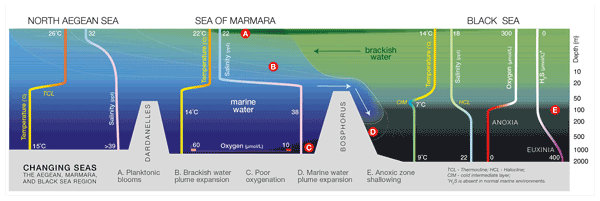
BlackGate seeks to MSP drill a transect to study the impact of dramatic hydrologic change in Mediterranean–Black Sea connectivity by recovering the Messinian to Holocene (~ 7 Myr) sedimentary sequence in the North Aegean, Marmara, and Black seas. These archives will reveal hydrographic, biotic, and climatic transitions studied by a broad scientific community spanning the stratigraphic, tectonic, biogeochemical, and microbiological evolution of Earth’s most recent saline and anoxic giant.
María H. Toyos, Gisela Winckler, Helge W. Arz, Lester Lembke-Jene, Carina B. Lange, Gerhard Kuhn, and Frank Lamy
Clim. Past, 18, 147–166, https://doi.org/10.5194/cp-18-147-2022, https://doi.org/10.5194/cp-18-147-2022, 2022
Short summary
Short summary
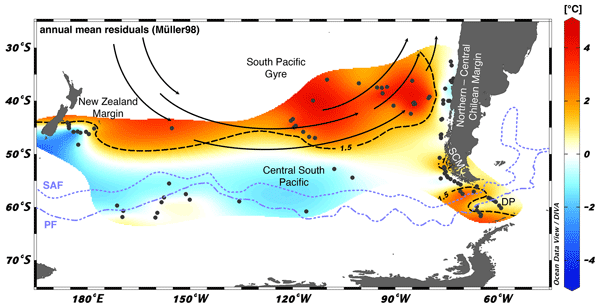
Past export production in the southeast Pacific and its link to Patagonian ice dynamics is unknown. We reconstruct biological productivity changes at the Pacific entrance to the Drake Passage, covering the past 400 000 years. We show that glacial–interglacial variability in export production responds to glaciogenic Fe supply from Patagonia and silica availability due to shifts in oceanic fronts, whereas dust, as a source of lithogenic material, plays a minor role.
Yueyang Xia, Jacob Geersen, Dirk Klaeschen, Bo Ma, Dietrich Lange, Michael Riedel, Michael Schnabel, and Heidrun Kopp
Solid Earth, 12, 2467–2477, https://doi.org/10.5194/se-12-2467-2021, https://doi.org/10.5194/se-12-2467-2021, 2021
Short summary
Short summary
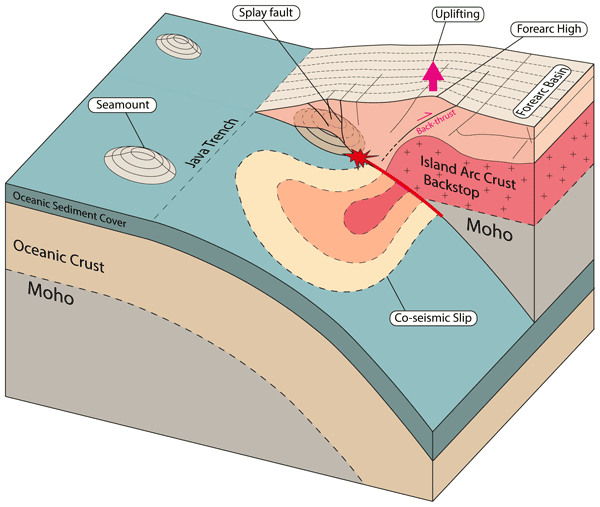
The 2 June 1994 Java tsunami earthquake ruptured in a seismically quiet subduction zone and generated a larger-than-expected tsunami. Here, we re-process a seismic line across the rupture area. We show that a subducting seamount is located up-dip of the mainshock in a region that did not rupture during the earthquake. Seamount subduction modulates the topography of the marine forearc and acts as a seismic barrier in the 1994 earthquake rupture.
Cited articles
Andrén, E., Andrén, T., and Sohlenius, G.: The Holocene history of the southwestern Baltic Sea as reflected in a sediment core from the Bornholm Basin, Boreas, 29, 233–250, https://doi.org/10.1111/j.1502-3885.2000.tb00981.x, 2000. a
Andrén, T., Lindeberg, G., and Andrén, E.: Evidence of the final drainage of the Baltic Ice Lake and the brackish phase of the Yoldia Sea in glacial varves from the Baltic Sea, Boreas, 31, 226–238, 2002. a
Andrén, T., Björck, S., Andrén, E., Conley, D., Zillén, L., and Anjar, J.: The Development of the Baltic Sea Basin During the Last 130 ka, in: The Baltic Sea Basin, edited by: Harff, J., Björck, S., and Hoth, P., pp. 75–97, Springer, Berlin, Heidelberg, ISBN 978-3-642-17220-5, https://doi.org/10.1007/978-3-642-17220-5_4, 2011. a
Bendixen, C., Jensen, J. B., Boldreel, L. O., Clausen, O. R., Bennike, O., Seidenkrantz, M.-S., Nyberg, J., and Hübscher, C.: The Holocene Great Belt connection to the southern Kattegat, Scandinavia: Ancylus Lake drainage and Early Littorina Sea transgression, Boreas, 46, 53–68, https://doi.org/10.1111/bor.12154, publisher: Wiley, 2017. a, b, c, d
Bennike, O. and Jensen, J. B.: Near-shore Baltic Ice Lake deposits in Fakse Bugt, southeast Denmark, Boreas, 24, 185–195, https://doi.org/10.1111/j.1502-3885.1995.tb00772.x, 1995. a, b
Bennike, O. and Jensen, J. B.: Late- and postglacial shore level changes in the southwestern Baltic Sea, B. Geol. Soc. Denmark, 45, 27–38, https://doi.org/10.37570/bgsd-1998-45-04, 1998. a, b, c, d, e, f, g, h, i, j, k, l, m, n, o, p, q, r, s, t, u, v, w, x, y, z, aa, ab, ac, ad, ae, af, ag, ah, ai, aj, ak, al, am, an
Bennike, O. and Jensen, J. B.: A Baltic Ice Lake lowstand of latest Alleröd age in the Arkona Basin, southern Baltic Sea, GEUS Bulletin, 28, 17–20, https://doi.org/10.34194/geusb.v28.4710, 2013. a
Bennike, O., Lemke, W., and Jensen, J. B.: Fauna and flora in submarine early Holocene lake-marl deposits from the southwestern Baltic Sea, The Holocene, 8, 353–358, https://doi.org/10.1191/095968398673688465, 1998. a, b
Bennike, O., Jensen, J. B., Lemke, W., Kuijpers, A., and Lomholt, S.: Late- and postglacial history of the Great Belt, Denmark, Boreas, 33, 18–33, https://doi.org/10.1080/03009480310006952, 2004. a, b
Bennike, O., Jensen, J. B., Nörgaard-Pedersen, N., Andresen, K. J., Seidenkrantz, M.-S., Moros, M., and Wagner, B.: When were the straits between the Baltic Sea and the Kattegat inundated by the sea during the Holocene?, Boreas, 50, 1079–1094, https://doi.org/10.1111/bor.12525, 2021. a
Björck, S.: The late Quaternary development of the Baltic Sea basin, Assessment of Climate Change for the Baltic Sea Basin, pp. 398–407, ISBN 978-3-540-72785-9, 2008. a
Björck, S. and Digerfeldt, G.: Climatic Changes at Pleistocene/Holocene Boundary in the Middle Swedish Endmoraine Zone, Mainly Inferred from Stratigraphic Indications, in: Climatic Changes on a Yearly to Millennial Basis: Geological, Historical and Instrumental Records, edited by: Mörner, N.-A. and Karlén, W., pp. 37–56, Springer Netherlands, Dordrecht, ISBN 978-94-015-7692-5, https://doi.org/10.1007/978-94-015-7692-5_4, 1984. a
Björck, S. and Digerfeldt, G.: Alleröd- Younger Dryas sea level changes in southwestern Sweden and their relation to the Baltic Ice Lake development, Boreas, 20, 115–133, https://doi.org/10.1111/j.1502-3885.1991.tb00301.x, 1991. a
Blott, S. J. and Pye, K.: GRADISTAT: a grain size distribution and statistics package for the analysis of unconsolidated sediments, Earth Surf. Process. Landf., 26, 1237–1248, https://doi.org/10.1002/esp.261, 2001. a
Feldens, P.: Dataset regarding the Paleogeography of a lake and river system in north-eastern Mecklenburg Bay, southern Baltic Sea, Zenodo [data set], https://doi.org/10.5281/zenodo.14887536, 2025. a
Geersen, J., Bradtmöller, M., Schneider von Deimling, J., Feldens, P., Auer, J., Held, P., Lohrberg, A., Supka, R., Hoffmann, J. J. L., Eriksen, B. V., Rabbel, W., Karlsen, H.-J., Krastel, S., Brandt, D., Heuskin, D., and Lübke, H.: A submerged Stone Age hunting architecture from the Western Baltic Sea, P. Natl. Acad. Sci. USA, 121, e2312008121, https://doi.org/10.1073/pnas.2312008121, 2024. a
Godwin, H.: Half-life of Radiocarbon, Nature, 195, 984–984, https://doi.org/10.1038/195984a0, 1962. a
Gustafsson, B. G. and Westman, P.: On the causes for salinity variations in the Baltic Sea during the last 8500 years, Paleoceanography, 17, 12-1–12-14, https://doi.org/10.1029/2000PA000572, 2002. a
Hansson, A., Nilsson, B., Sjöström, A., Björck, S., Holmgren, S., Linderson, H., Magnell, O., Rundgren, M., and Hammarlund, D.: A submerged Mesolithic lagoonal landscape in the Baltic Sea, south-eastern Sweden – Early Holocene environmental reconstruction and shore-level displacement based on a multiproxy approach, Quat. Int., 463, 110–123, https://doi.org/10.1016/j.quaint.2016.07.059, 2018. a, b
Harff, J., Björck, S., and Hoth, P. (Eds.): The Baltic Sea Basin, Central and Eastern European Development Studies (CEEDES), Springer Berlin Heidelberg, Berlin, Heidelberg, ISBN 978-3-642-17219-9 978-3-642-17220-5, https://doi.org/10.1007/978-3-642-17220-5, 2011. a, b
Harff, J., Deng, J., Dudzińska-Nowak, J., Fröhle, P., Groh, A., Hünicke, B., Soomere, T., and Zhang, W.: Coastline Changes of the Baltic Sea from South to East, Coastal Research Library, pp. 15–35, https://doi.org/10.1007/978-3-319-49894-2_2, 2017. a, b
Hoffmann, G., Schmedemann, N., and Schafmeister, M.-T.: Relative sea-level curve for SE Rügen and Usedom Island (SW Baltic Sea coast, Germany) using decompacted profiles, Zeitschrift der Deutschen Gesellschaft für Geowissenschaften, 160, 69–78, https://doi.org/10.1127/1860-1804/2009/0160-0069, 2009. a
Hughes, A. L. C., Gyllencreutz, R., Lohne, Ã. S., Mangerud, J., and Svendsen, J. I.: The last Eurasian ice sheets – a chronological database and time-slice reconstruction, DATED-1., Boreas, 45, 1–45, https://doi.org/10.1111/bor.12142, 2016. a, b, c
Jakobsson, M., Björck, S., Alm, G., Andrén, T., Lindeberg, G., and Svensson, N.-O.: Reconstructing the Younger Dryas ice dammed lake in the Baltic Basin: Bathymetry, area and volume, Glob. Planet. Change, 57, 355–370, https://doi.org/10.1016/j.gloplacha.2007.01.006, 2007. a
Jakobsson, M., Gyllencreutz, R., Mayer, L. A., Dowdeswell, J. A., Canals, M., Todd, B. J., Dowdeswell, E. K., Hogan, K. A., and Larter, R. D.: Mapping submarine glacial landforms using acoustic methods, Geological Society, London, Memoirs, 46, 17–40, https://doi.org/10.1144/M46.182, 2016. a
Jensen, J. B.: A Baltic Ice Lake transgression in the southwestern Baltic: Evidence from Fakse Bugt, Denmark, Quat. Int., 27, 59–68, https://doi.org/10.1016/1040-6182(94)00061-9, 1995. a
Jensen, J. B., Bennike, O., Witkowski, A., Lemke, W., and Kuijpers, A.: The Baltic Ice Lake in the southwestern Baltic: sequence. chrono. and biostratigraphy, Boreas, 26, 217–236, https://doi.org/10.1111/j.1502-3885.1997.tb00853.x, 1997. a, b, c, d, e, f, g, h, i, j, k, l, m, n, o, p, q, r, s, t, u, v
Jensen, J. B., Bennike, O., Lemke, W., and Kuijpers, A.: The Storebælt gateway to the Baltic, Geol. Surv. Den. Greenl. Bull., 7, 45–48, https://doi.org/10.34194/geusb.v7.4831, 2005. a, b
Johnson, M. D., Kylander, M. E., Casserstedt, L., Wiborgh, H., and Björck, S.: Varved glaciomarine clay in central Sweden before and after the Baltic Ice Lake drainage: a further clue to the drainage events at Mt Billingen, GFF, 135, 293–307, https://doi.org/10.1080/11035897.2013.819032, 2013. a
Kaiser, K.: Die spätpleistozäne bis frühholozäne Beckenentwicklung in Mecklenburg-Vorpommern: Untersuchungen zur Stratigraphie, Geomorphologie und Geoarchäologie, no. 24 in Greifswalder geographische Arbeiten, Ernst-Moritz-Arndt-Univ. Greifswald, Greifswald, ISBN 978-3-86006-183-1, 2001. a
Kolp, O.: Paläogeographische Ergebnisse der Kartierung des Meeresgrundes der westlichen Ostsee zwischen Fehmarn und Arkona, Akademie Verlag, 19–59 pp., 1965. a
Lambeck, K.: Shoreline displacements in southern-central Sweden and the evolution of the Baltic Sea since the last maximum glaciation, J. Geol. Soc., 156, 465–486, https://doi.org/10.1144/gsjgs.156.3.0465, 1999. a
Lambeck, K. and Chappell, J.: Sea Level Change Through the Last Glacial Cycle, Science, 292, 679–686, https://doi.org/10.1126/science.1059549, 2001. a
Lampe, R., Naumann, M., Meyer, H., Janke, W., and Ziekur, R.: Holocene evolution of the southern Baltic sea coast and interplay of sea-level variation, isostasy, accommodation and sediment supply, in: The Baltic Sea Basin, pp. 233–251, Springer Berlin Heidelberg, Berlin, Heidelberg, ISBN 978-3-642-17219-9, https://doi.org/10.1007/978-3-642-17220-5_12, 2011. a, b, c
Lemke, W.: Sedimentation und paläogeographische Entwicklung im westlichen Ostseeraum (Mecklenburger Bucht bis Arkonabecken) vom Ende der Weichselvereisung bis zur Litorinatransgression, Meereswissenschaftliche Berichte, Institut für Ostseeforschung Warnemünde, 31, pp. 156, https://www.iow.de/files/forschung/meereswissenschaftliche-berichte/mebe31_1998_lemke.pdf (last access: 4 June 2026), 1998. a, b, c, d, e, f, g, h
Lohne, Ã. S., Mangerud, J., and Svendsen, J. I.: Timing of the younger dryas glacial maximum in western Norway, J. Quaternary Sci., 27, 81–88, https://doi.org/10.1002/jqs.1516, 2012. a
Lohne, S., Mangerud, J., and Birks, H. H.: Precise 14C ages of the Vedde and Saksunarvatn ashes and the Younger Dryas boundaries from western Norway and their comparison with the Greenland Ice Core (GICC05) chronology, J. Quaternary Sci., 28, 490–500, https://doi.org/10.1002/jqs.2640, 2013. a
Mörner, N.-A.: The northwest European “sea-level laboratory” and regional holocene eustasy, Palaeogeogr. Palaeoclimatol. Palaeoecol., 29, 281–300, https://doi.org/10.1016/0031-0182(79)90086-5, 1979. a
Moros, M., Lemke, W., Kuijpers, A., Endler, R., Jensen, J. B., Bennike, O., and Gingele, F.: Regressions and transgressions of the Baltic basin rejected by a new high-resolution deglacial and postglacial lithostratigraphy for Arkona Basin sediments (western Baltic Sea), 31, 151–162, 2002. a
Munsell, A. H.: Munsell soil color charts, Gretagmacbeth, 2000. a
Naughton, F., Sánchez-Goñi, M. F., Landais, A., Rodrigues, T., Riveiros, N. V., and Toucanne, S.: Chapter 6 – The Bølling-Alleröd Interstadial, in: European Glacial Landscapes, edited by Palacios, D., Hughes, P. D., García-Ruiz, J. M., and Andrés, N., pp. 45–50, Elsevier, ISBN 978-0-323-91899-2, https://doi.org/10.1016/B978-0-323-91899-2.00015-2, 2023. a, b
Novak, B. and Björck, S.: Marine seismic studies in southern Kattegat, with special emphasis on longitudinal bars and their possible relationship to the drainage of the Ancylus Lake, GFF, 120, 297–306, https://doi.org/10.1080/11035899809453223, 1998. a, b
Novak, B. and Björck, S.: A Late Pleistocene lacustrine transgression in the Fehmarn Belt, southwestern Baltic Sea, Int. J. Earth Sci., 93, 634–644, https://doi.org/10.1007/s00531-004-0429-0, 2004. a
Regnéll, C., Greenwood, S. L., Gyllencreutz, R., Peterson, G., Regnéll, J., Öhrling, C., Hardeng, J., Johnson, E., Bakke, J., and Cederström, J. M.: Anchoring the Swedish Time Scale to the radiocarbon time scale – An absolute age for De Geer's zero varve, Geology, 53, 601–606, https://doi.org/10.1130/G53280.1, 2025. a, b, c
Reimer, P. J., Austin, W. E. N., Bard, E., Bayliss, A., Blackwell, P. G., Ramsey, C. B., Butzin, M., Cheng, H., Edwards, R. L., Friedrich, M., Grootes, P. M., Guilderson, T. P., Hajdas, I., Heaton, T. J., Hogg, A. G., Hughen, K. A., Kromer, B., Manning, S. W., Muscheler, R., Palmer, J. G., Pearson, C., Plicht, J. v. d., Reimer, R. W., Richards, D. A., Scott, E. M., Southon, J. R., Turney, C. S. M., Wacker, L., Adolphi, F., Büntgen, U., Capano, M., Fahrni, S. M., Fogtmann-Schulz, A., Friedrich, R., Köhler, P., Kudsk, S., Miyake, F., Olsen, J., Reinig, F., Sakamoto, M., Sookdeo, A., and Talamo, S.: The IntCal20 Northern Hemisphere Radiocarbon Age Calibration Curve (0–55 cal kBP), Radiocarbon, 62, 725–757, https://doi.org/10.1017/RDC.2020.41, 2020. a
Rosentau, A., Bennike, O., Uścinowicz, S., and Miotk-Szpiganowicz, G.: The Baltic sea basin, in: Submerged Landscapes of the European Continental Shelf, pp. 103–133, John Wiley & Sons, Ltd, Oxford, UK, ISBN 978-1-118-92782-3, https://doi.org/10.1002/9781118927823.ch5, 2017. a
Schulze, I., Gogina, M., Schönke, M., Zettler, M. L., and Feldens, P.: Seasonal change of multifrequency backscatter in three Baltic Sea habitats, Front. Remote Sens., 3, https://doi.org/10.3389/frsen.2022.956994, 2022. a
Schwarzer, K., Diesing, M., and Trieschmann, B.: Nearshore facies of the southern shore of the Baltic Ice Lake – Example from Tromper Wiek (Rügen Island), Baltica, 13, 69–76, 2000. a
Svensson, N.-O.: Late weichselian and early holocene shore displacement in the central Baltic sea, Quat. Int., 9, 7–26, https://doi.org/10.1016/1040-6182(91)90059-w, 1991. a, b, c
Sviridov, N. I. and Emelyanov, E. M.: Lithofacial complexes of quaternary deposits in the central and southeastern baltic sea, Lithol. Miner. Resour., 35, 211–231, https://doi.org/10.1007/BF02821956, 2000. a
Talling, P. J.: How and where do incised valleys form if sea level remains above the shelf edge?, Geology, 26, 87–90, 1998. a
Tauber, F.: Meeresbodensedimente und Meeresbodenrelief in der deutschen Ostsee : Datenpositionen und Blattschnitt, Karte Nr. 2930 = Seabed sediments and seabed relief in the German Baltic Sea: Data positions and sheet index, map no. 2930 [Map] 1:550 000, 54° N, Hamburg, 2012. a
Uścinowicz, S.: Relative Sea Level Changes, Glacio-Isostatic Rebound and Shoreline Displacement in the Southern Baltic, Polish Geological Institute Special Papers, 10, 2003. a
Uścinowicz, S.: A relative sea-level curve for the Polish Southern Baltic Sea, Quat. Int., 145–146, 86–105, https://doi.org/10.1016/j.quaint.2005.07.007, 2006. a, b
Virtasalo, J. J., Endler, M., Moros, M., Jokinen, S. A., Hämäläinen, J., and Kotilainen, A. T.: Base of brackish-water mud as key regional stratigraphic marker of mid-Holocene marine flooding of the Baltic Sea Basin, Geo-Mar. Lett., 36, 445–456, https://doi.org/10.1007/s00367-016-0464-4, 2016. a, b
Wiberg-Larsen, P., Bennike, O., Jensen, J. B., and Lemke, W.: Trichoptera remains from early Holocene river deposits in the Great Belt, Denmark, Boreas, 30, 299–306, 2001. a
Winn, K., Averdieck, F.-R., and Werner, F.: Spät- und postglaziale Entwicklung des Vejsnaes-Gebietes (Westliche Ostsee), Meyniana, 34, 1–28, 1982. a
Zhurbas, V., Väli, G., Golenko, M., and Paka, V.: Variability of bottom friction velocity along the inflow water pathway in the Baltic Sea, J. Mar. Syst., 184, 50–58, https://doi.org/10.1016/j.jmarsys.2018.04.008, 2018. a
Zolitschka, B., Francus, P., Ojala, A. E. K., and Schimmelmann, A.: Varves in lake sediments – a review, Quaternary Sci. Rev., 117, 1–41, https://doi.org/10.1016/j.quascirev.2015.03.019, 2015. a
Short summary
Water levels in the Baltic Sea have fluctuated since the Last Glacial, and coastlines have been at locations where water depth today is meters. We want to understand these changes and reconstruct prior lake boundaries and river channels in Mecklenburg Bay in the German Baltic Sea. This was done with acoustic remote sensing, video observation, and sampling and dating of seafloor sediments. Knowing the paleogeography is important for locating flooded sites of archeological interest.
Water levels in the Baltic Sea have fluctuated since the Last Glacial, and coastlines have been...