
the Creative Commons Attribution 4.0 License.
the Creative Commons Attribution 4.0 License.
 | 14 Oct 2026
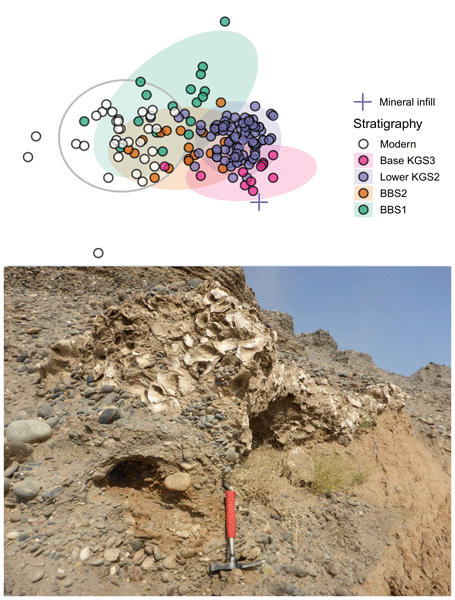
Paleoseasonality through serial stable isotope analysis of Pleistocene to recent Etheria elliptica shells from the middle Atbara River, eastern Sudan
Aisha Huseen

Robert Bussert
Mosab Mohammednoor
Ulrich Struck
Sumiko Tsukamoto
Ali Eisawi
Faysal Bibi
Huseen, A., Bussert, R., Mohammednoor, M., Struck, U., Tsukamoto, S., Eisawi, A., and Bibi, F.: Paleoseasonality through serial stable isotope analysis of Pleistocene to recent Etheria elliptica shells from the middle Atbara River, eastern Sudan, E&G Quaternary Sci. J., 75, 173–190, https://doi.org/10.5194/egqsj-75-173-2026, 2026.
Rainfall magnitude and seasonality are primary determinants of African savannas today, governing essential aspects of biomass production, such as primary productivity and the amount of tree cover. It remains unclear to what extent past seasonality differed from today, potentially accounting for differences in habitats and faunal diversity. Stable isotopes along with trace elements of the growth layers in bivalve shells provide valuable insights into paleoenvironmental conditions, including rainfall, river productivity, and water temperature. In this study, we analyzed stable oxygen and carbon isotopes in 11 fossil and three modern Etheria elliptica shells collected from the middle Atbara River in eastern Sudan. The fossil specimens are from sediments dated by optically stimulated luminescence (OSL) to between ∼ 224 and ∼ 17 ka in age. The δ18O values of fossil and modern shells are broadly similar, although the fossils are more enriched (−2.4 ‰ to 5.9 ‰ for fossils vs. −6.4 ‰ to 1.5 ‰ for modern shells), possibly indicating more evaporative and drier conditions during the Pleistocene. However, the Atbara River is today altered by dams, which might also explain the more depleted isotopic values in modern shells. δ13C values are broadly similar in fossil and modern shells, ranging from −14.1 ‰ to 4.5 ‰ in fossils and −16.9 ‰ to −9.6 ‰ in modern shells but show significant changes over time. Enriched δ13C values in Pleistocene shells may reflect lower atmospheric CO2 levels, while depleted values in modern shells align with post-industrial increases in CO2, although changes in catchment vegetation, weathering processes, or biological factors might also play a role. We also reconstructed the Atbara local meteoric water line (ALMWL) from seven river water samples. Results suggested that the Atbara River experiences low relative humidity compared to the global MWL. Moisture sources inferred from the ALMWL likely include the Indian Ocean, the Atlantic Ocean, and recycled moisture from continental input. These may have also supplied moisture during the Pleistocene, as fossil and modern shells exhibit comparable isotopic ranges. Our results overall indicate that a strong precipitation seasonality pattern has likely persisted in eastern Sudan since at least ∼ 200 ka.
Die Niederschlagsmenge und -saisonalität sind heute die primären Einflussfaktoren der afrikanischen Savannen und bestimmen wesentliche Aspekte der Biomasseproduktion, wie die Primärproduktivität und den Anteil der Baumbedeckung. Es bleibt unklar, in welchem Ausmaß sich die vergangene Saisonalität von der heutigen unterschied, was möglicherweise Unterschiede in Lebensräumen und faunistischer Diversität erklären könnte. Stabile Isotope sowie Spurenelemente der Wachstumslagen in Bivalvenschalen liefern wertvolle Einblicke in paläoumweltliche Bedingungen, einschließlich Niederschlag, Flussproduktivität und Wassertemperatur. In dieser Studie analysierten wir stabile Sauerstoff- und Kohlenstoffisotope in elf fossilen und drei modernen Schalen von Etheria elliptica, die aus der Region des mittleren Atbara-Flusses im Osten des Sudan gesammelt wurden. Die fossilen Exemplare stammen aus Sedimenten, deren Alter mittels optisch stimulierter Lumineszenz (OSL) auf ∼ 224–∼ 17 ka datiert wurde. Die δ18O-Werte der fossilen und modernen Schalen sind im Allgemeinen ähnlich, obwohl die Fossilien stärker angereicherte Werte aufweisen (−2,4 ‰ bis 5,9 ‰ für Fossilien gegenüber −6,4 ‰ bis 1,5 ‰ für moderne Schalen), was möglicherweise auf stärker evaporative und trockenere Bedingungen während des Pleistozäns hindeutet. Allerdings ist der Atbara-Fluss heute durch Dämme verändert, was ebenfalls die stärker abgereicherten Isotopenwerte in modernen Schalen erklären könnte. Die δ13C-Werte sind in fossilen und modernen Schalen im Allgemeinen ähnlich und reichen von −14,1 ‰ bis 4,5 ‰ in fossilen und von −16,9 ‰ bis −9,6 ‰ in modernen Schalen, zeigen jedoch signifikante Veränderungen im Laufe der Zeit. Angereicherte δ13C-Werte in pleistozänen Schalen könnten niedrigere atmosphärische CO2-Konzentrationen widerspiegeln, während abgereicherte Werte in modernen Schalen mit dem Anstieg von CO2 nach der Industrialisierung übereinstimmen, obwohl Veränderungen in der Vegetation des Einzugsgebiets, Verwitterungsprozesse oder biologische Faktoren ebenfalls eine Rolle spielen könnten. Wir rekonstruierten außerdem die lokale meteorische Wasserlinie des Atbara (Atbara local meteoric water line, ALMWL) anhand von sieben Flusswasserproben. Die Ergebnisse deuteten darauf hin, dass der Atbara-Fluss im Vergleich zur globalen MWL eine niedrige relative Luftfeuchtigkeit aufweist. Die aus der ALMWL abgeleiteten Feuchtigkeitsquellen umfassen wahrscheinlich den Indischen Ozean, den Atlantischen Ozean und recycelte Feuchtigkeit aus kontinentalem Eintrag. Diese könnten auch während des Pleistozäns Feuchtigkeit geliefert haben, da fossile und moderne Schalen ähnliche Isotopenbereiche aufweisen. Unsere Ergebnisse deuten insgesamt darauf hin, dass wahrscheinlich seit mindestens ∼ 200 ka ein stark saisonales Niederschlagsmuster im Osten des Sudan bestanden hat.
- Article
(4567 KB) - Full-text XML
-
Supplement
(4513 KB) - BibTeX
- EndNote


Precipitation seasonality is an essential determining factor of modern African savanna habitats. Seasonal rainfall magnitude, distribution, duration, and timing have shaped the habitats and ecological setting of African savannas by governing essential aspects of biomass production, such as primary productivity, biogeochemical processes, and phenology (Feng et al., 2013). Moreover, the reliance of these ecosystems on precipitation seasonality makes them vulnerable to any changes affecting one or all of the above-mentioned characteristics associated with the region's seasonal rainfall (Feng et al., 2013). Precipitation patterns across a large portion of modern Africa are primarily concentrated during the summer season (Liebmann et al., 2012; Yang et al., 2024). However, according to Palmer et al. (2023), eastern Africa experiences an additional short rainy season during winter (October–December).
To investigate seasonality in the geological past, serial stable isotope analysis has been conducted on fossils, including mammalian teeth and mollusk shells (Blaise and Balasse, 2011; De Winter et al., 2016; Fricke et al., 1998; Iacumin and Longinelli, 2002; Kniest et al., 2022; Pfister et al., 2019; Souron et al., 2012; Stephan, 2000). In particular, Holocene and modern hydrological systems in eastern Africa have been investigated using African freshwater oysters Etheria elliptica from Wadi Howar, Sudan (Rodrigues, 2000), the Shinfa (Rahad River in Sudan) and Omo Rivers in Ethiopia (Tabor et al., 2021; Vonhof et al., 2013), and lakes Turkana and Victoria, Kenya (Abell et al., 1996; Cohen et al., 2023). However, this region is lacking high-resolution archives beyond the early Holocene.
These previous studies demonstrate that E. elliptica shells can act as an archive of seasonal variations in the isotopic composition of their host waters. Specifically, stable oxygen and carbon isotope ratios in the growth layers of E. elliptica can provide valuable data for reconstructing paleoenvironmental conditions, including rainfall and water temperature (oxygen), and river productivity (carbon). The oldest E. elliptica shells analyzed to date are early Holocene in age (Cohen et al., 2023). However, the E. elliptica record may extend further back in time, if suitably aged and well-preserved fossil shells are found.
Along the Atbara River, located in the eastern-central Nile basin (Fig. 1), thick deposits of complex fluviatile sediments contain stone tools and vertebrate remains, along with a variety of gastropods, freshwater bivalves, and freshwater oysters (E. elliptica) – often in the form of fossil reefs (Abbate et al., 2010). Etheria elliptica can still be found in the Atbara River today, oftentimes forming reefs attached to rocks in fast-flowing water. In this study, we analyzed stable oxygen and carbon isotopes in 11 fossil E. elliptica shells from late Middle and Late Pleistocene sediments, as well as three modern shells, collected in the middle Atbara River area of eastern Sudan. This was done in order to test whether the seasonality of precipitation in the past was similar to that of today, and whether it varied over time or remained relatively stable throughout the last ∼ 224 ka. While oxygen isotopes primarily reflect hydrological seasonality through changes in precipitation and evaporation, carbon isotopes provide complementary information on dissolved inorganic carbon dynamics, vegetation input, and biogeochemical processes within the river system (Kelemen et al., 2017; Yan et al., 2012) that are difficult to disentangle.
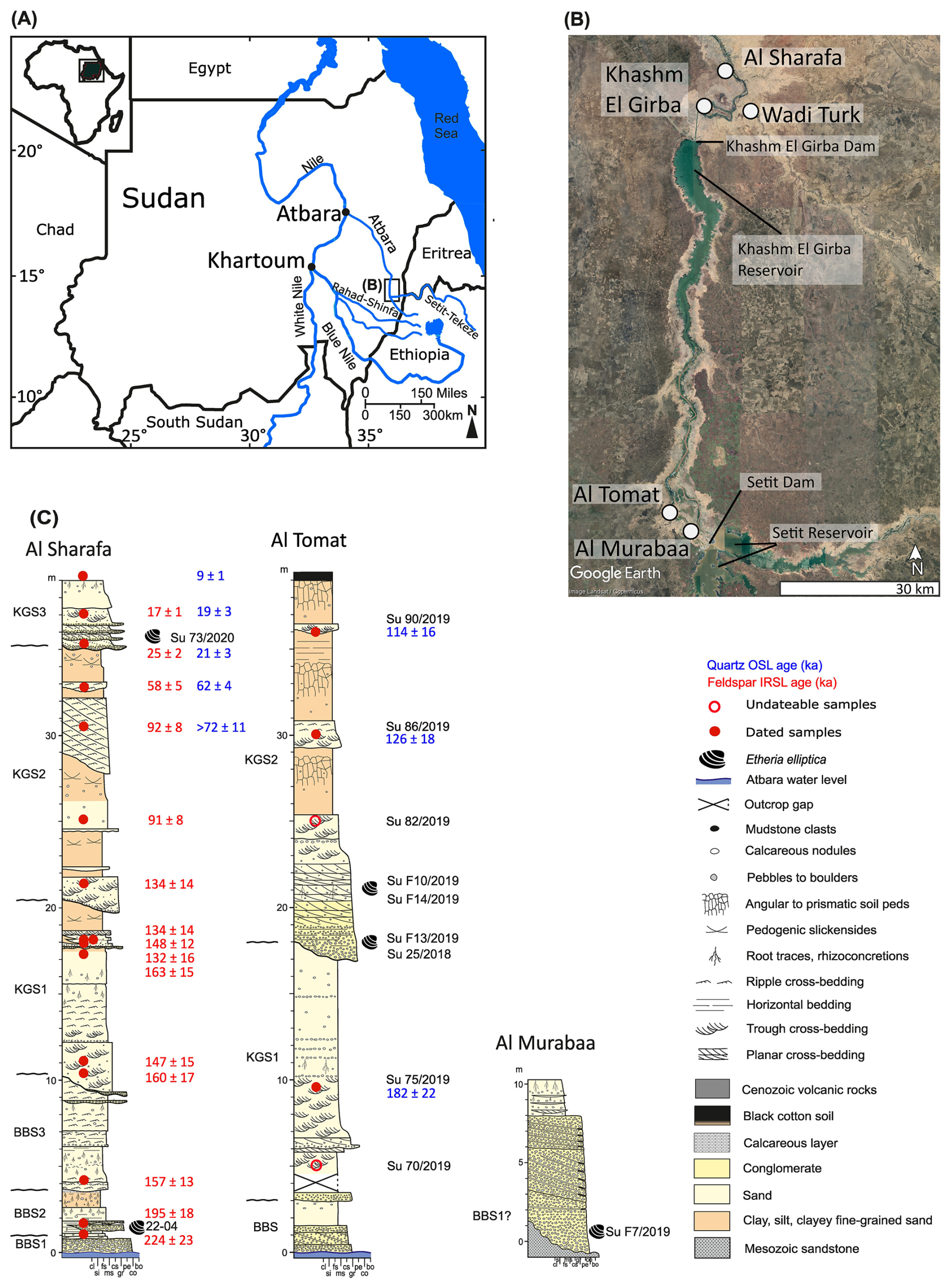
Figure 1(A) Location of the study area (modified after Mohammednoor et al., 2024), (B) satellite image of the study area and collection sites of Etheria elliptica (white circles) along the middle Atbara River (© Google Earth) and (C) stratigraphic sections showing the position of the E. elliptica specimens and the luminescence ages (red circles).
The shells of E. elliptica provide a proxy for paleoseasonality and paleoclimate due to their incremental growth, with discrete layers accumulating at the inner surface at a growth rate associated with age, following the von Bertalanffy growth model (Akélé et al., 2015). The isotopic ratios of each individual layer record water isotopic conditions and temperature at the time of formation.
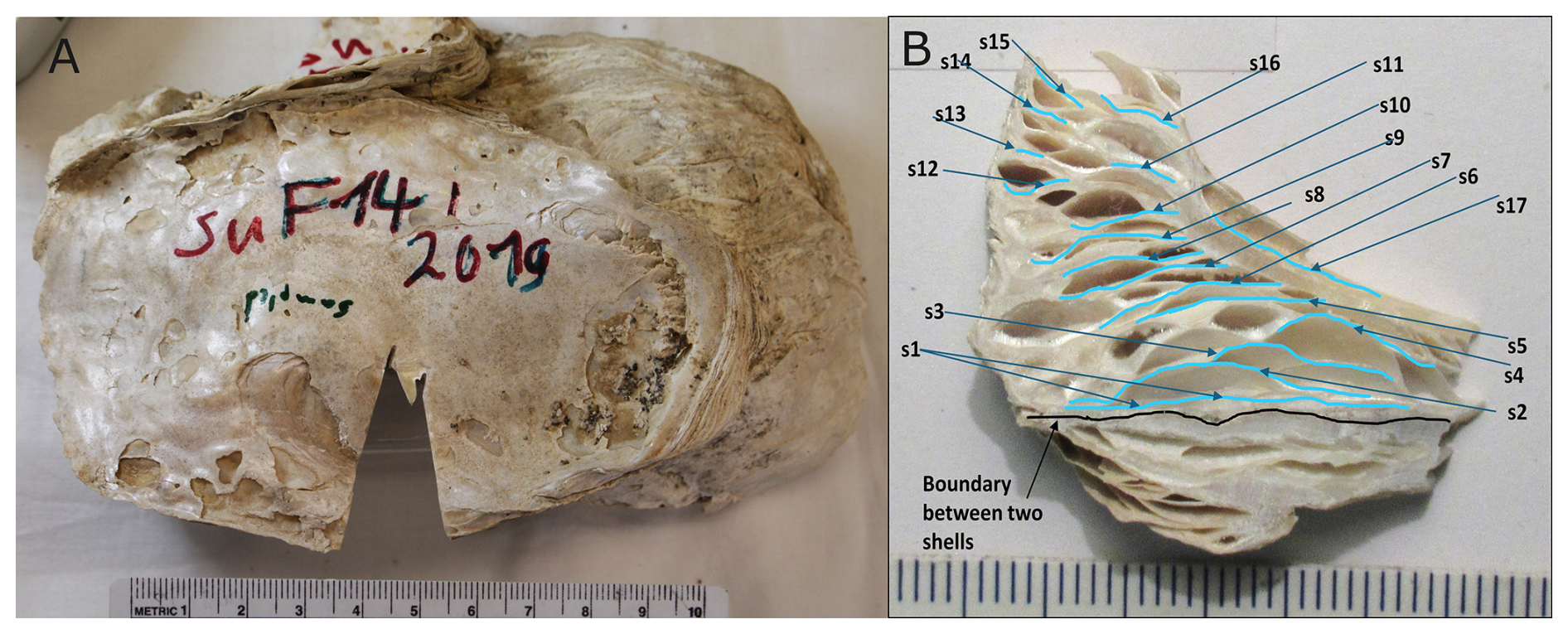
Figure 2(A) Interior view of the shell of Etheria elliptica (specimen KGS2, Su 14/2019 B). (B) Cross-section of the same specimen, with arrows indicating the sampling locations for carbon and oxygen isotope analyses. Cross-sections for remaining shells are provided in the Supplement.
The isotopic composition of bivalve shells is generally considered a reliable indicator of constructing rainfall and temperature seasonality. Shells of the freshwater oyster E. elliptica are about ∼ 2–3 cm (Fig. 2) thick and up to 15 cm long, with well-defined growth layers. These shells grow incrementally, accreting successive layers in which they record hydroclimate parameters, including water temperature and water isotopic signature. Consequently, geochemical analysis of their shells can inform seasonal changes in the water chemistry in which they grow (Cohen et al., 2023; Pfister et al., 2019; Vonhof et al., 2013). In terrestrial environments, ratios of stable isotopes of oxygen (δ18O) in animal hard tissues (shells, tooth enamel, etc.) are known to vary with the amount of seasonality of rainfall and other climate variables (Fricke et al., 1998; Iacumin and Longinelli, 2002; Pfister et al., 2019; Souron et al., 2012; Stephan, 2000; Brookman and Ambrose, 2012). Rainy seasons bring in more of the lighter isotope into the watershed, lowering the δ18O ratio, while evaporation during the dry season preferentially removes the lighter isotope, raising the δ18O ratio. In bivalve shells specifically, variations in δ18O reflect changes in the δ18O of the river that depend on hydrological factors such as water temperature, precipitation–evaporation balance, and river runoff during shell formation (Yan et al., 2014). Enriched δ18O values are interpreted as reflecting periods of high evaporation during the dry season, while depleted δ18O values represent the rainy season. These fluctuations in stable oxygen isotopes between wet and dry seasons are measurable in both fossil and modern shells of E. elliptica (Abell et al., 1996; Cohen et al., 2023; Rodrigues, 2000; Tabor et al., 2021; Vonhof et al., 2013). It is important to note that the source of moisture supplying the Atbara River water is the source of the δ18O isotopic composition of its water and consequently the δ18O of the shells. To develop a robust interpretation of shell values, it is informative also to examine the isotopic composition of the Atbara River water and compare the Atbara local meteoric water line (ALMWL) to those of other rivers in the region.
The carbon isotope ratios recorded in river shells are also of interest in that they indicate changes in sources of the organic matter used as the food supply for these mollusks (Rodrigues, 2000). Dissolved inorganic carbon (DIC) is removed from the river by photosynthesizing algae and diatoms, and by the precipitation of carbonates. The δ13C of shells reflects a complex interaction of paleo-productivity, paleo-atmospheric CO2, catchment area vegetation, and weathering (Graniero et al., 2021). However, shell carbonates were often found not to reflect the predicted equilibrium fractionation (Graniero et al., 2021; Kelemen et al., 2017; Stringer and Prendergast, 2023; Yan et al., 2012). Most explanations refer this offset to the additional contribution of metabolic effects, which result in depleted δ13C values, and kinetic effects or mixing between multiple sources of DIC (Geist et al., 2005; Graniero et al., 2021; Kelemen et al., 2017; Yan et al., 2012).
The Atbara River is the northernmost major tributary of the Nile River, originating in the Ethiopian Highlands and draining portions of Eritrea before joining the Nile near Atbara city in Sudan (Fig. 1). The Atbara River contributes approximately 14 % of the Nile's total water discharge (Cockerton et al., 2013). Its hydrological behavior is highly variable, exhibiting extreme and rapid fluctuations in discharge (Whiteman, 1971). This pronounced variability is primarily driven by the river's position near the northernmost extent of the Intertropical Convergence Zone (ITCZ) during the summer months, where seasonal shifts in rainfall patterns within the catchment area lead to sudden and intense changes in river flow (Cockerton et al., 2013; Gebremicael et al., 2017). In the middle reach of the valley, these seasonal changes in river discharge are dampened due to dam construction. Two dams have been built within the study area (Fig. 1): the Khashm El Girba Dam, which was completed in 1964 (Adam and Suleiman, 2022); and the Upper Atbara–Setit Dam Complex, which was inaugurated in 2017.
The regional geology of the study area consists of several distinct geological units, beginning with the Precambrian basement complex (Whiteman, 1971), which is exposed at various locations along the riverbanks. The Precambrian basement is overlain by the Late Cretaceous Gedaref Formation (Eisawi and Schrank, 2009), followed by a sedimentary kaolinitic unit attributed to the Early Eocene (Chialvo, 2000). Overlaying these units lies a sequence of Miocene basalts, overlain by the thick Pleistocene sedimentary deposits that form the focus of this study. The sequence is capped by recent black cotton soils (Abbate et al., 2010). Two stratigraphic levels – the Butana Bridge Synthem (BBS) and the Kashm El Girba Synthem (KGS) – have been identified within the late Middle and Late Pleistocene deposits of the middle Atbara River (Abbate et al., 2010). These units are further subdivided into subsynthems: BBS, KGS1, KGS2, and KGS3 (Abbate et al., 2010). These subsynthems have been dated using OSL methods to approximately age ranges 224–160, 160–130, 130–60, and ∼ 30–> 17 ka, respectively (Tsukamoto et al., 2022). The OSL ages provide a chronological framework for interpreting precipitation seasonality recorded by the shells and for placing these seasonal signals within their stratigraphic context, allowing comparisons of both temperature and precipitation seasonality (primary determinants of both vegetation and faunal composition) between the Pleistocene and modern times. Specifically, we sought to examine whether rainfall seasonality in the past was similar to that of today.
During the Late Pleistocene, eastern Africa experienced climatic fluctuations driven by orbital forces (∼ 200 to 60 ka) (Svenning et al., 2024), Heinrich events (∼ 60 ka) (Schaebitz et al., 2021), and local insolation variability, which affected temperature and rainfall seasonality (Blome et al., 2012). The Pleistocene sediments along the middle Atbara River dated ∼ 224 to 17 ka (Tsukamoto et al., 2022) and exhibit arid to semi-arid environments accompanied by a vegetation cover of C3 and C4 plants (Mohammednoor et al., 2025). This paleoclimate is further substantiated by mineralogical evidence from the middle Atbara River paleosols, which reveal a gradual transition between arid to semi-arid and seasonal humid environmental conditions throughout the succession, and it is similar to the Late Pleistocene of eastern Africa (Mohammednoor et al., 2024). Human evolution has been closely linked to both global and regional paleoclimate records (Maslin et al., 2014). Hominins have lived and evolved in African savannas for over 6 million years before eventually dispersing out of Africa. The movement of life and ecosystems within and beyond Africa was likely shaped by climate, with the Nile corridor and its tributaries, including the Atbara River, which might play a key role in providing food and freshwater. Recent paleontological, sedimentological, and archeological discoveries suggest that the Atbara River may have supported distinct faunal dynamics, markedly different from modern community structures, during periods when environmental conditions were favorable (Abbate et al., 2010; Tabor et al., 2021; Tsukamoto et al., 2022). The climatic oscillations between glaciation and interglaciation phases during the Pleistocene had a profound impact on the composition and distribution of mammalian faunal communities across Africa. These oscillations instigated recurrent habitat fragmentation, resulting in the isolation of plant and animal populations. However, this process ultimately facilitated an increase in biodiversity, while concurrently influencing human demographic patterns, behavioral adaptations, and technological innovations (Blome et al., 2012). The understanding of paleoenvironment and climate factors of the past ∼ 200 ka is well known from South Africa and the East African Rift Valley, but the Sahelian region remains unclear (Blome et al., 2012).
The profiles at Al Sharafa and Al Tomat each comprise approximately 40 m of sediments, consisting of coarse-grained river channel deposits and fine-grained floodplain sediments. These sediments are arranged in sequences (synthems), with the main sequences named by Abbate et al. (2010) as subsystems (subsynthems). At the base of the sequences, coarse-grained channel sediments overlay deep erosional incisions and transition upward into fine-grained floodplain sediments, which contain interbedded paleosols. Sandy sediments from smaller channels are embedded within the upper floodplain sediments. The Al Muraaba profile consists of only one sequence, which at its base is composed of a very coarse-grained, large-scale cross-bedded river channel fill that is overlain by floodplain sediments containing small sandy channel fills. In all profiles, fossil E. elliptica occurs exclusively in coarse-grained river channel sediments. In the Al Tomat profile, they form partly autochthonous patch reefs, while in the Al Sharafa and Al Muraaba profiles, they occur as allochthonous redeposited shells within the river channel sediments.
4.1 Freshwater oyster samples
A total of 14 E. elliptica shell specimens (11 fossils, 3 modern) were collected from the middle Atbara River between 2018 and 2022. Fossil shells are relatively common within the Pleistocene Atbara sediments, occurring either as isolated shells or large reef colonies. The fossil specimens were collected from different stratigraphic horizons within the Atbara sedimentary sequence at three different locations: Al Sharafa, Al Tomat, and Al Murabaa (Fig. 1; Table 1). The fossil specimen collected from Al Murabaa is tentatively assigned to the BBS1 based on its position within gravelly channels directly above the Cretaceous Gedaref Formation.
Table 1Etheria elliptica specimens and their associated stratigraphic levels, their lengths (maximum dorsal ventral length), and their corresponding calculated ages, localities and coordinates. NA denotes not applicable.
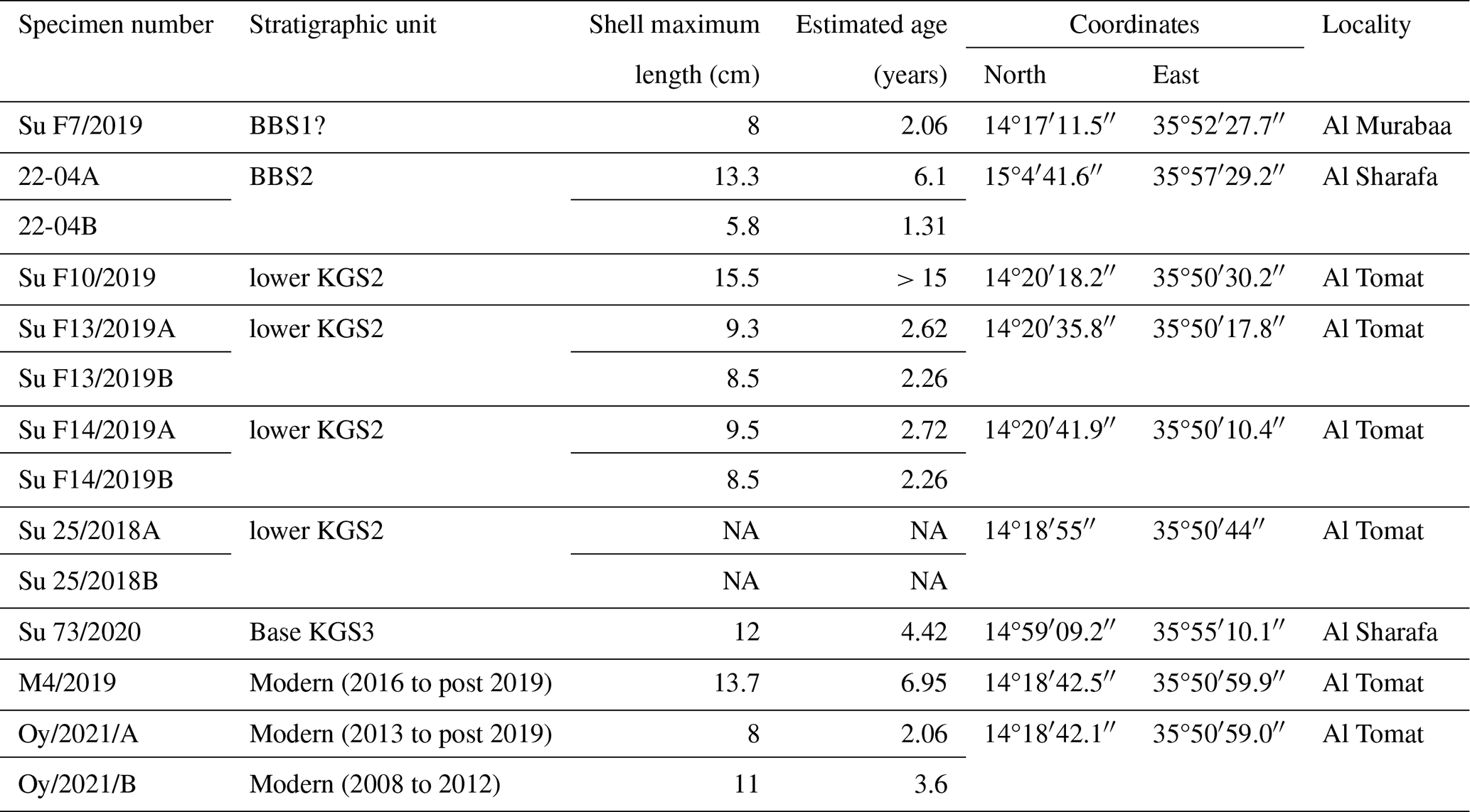
The modern specimen Oy/2021A likely lived prior to the opening of the Upper Atbara–Setit Dam Complex. Specimen Oy/2021B is more definitively assigned to the period before the dam's construction or during its early construction phase – before the river flow was altered by the formation of the dam's reservoir. In contrast, specimen M4/2019 appears to have lived during the final stages of dam construction and the period following its completion.
4.2 Water samples
Sample AH1/2021: approximately 30 mL of water was collected from the west bank of the Atbara River at Al Tomat on 20 February 2021. This was collected in ten 3 mL glass tubes for stable oxygen and deuterium isotopes analyses. The sampling site is located between the Khashm El Girba Dam to the north and the Upper Atbara–Setit Dam Complex to the east. The remaining water samples were collected as described by Mohammednoor et al. (2025) from three locations (Al Sharafa, Wadi Turk, and Khashm El Girba) along the middle Atbara River during the 2022 field season in February (Table 3).
4.3 X-ray diffraction (XRD)
For the XRD analyses, approximately 2 g of material was collected from the inner parts of the shells. The material was ground to an analytical fineness using an agate mortar. Subsequently, randomly oriented powders were measured using a Bruker D2 diffractometer in the 3 to 80° 2θ range at 30 kV and 10 mA, with a step size of 0.01° and a measurement time of 1 s per step, using Cu Kα radiation. The mineralogical composition was evaluated using the SmartLab II software from Rigaku and the PDF-4 database.
4.4 Radiocarbon dating of the modern samples
All modern shells (M4/2019, Oy/2021A, Oy/2021B) were analyzed using radiocarbon dating to determine whether they lived before or after the reconstruction of the Upper Atbara–Setit Dam Complex. This analysis specifically aimed to assess whether their lifetimes occurred prior to or following the hydrological changes caused by the dam's construction and subsequent opening. Radiocarbon dating was carried out by the Beta Analytic Laboratory (Miami, USA). All work was conducted at Beta in-house using NEC accelerator mass spectrometers and four Thermo IRMSs. Radiocarbon ages were corrected for isotopic fractionation and calibrated to calendar years using the IntCal20 calibration curve (Christie, 2018; Reimer et al., 2020). Ages beyond the modern reference are reported as percent modern carbon (pMC). Reported errors represent 1σ counting statistics.
4.5 Optically stimulated luminescence (OSL) dating
The geochronology of the Al Sharafa section based primarily on OSL dating was previously described by Tsukamoto et al. (2022) and Mohammednoor et al. (2024). In this study, new OSL ages are reported for the Al Tomat section. Five OSL samples (Su70/2019, Su75/2019, Su82/2019, Su86/2019, and Su90/2019; Fig. 1) were collected in 2019 using opaque plastic tubes. Extra materials surrounding the OSL tubes were also collected for environmental dose rate estimation. The luminescence sample preparation was conducted in the laboratory to extract quartz and K-feldspar fractions at the LIAG (Institute for Applied Geophysics, Hannover), following the standard procedure described in Tsukamoto et al. (2022). This included sieving, acid treatments, density separation, and HF etching (for quartz only). However, due to the basaltic composition of the sediments, the K-feldspar fraction (d < 2.58) was presumed not containing K-feldspar, because it did not emit any infrared stimulated luminescence signal. Only one sample (Su75/2019) yielded ∼ 30 mg of quartz for a fraction of 100–150 µm. The second attempt was made to extract quartz using all materials > 150 µm, since relatively large quartz grains in the sediments were observed during the fieldwork. Through the second preparation, ∼ 30 mg and 1 g of quartz from Su86/2019 and Su90/2019 were extracted, respectively. The grain size of these two quartz samples were determined under the optical microscope. The quartz OSL measurements were done using a Risø TL/OSL DA-20 reader equipped with blue and infrared (IR) LEDs as stimulation light sources, an EMI 9235QB photomultiplier tube, and a calibrated 90Sr 90Y beta source. Equivalent doses of quartz were measured using a single aliquot regenerative dose protocol, using a preheat of 260 °C (10 s) and a cut heat of 240 °C (0 s), which was used in Tsukamoto et al. (2022) after optimizing the heating conditions. At least 24 small aliquots of 1–2 mm diameter on stainless steel disks were measured to calculate the equivalent dose (De) values. Mean De values and 1σ standard error were used to calculate OSL ages, excluding aliquots, for which the natural OSL signal was in saturation. Dose rates for the samples were measured using high-resolution gamma spectrometry with a pure Ge detector. The measured gamma rays from U, Th, and K were converted to dose rates using the conversion factors of Liritzis et al. (2013) and R scripts of Zhang and Tsukamoto (2025). More details about the procedures of OSL dating can be found in Tsukamoto et al. (2022).
4.6 Serial stable isotope analysis
Sections of E. elliptica shells were prepared using a regular rotating table saw that uses water during the cutting process, in the paleontology preparation laboratory at the Museum für Naturkunde, Berlin. Cross-sections were taken through the thickest growth direction of the shell perpendicularly to the surface (Fig. 2). Most shells were sectioned in or near the umbo. The significance of this section from the umbo to the innermost layer is that it corresponds almost to the whole age of the animal as it represents all accretionary calcium carbonate layers from the beginning when the growth rate is high to the younger parts when the growth rates are slow and constant after the fifth year. One section (M4/2019) reflects a time span of younger layers, shown by the ventral side of a shell which records the later stages of the animal. Sectioning was repeated for the 22-04 and Su 73/2020 samples as the former sections are fragile and breakable during successive drilling. Every cross-section was examined under the microscope before drilling to assess the preservation condition of the sample, to check for sediments or precipitates within the layers, and to choose the best layers to drill. The number of samples taken from each E. elliptica varied depending on the thickness of the cross-section and the visible condition of the successive bands. Layers were drilled in a specific sequence after drying, starting from older/outer to younger/inner layer; however, in some specimens, the succession is not clear, especially when two shells are attached to each other. Between six and 26 samples were taken from each shell (without counting the secondary mineral infill samples). Layers with precipitates were avoided as much as possible. Some specimens (Su F14/2019/B–Su F10/2019) have secondary mineral infill which were sampled to examine its values, with the aim of investigating the occurrence of any anomalous isotope values that may indicate recrystallization or mineral precipitation. The drill bit and the surface of the shell were cleaned for every drilling process to minimize contamination. Generally, drilling was repeated several times as the sample powder obtained was often not sufficient, or due to mixing with adjacent layers or sample loss. For oxygen and carbon isotope measurements of carbonate samples, approximately 100–400 µg of sample material was put into a clean 10 mL exetainer. After sealing the exetainer with a septum cap (caps and septa for LABCO exetainer 438b), the remaining air was removed by flushing the exetainer with He (4.6) for 6 min at a flow of 100 mL min−1. After flushing, approximately 30 µL of anhydrous phosphoric acid was injected through the septum into the sealed exetainer by using a disposable syringe. After approximately 1.5 hours of reaction time at 50 °C, the sample is ready for isotope measurement.
The oxygen and carbon isotopic composition in the CO2 in the headspace were measured using a Thermo Finnigan GASBENCH II coupled online with a Thermo Finnigan Delta V isotope ratio mass spectrometer. Reference gas was pure CO2 (4.5) from a cylinder calibrated against the Vienna Pee Dee Belemnite (VPDB) standard using International Atomic Energy Agency (IAEA) reference materials (NBS 18, NBS 19). Isotope values are shown in the conventional delta notation (δ18O, δ13C) in per mil (‰) versus VPDB. The reproducibility of replicate measurements of lab standards (limestone) is generally better than 0.10 ‰ (1 standard deviation).
Statistical analysis was conducted in R to test the differences in δ18O and δ13C values between fossils from each sedimentary unit, between the KGS, BBS, and modern levels.
4.7 Oxygen and hydrogen isotope measurements in water samples
Stable isotope ratios of oxygen (18O 16O) and hydrogen (2H 1H) in H2O in water samples were measured with a PICARRO L1102-i isotope analyzer. The L1102-i is based on the WS-CRDS (wavelength-scanned cavity ring-down spectroscopy) technique (Gupta et al., 2009). Measurements were calibrated by the application of linear regression of the analyses of IAEA calibration material VSMOW, VSLAP, and GISP. The stable isotope ratios of oxygen and hydrogen are expressed in the conventional delta notation (δ18O, δD) in per mil (‰) versus VSMOW. For each sample, six replicate injections were performed, and arithmetic average and standard deviations (1σ) calculated. The reproducibility of replicate measurements is generally better than 0.1 ‰ for oxygen and 0.5 ‰ for hydrogen.
4.8 Age calculation
Age estimation followed Akélé et al. (2015), using the von Bertalanffy growth equation:
To estimate shell age, the equation can be rewritten as
where Lt = mean length at age t; L∞ = asymptotic length, equal to 14.75 cm as determined by Akélé et al. (2015); k = growth coefficient, equal to 0.38 yr−1 as determined by Akélé et al. (2015); t = age of the E. elliptica in years; and t0 = hypothetical age at which the length is zero, which was assumed to be zero.
4.9 Quantifying seasonality
Seasonality in this study refers to intra-annual variations in shell δ18O values that reflect seasonal changes in river water temperature and isotopic composition during shell growth. In the Atbara River system, these variations are interpreted to be primarily driven by changes in water chemistry associated with wet (high discharge) and dry (low discharge) seasons (Tabor et al., 2021). Because freshwater bivalves accrete sequential carbonate layers, the isotopic composition measured along growth layers should record temporal environmental variation, capturing seasonal cycles. In theory, seasonal cycles should be recognizable as successive peaks and troughs in δ18O values, representing seasonal cycles. However, given sampling resolution and number, confident identification of individual cycles and cycle counting was rarely possible with our data. Instead, we used the distribution (range and standard deviation) of δ18O values within each specimen as a proxy for the overall amplitude of seasonality. We interpret the spread of values in the isotopic profiles as reflecting seasonal fluctuations within the river system. Seasonal amplitudes were then summarized by stratigraphic unit, allowing comparison of seasonal variability across time intervals. The standard deviation was a preferred measure of variability than range as it is less sensitive to extreme or outlier values.
5.1 Shell mineralogy
The XRD analyses show that the modern E. elliptica shells (Oy/2021A, Oy/2021B, M4/2019) are practically monomineralic, consisting of aragonite beyond trace amounts of calcite. Sample Oy/2021A contains traces of quartz. The fossil E. elliptica shells also consist almost exclusively of aragonite, with the exception of sample Su 73/2020, which contains significant amounts of calcite (see the Supplement). No other minerals were detected in the samples. Thus, except for sample Su 73/2020, we consider these specimens diagenetically unaltered and that their isotope ratios reflect their original composition.
5.2 Modern shell ages
The calibrated age ranges for the specimens are as follows: M4/2019:2016 to post-2019; Oy/2021A: 2013 to post-2019; Oy/2021B: 2008 to 2012 (see the Supplement). This indicates that they are all quite recent, postdating the age of the Khashm El Girba Dam (1964), but likely the only shell that predates the Upper Atbara–Setit Dam Complex opening is Oy/2021B, and the remaining specimens have an age range spanning before to after the opening of the Upper Atbara–Setit Dam Complex.
5.3 OSL chronology results
Table 2 shows the results of the dose rate, De values, and quartz OSL ages for the three samples, ranging from 182 ± 22 to 114 ± 16 ka (Table 2; Fig. 1).
Table 2Dose rate, equivalent dose, and quartz OSL ages from Al Tomat.

5.4 Water stable isotopes
The water sample AH1/2021 from the Atbara River has δ18O values ranging from +0.45 ‰ to +0.75 ‰ (average 0.6), with corresponding δD ranging from +16.04 ‰ to 18.70 ‰ (average 17.4) (Table 3). The other water samples derive from the study by Mohammednoor et al. (2025) (Table 3).
Table 3δ18O (VSMOW) and δD (VSMOW) values of water from the Atbara River.
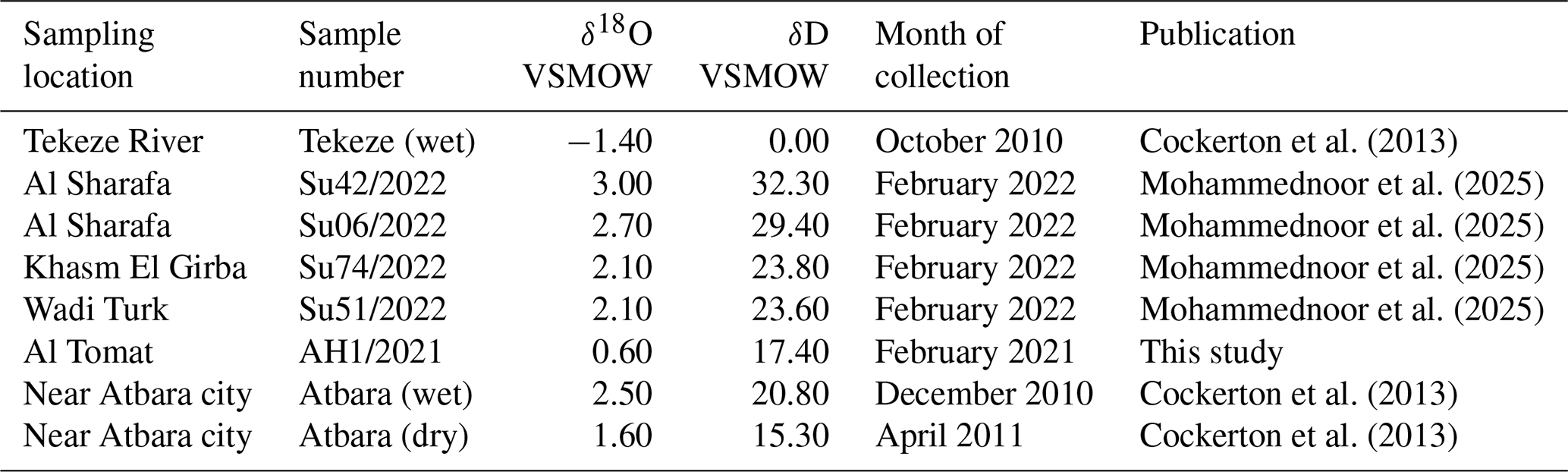
The δ18O and δD values of the Atbara River are plotted with reference to the global meteoric water line (GMWL) (Fig. 6). There is no statistically significant difference between the Atbara LMWL and the GMWL (Z-test for the slope, p = 0.08; for the intercept, p = 0.7). In comparison with the Blue, White, and main Niles, and the Shinfa River, the Atbara LMWL line does not differ in slope (p > 0.05, Z-test) except for the Shinfa River (p = 0.01, Z-test) and the same for the intercept which does not differ significantly among these rivers (p > 0.05).
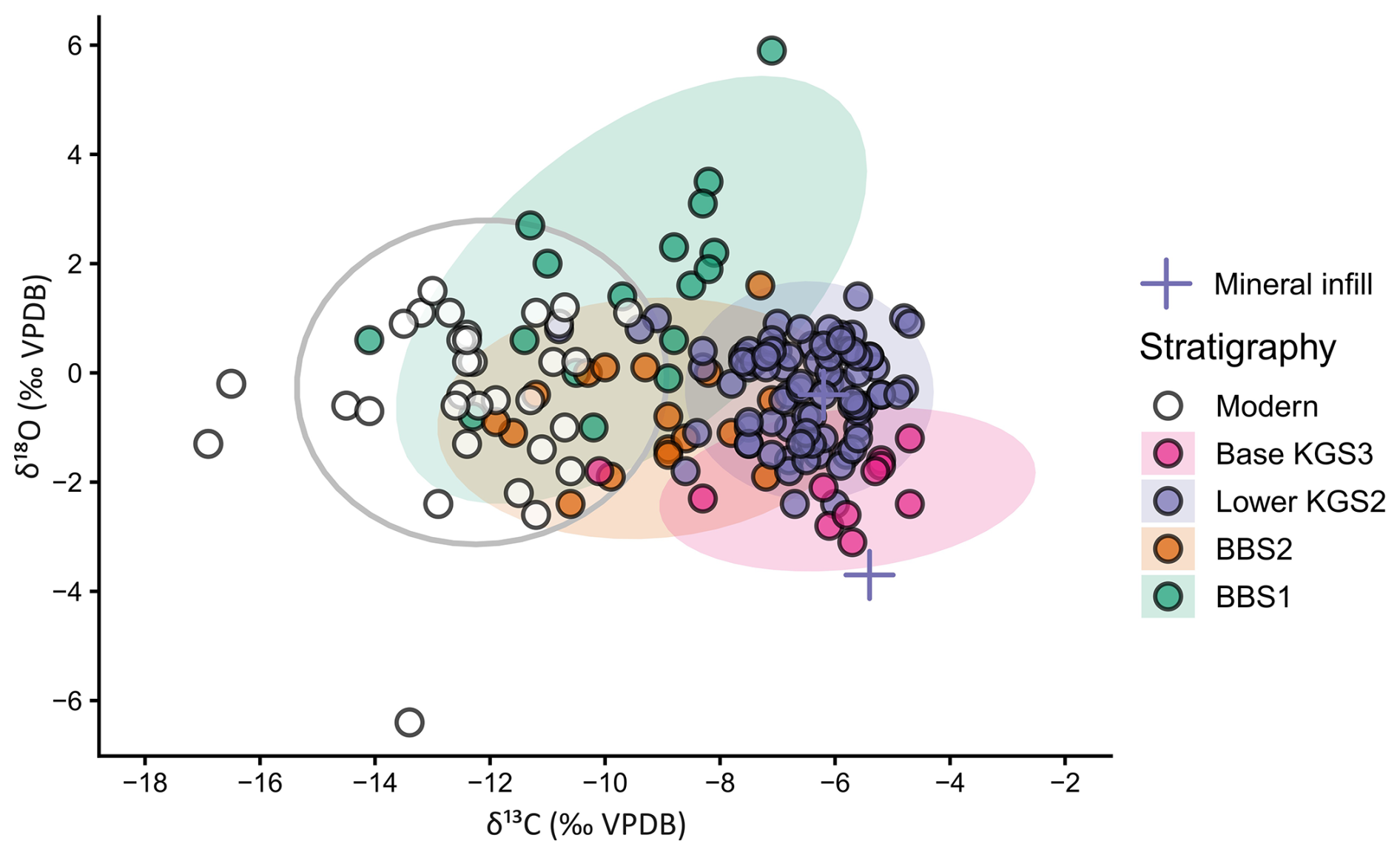
Figure 3Scatter plot of δ18OVPDB and δ13CVPDB values of modern and Pleistocene shells from the middle Atbara River. Modern values are most similar to those from the BBS. Carbon and oxygen values are not correlated. Ellipses represent 95 % confidence regions based on a multivariate t distribution.
5.5 Stable oxygen isotopes in shell carbonate samples
δ18O (VPDB) values from the three BBS specimens (Su F7/2019, 22-04A, and 22-04B) are from −2.4 ‰ to +5.9 ‰, median 1.60 ± 1.7 ‰, −0.65 ± 0.8 ‰, 1.10 ± 1.1‰, with a mean range of 8.3 ± 0.05 ‰ (error = 1 standard deviation), although this is mainly reflecting enriched values in the one specimen from the BBS1 (Fig. 5). The seven specimens from the KGS2 have δ18O values between −2.4 ‰ and +1.4 ‰, median −0.2 ± 0.8 ‰, with an average range of 2.2 ± 0.08 ‰. The KGS3 specimen (Su 73/2020) has values ranging from −3.1 ‰ to −1.3 ‰ and median −2.1 ± 0.6 ‰. However, this is unlikely to reflect the original δ18O of the shell due to diagenetic alteration into calcite, which is expected to result in more depleted δ18O values. Accordingly, we excluded it from further δ18O data interpretation. Modern specimens (Oy/2021A, Oy/2021B, and M4/2019) display a range from −6.4 ‰ to +1.5 ‰, median −0.3 ± 1.5 ‰, with average range of 3.2 ± 0.1 ‰. In specimen Su F10/2019, the mineral infill δ18O value of −0.4 ‰ falls within the range of values found in the shell layers. In contrast, in specimen Su F14/2019B, the mineral infill δ18O value of −3.7‰ is more depleted than any value observed in the shell layers. Statistical testing revealed significant differences among stratigraphic units. The Fligner–Killeen test indicated heterogeneity of variances between BBS and KGS2, KGS2 and Modern intervals (p < 0.05), but it shows no significant variation between BBS and Modern intervals (p = 0.23), and the pairwise Wilcoxon rank sum test identified no significant differences in medians between all intervals (p > 0.05).
The pairwise Wilcoxon rank sum test shows significant differences among the modern Atbara River and all other modern records (p < 0.05) except for the late Holocene shell from the lower Omo River (p = 0.1).
5.6 Stable carbon isotopes
Specimens of the BBS interval show δ13C values ranging from −14.1 ‰ to −7.1 ‰ with median −8.9 ± 1.6 ‰ (n = 3). The KGS2 shells have a range from −10.8 ‰ to −4.7 ‰, median −6.4 ± 1.0 ‰ (n = 7). The only shell from the KGS3 has a range from −10.1 ‰ to −4.7‰ and median −5.7 ± 1.6 ‰. Although this sample is altered to calcite, it is likely to reflect the original δ13C of the shell (Ritter et al., 2017; Zhang et al., 2014). The modern Atbara River shells have δ13C values ranging from −16.9 ‰ to −10.6 ‰ and median −12.4 ± 1.6 ‰ (n = 3; Fig. 4). The secondary mineral infill shows δ13C values of −5.4 ‰ for Su F14/2019B and −6.2 ‰ for Su F10/2019. These values fall within the shell δ13C ranges observed for these specimens. The Kruskal–Wallis rank sum and pairwise Wilcoxon tests show that each interval (BBS, KGS, modern) has a distinct range of δ13C values (p < 0.05). The pairwise Wilcoxon test shows no significant differences between the modern Atbara, Shinfa (p = 0.2), and Omo (p = 0.059) rivers, in contrast to the North Turkana, Late Holocene, and Middle Holocene records (p < 0.05).
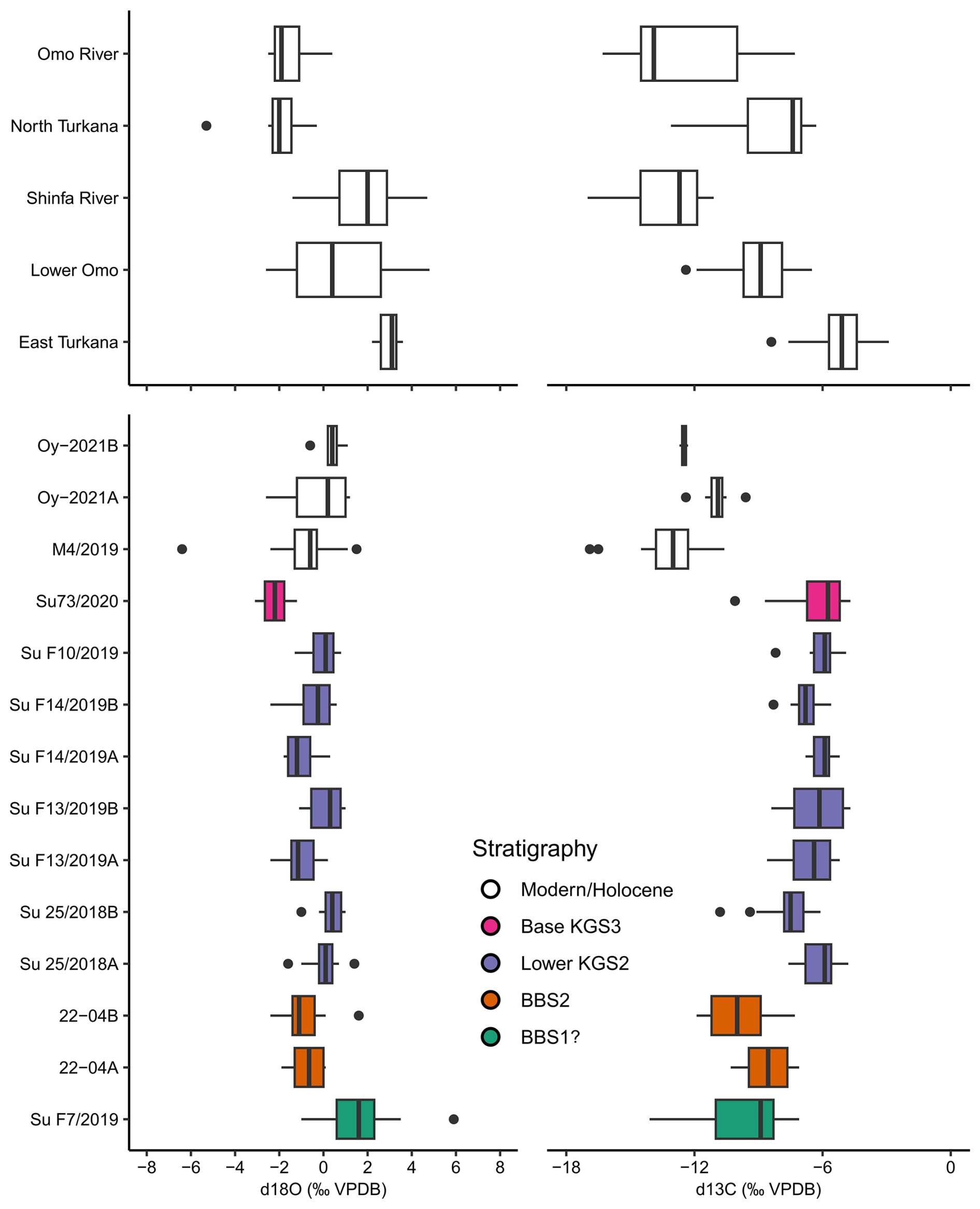
Figure 4Comparison between Etheria δ18OVPDB and δ13CVPDB of the middle Atbara River (this study), Shinfa River (Tabor et al., 2021), Omo River (Vonhof et al., 2013), and Turkana basin (East Turkana, Lower Omo, North Turkana) (Cohen et al., 2023) through different stratigraphic levels from the Pleistocene (colored) to the Holocene/Modern. Isotope data are plotted as box and whisker diagrams (showing median, first, and third quartiles, and maximum/minimum or 1.5 × interquartile range from first and third quartiles).
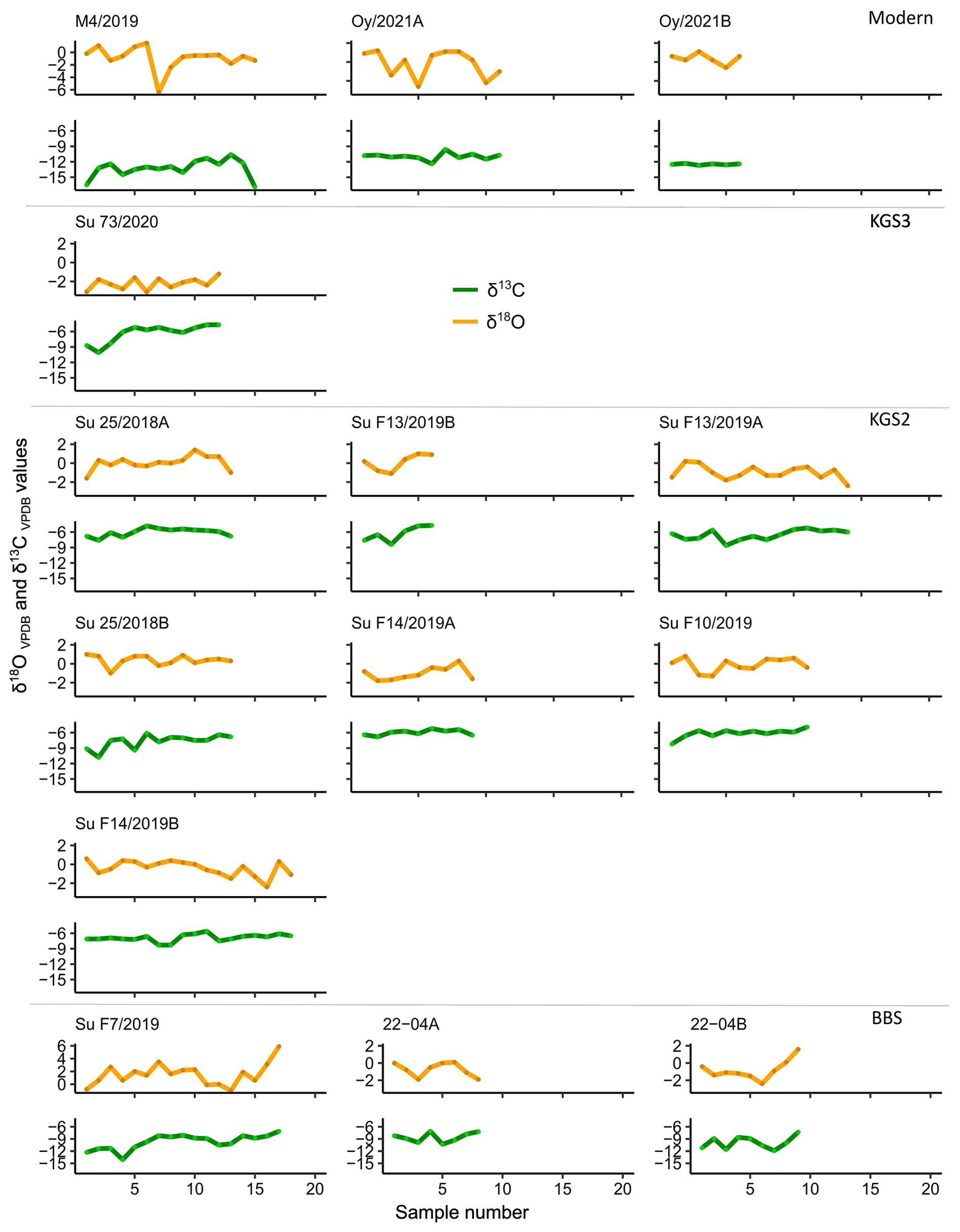
Figure 5Serial δ18OVPDB and δ13CVPDB profiles of the Pleistocene and modern E. elliptica from the middle Atbara River. Left to right indicates earlier to later growth stages, respectively.
5.7 Ontogenetic ages and sampling resolution
Based on their size, the E. elliptica in this study were estimated to range from ∼ 1 to > 15 years (Table 1). The age of Su 25/2018 could not be estimated because the specimen could not be relocated after sampling. Su F10/2019 has a length of 15.5 cm, which exceeds the asymptotic length constant of the equation (14.75 cm); therefore, its age is assumed to be greater than 15 years.
Based on the growth rate of E. elliptica (2.55, 4.66, 7.85, 10.03, 11.52, and 12.54 cm by 0.5, 1, 2, 3, 4, and 5 years of age, respectively) in Akélé et al. (2015), our shell lengths indicate that each shell transect spans at least one complete annual cycle of carbonate precipitation. In older specimens, the dramatic reduction in the annual growth increments after ∼ 4 years of growth makes it challenging to capture seasonal cycles in detail, as the increasingly closely spaced layering makes sampling challenging. As a result, cycle counting in this context is unreliable. In contrast, the von Bertalanffy growth function does not rely on the assumption of annual cyclicity but instead integrates overall growth patterns and accounts for growth rates, providing a more realistic estimate of age when clear periodicity cannot be defined in detail.
6.1 Paleoseasonality of rainfall
As noted above, XRD results indicate that all modern and fossil Atbara River shells, apart from Su 73/2020, show no significant alteration of the original aragonite mineralogy, indicating that isotope ratios should not be affected by diagenetic alteration. Variation in δ18O is observed in all samples shells, which we interpret as reflecting seasonal fluctuations within the river system. Broadly, increase and decrease in δ18O is taken to correspond to shifts between wetter and drier conditions, although, as noted above, individual seasonal cycles are not precisely resolved due to low sampling and changing growth rates. Our fossil data show that during the Middle to Late Pleistocene, the Atbara River system experienced pronounced seasonality, with strong contrasts between wet and dry seasons, much as it does today. A single specimen, likely deriving from the BBS1 level, shows high variability and significantly more enriched δ18O values than all other later fossil and modern specimens. This suggests the presence of significantly drier and potentially more seasonal rainfall during BBS1 times (∼ 224 ± 23 ka). This is generally consistent with sedimentological studies that found more arid conditions during BBS times (Mohammednoor et al., 2024), although these only sampled the BBS2 and BBS3 intervals. Further specimens would be needed to more confidently conclude a climatic shift between BBS1 and later units. In contrast to the BBS shells, the KGS2 shells exhibit significantly lower variability than those of any other interval, with a small range (∼ 2 ‰) likely indicating slightly wetter conditions and lower seasonal variability. The single shell from the KGS3 shows depleted values, at first sight suggesting wetter conditions during this interval, but since this shell exhibits significant alteration of its original aragonite mineralogy, its oxygen isotopic signal should not be considered reliable. The three modern Atbara River shells exhibit a considerable range in δ18O values from 1.7 ‰ to 7.9 ‰, reflecting highly seasonal precipitation of the area today, consistent with its actual rainfall pattern (Williams, 2018). For comparison, modern E. elliptica shells from the highly seasonal Shinfa River in Ethiopia exhibit a δ18O range of ∼ 4.1 ‰ (Tabor et al., 2021). The three modern Atbara River shells were collected from Al Tomat, which is bounded by dams to the north and south (Fig. 1). Radiocarbon dating indicates all three shells spent their lifetime after the construction of the Khashm El Girba Dam (1964) and, with the exception of Oy/2021B, after the inauguration of the Upper Atbara–Setit Dam Complex (2017). The presence of artificial reservoirs is expected to have reduced the amplitude of natural hydrological variability, but the high δ18O range still suggests that, even under regulated flow conditions, the seasonal cycle of the Atbara River remains detectable in these shells.
The δ18O values recorded in these shells likely reflects summer monsoon activity that enhanced precipitation in the region during boreal summers (Blome et al., 2012). The amplitude of this seasonality appears to have declined during the deposition of the KGS2 unit, potentially reflecting a long-term climatic shift toward a less seasonal variability between ∼ 130 and ∼ 30 ka. This long-term variability was most likely driven by orbital-scale climatic forcing, particularly of the precession cycle, which modulates the intensity and timing of solar insolation at low latitudes (Blome et al., 2012; Kutzbach et al., 2008; Clark et al., 2009), in turn influencing the strength and position of the Intertropical Convergence Zone (ITCZ), a main driver of rainfall in the Sahel province in eastern Africa. When insolation over the Northern Hemisphere reached the highest peak during summer, the ITCZ shifted northward, intensifying monsoonal rainfall and enhancing river discharge. Conversely, periods of reduced insolation weakened monsoon strength, leading to lower river flow and reduced seasonality due to rainfall decrease. Thus, the Atbara River's seasonal history might reflect a complex interplay between global orbital forcing, regional monsoon dynamics, and more recent dam modifications.
6.2 Sources of δ13C
It is unclear whether the δ13C values of aragonitic shells mainly reflect sources of dissolved inorganic carbon (DIC) in their host water or changes in metabolic activity (Graniero et al., 2021; Kelemen et al., 2017; McConnaughey and Gillikin, 2008; Yan et al., 2012). Atmospheric CO2, the weathering rate of surrounding rocks (especially in the catchment area in the Ethiopian highlands where the amount of rain received is high compared to the middle reaches of the Atbara River), soil respiration, vegetation type, biological productivity, and groundwater are all possible sources of DIC in the Atbara River (Darling et al., 2005). Unfortunately, no information is available on δ13C of DIC from the Atbara River today, making it difficult to reconstruct the amount of contribution of these possible sources and their controls on the δ13C values of Etheria shells.
We found that δ13C in both fossil and recent samples showed no correlation with their corresponding δ18O values (see Fig. 3), which might indicate that δ13C values were not affected by precipitation seasonality. This differs from the Omo River shells, where a correlation between δ13C and δ18O values was interpreted to be the result of seasonal groundwater input into the river, simultaneously affecting both O and C ratios (Vonhof et al., 2013). This seems not to have been the case in both the Pleistocene and modern Atbara Rivers, where processes associated with precipitation, biological productivity, and organic matter mineralization may exhibit different seasonal dynamics, such that δ13C and δ18O are not necessarily expected to vary synchronously.
However, each interval (BBS, KGS, Modern) shows a distinct range of δ13C values that differ significantly (Fig. 4). The BBS has more enriched values than the modern shells, and the KGS samples have the most enriched δ13C values. Alternately, δ13C enrichment might reflect relatively lower atmospheric CO2 concentration during BBS and especially KGS2-3 times (∼ 220–17 ka) (Da et al., 2019; Lee et al., 2021; Schmitt et al., 2012). Reconstructed atmospheric CO2 concentration levels estimated from ice cores and boron isotopes indicate that pCO2 was ∼ 260 ppm during BBS times and ∼ 180 ppm during the KGS2 interval (Henehan et al., 2013; Hönisch and Hemming, 2005). Conversely, the lower δ13C values of modern shells might be due to higher modern atmospheric CO2 levels (Bauska, 2025; Vonhof et al., 2013; Lerner et al., 2025). However, the lack of modern DIC data from the Atbara River means we cannot determine the exact sources of shell δ13C values with confidence. Our results therefore indicate major shifts in Atbara River δ13C values sometime between the BBS2 and KGS2 (∼ 160–130 ka), and again between the basal KGS3 (∼ 25 ka) and today, although the reasons for these changes are not immediately clear.
6.3 Modern regional comparisons
The average δ18O range of the modern E. elliptica from the Atbara River (mean range = 3.1 ‰, SD = 1.24, n = 31) is significantly lower than that from the Shinfa River (mean range = 4.1 ‰, SD = 2.76, n = 14) (Tabor et al., 2021) (Fig. 4). This is consistent with the fact that the Shinfa River is extremely seasonal, characterized by strong wet (high discharge) and dry (low discharge) episodes, which is also reflected in the high δ18O range of its water (Tabor et al., 2021). In contrast, the δ18O range of modern E. elliptica from the Omo River (mean range = 2.9 ‰, n = 29) is significantly lower than that in the modern Atbara River (Vonhof et al., 2013), indicating less seasonal conditions. This is also consistent with more depleted δ18O values in the Omo in comparison to the Atbara and Shinfa rivers, indicating less evaporative conditions. Modern E. elliptica shells from the northern Turkana basin or the lower Omo (Cohen et al., 2023), and therefore still under the influence of the Omo River, have δ18O values that show a comparable range to the Atbara River (2.14 ‰, SD = 0.57, n = 26); however, they are significantly more depleted, reflecting the year-round input from the Omo River. Late Holocene E. elliptica from the Omo River delta (Cohen et al., 2023) exhibit a wide range of δ18O values (mean range = 6.5 ‰, SD = 1.06, n = 45) and the depleted δ18O values expected for the Omo River (Cohen et al., 2023). This is confirmed by estimation of water δ18O from the modern E. elliptica values, through clumped isotope measurements (1.59 ‰ to −0.62 ‰) and equilibrium equations (1.6 ‰ to −1.7 ‰) (Cohen et al., 2023), again confirming that the Omo River is less seasonal than the Atbara River. Middle Holocene shells from the eastern part of Lake Turkana, dated to the latest stages of the African Humid Period (AHP), show a very low range of δ18O values (mean range = 0.6 ‰, SD = 0.09, n = 63) (Cohen et al., 2023), which is much less than the δ18O values in the Atbara River, reflecting the far less seasonal climate of the AHP (Fig. 4). The average δ13C range of the modern E. elliptica from the Atbara River (mean range = 3.1 ‰, SD = 2.97, n = 31) is comparable to that from the Shinfa River (mean range = 3.2 ‰, SD = 1.91, n = 14) and shows no statistical difference (Tabor et al., 2021) (Fig. 4). This might be attributed to the fact that the Atbara and Shinfa rivers have almost the same upstream catchment area over the Ethiopian highlands and likely undergo the same weather events as well hosting a similar biota (Williams, 2018). In contrast, the δ13C range of modern E. elliptica from the Omo River (mean range = 9 ‰, n = 29) (Vonhof et al., 2013) is much higher than in the modern Atbara River shells, but the differences are not significant. In contrast, the modern E. elliptica (mean range = 6.8 ‰, n = 26) and Late Holocene shells (mean range = 4.5 ‰, SD = 0.7, n = 45), both from northern Turkana, and the Middle Holocene (mean range = 4.5 ‰, SD = 1.41, n = 63) from eastern Turkana (Cohen et al., 2023) differ significantly from the Atbara River. It is difficult to speculate on the definite causes that led to these variations in δ13C between the Atbara River, the Omo River, and the Turkana basin. They likely reflect a combination of factors, like dissolved inorganic carbon sources including the rate of exchange between the water surface and atmospheric CO2, the rate of weathering and the type of weathered rocks, vegetation cover affecting the hydrological system, the decay of organic matter in case of the lake setting, groundwater contribution, and the metabolism of the mussels (Cohen et al., 2023; Darling et al., 2005; Diamond, 2022; Kelemen et al., 2017).
6.4 Water sources and the local meteoric water line
A progressive increase in δD and δ18O (VSMOW) values is observed along the Atbara River from the Tekezze in the Ethiopian highlands (Cockerton et al., 2013) in the south to Atbara city near to the confluence with the main Nile in the north (Fig. 1; Table 3). This pattern aligns with previous findings that the enrichment of river waters in the Nile basin is linked to the reduction in rainfall and the increase of cumulative evaporation moving northward (Cockerton et al., 2013).
The relationship between hydrogen and oxygen isotopes in water samples collected from the middle reaches of the Atbara River (n = 5) in this study, when combined with those from Mohammednoor et al. (2025) and additional samples from the Atbara and Tekeze rivers (Cockerton et al., 2013), gives an LMWL expressed as δD = (6.53 ± 0.96) δ18O + (9.56 ± 2.03) (r2 = 0.886). When compared to the GMWL δD = (8.17 ± 0.06) δ18O + (10.35 ± 0.65) (Craig, 1961; Rozanski et al., 2013), the Atbara LMWL exhibits a slightly lower slope (Fig. 6), suggesting more evaporative conditions in the Atbara River (Tabor et al., 2021). However, there is no statistically significant difference between the Atbara LMWL and the GMWL, likely due to the small sample size from the Atbara River (n = 7) compared to the sample size of the GMWL (n = 206) (Craig, 1961; Rozanski et al., 2013). The ALMWL is expected to have a more positive intercept (d-excess) than the GMWL, reflecting increased input of recycled water vapor, as moisture originating from continental water surfaces and/or evapotranspiration in low relative humidity conditions tends to have high d-excess, resulting in precipitation and runoff with similarly elevated d-excess values (Cockerton et al., 2013; Diamond, 2022; Gammons et al., 2006; Tabor et al., 2021). However, this cannot be confirmed with our small Atbara River sample size.
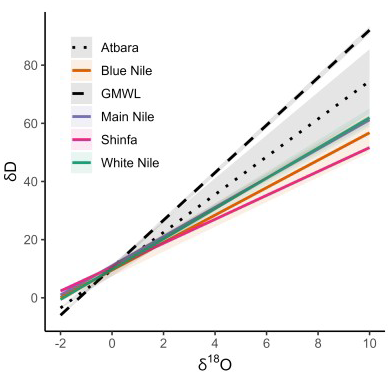
Figure 6Comparison of the Atbara River local meteoric water line (LMWL) with the global meteoric water line (GMWL) and those of the Nile basin rivers. Nile basin LMWLs exhibit significantly shallower slopes than the GMWL, likely reflecting enhanced evaporation of Nile basin rivers. The Atbara LMWL is probably similar to the other Nile rivers, although small sample size and high uncertainty mean the differences to the GMWL are not significant.
This is consistent with LMWLs that were calculated for the Blue Nile, White Nile, and main Nile (dry season) by Cockerton et al. (2013) and for the Shinfa River by Tabor et al. (2021). This also differs significantly from the GMWL in slope, probably due to excessive evaporative conditions in these rivers (Darling et al., 2005) (Fig. 6). This confirms the dominance of evaporative conditions in the Sudanese Nile basin (Cockerton et al., 2013; Darling et al., 2005; Diamond, 2022), consistent with arid, semi-arid, and subtropical regions (Hasan et al., 2018). The Atbara River LMWL has a higher slope than the Blue, White, and main Nile LMWLs (Fig. 6), but this difference is not statistically significant except for the Shinfa River.
The values observed along the Atbara River water likely reflect the isotopic signatures of its source waters, including contributions from rainfall, possible groundwater discharge contribution from aquifers in the area and upstream (Hagos et al., 2015), recharge to the subsurface, and evaporation. To what extent these factors affect the water chemistry is unknown, specifically the groundwater contribution. The rainfall recorded in the middle Atbara River (El Showak meteorological station) has its highest peak during July–August (Mirghani, 2001), in a rainy season extending from April to November. The main moisture source of this rainfall is likely to be the Indian Ocean (Mohammednoor et al., 2025), in addition to other sources like evapotranspiration, moisture from continental water surfaces, and/or the contribution of Atlantic Ocean moisture (Cockerton et al., 2013; Kebede and Travi, 2012; Levin et al., 2009). This rainfall pattern has similarity with the rainfall pattern observed in Addis Ababa, Ethiopia (Levin et al., 2009), which might refer to the same westerly moisture source (Kebede and Travi, 2012; Levin et al., 2009). Whether these same sources also supplied moisture during the Pleistocene is unknown, as δD cannot be measured in the fossil shells.
One limitation of this study is that the number of analyzed specimens is limited, particularly for the KGS3 and BBS1–2 intervals, making it hard to confidently compare these intervals with the modern and KGS2 data. In addition, more modern water samples from the Atbara River are needed to establish a more robust meteoric water line. Future work integrating modern water isotope measurements and additional shell material would help to better understand and evaluate the controls on shell δ18O and δ13C, and improve reconstructions of past seasonal variability.
The isotopic profiles of Etheria elliptica shells from the middle Atbara River region provide a valuable proxy to reconstruct rainfall seasonality of the late Middle Pleistocene to the present. The δ18O values consistently display large ranges across all intervals, confirming that rainfall seasonality was a persistent feature of the eastern Sahel region since ∼ 200 ka.
The δ13C signals across all intervals reveal an oscillating pattern that appears to correlate with age. However, a more comprehensive investigation is needed to interpret these patterns accurately due to the variety of potential δ13C sources. This would require additional information on the aquifers influencing the Atbara River, the characteristics of the rock succession, vegetation cover, river productivity, the rate of atmospheric CO2 exchange with the river surface, the metabolic activity of E. elliptica, and sufficient data on dissolved inorganic carbon (DIC) of the Atbara River.
The reconstruction of the local meteoric water line (LMWL) provides valuable insights into evaporation and moisture sources influencing the Atbara River. Although the LMWL closely aligns with the global meteoric water line (GMWL), likely due to the limited number of water samples from the Atbara River, modern isotopic signatures suggest evaporative conditions. A larger set of water samples is therefore necessary to improve our understanding of evaporation conditions and relative humidity in the Atbara River.
This study provides an important baseline for future research on freshwater bivalves as paleoenvironmental archives in semi-arid regions. The results contribute to a better understanding of past rainfall seasonality in the eastern Sahel and offer a framework for applying stable isotope analysis in Pleistocene river systems. Future studies building on this work, particularly those integrating larger datasets and modern monitoring, will improve the reliability of freshwater shell environmental reconstructions.
All data and code used in this study are available in the Supplement.
The supplement related to this article is available online at https://doi.org/10.5194/egqsj-75-173-2026-supplement.
AH conceptualized and designed the study, conducted formal analysis and data interpretation, prepared the original draft, and created the visualizations. FB conceptualized and designed the study, obtained funding, and contributed to data interpretation and to reviewing and editing the paper. US carried out the laboratory analyses, validated results, and reviewed the paper. RB conceptualized and designed the study, provided XRD and sedimentological data, contributed to validation, and reviewed the paper. ST provided OSL data, contributed to validation, and reviewed the paper. MM contributed to validation and reviewed the paper. AE contributed to validation, and reviewed and edited the paper.
The contact author has declared that none of the authors has any competing interests.
Publisher's note: Copernicus Publications remains neutral with regard to jurisdictional claims made in the text, published maps, institutional affiliations, or any other geographical representation in this paper. The authors bear the ultimate responsibility for providing appropriate place names. Views expressed in the text are those of the authors and do not necessarily reflect the views of the publisher.
We are grateful to the Geological Research Authority of Sudan for permitting fieldwork and sample exports. We thank Mohamed el-Tayeb and Discover Sudan for fieldwork and team logistics. River water collection by AH was made possible with the support of Abdelmajeed Anwar (Sudanese Mineral Resources Company, Gedaref office), Khalid Aldaw (Geological Research Authority of Sudan, Gedaref office), Ahmed Abdelrahman, Hind Alhilali, and Sumaya Aymen, who assisted with vehicle access, field permission, tools, and sample transportation. We thank Franziska Schmid for spectrometer analyses and Marcus Brinkmann for sectioning.
During the preparation of this work, the lead author used ChatGPT in order to polish text and assist in generating R code. After using this tool, all authors reviewed and edited the paper as needed and take full responsibility for the content of the published article.
This research has been supported by the European Research Council (PALEONILE, grant no. 101045217), the German Research Foundation (Deutsche Forschungsgemeinschaft, grant no. 387794796), and the National Geographic Society (grant no. CP-086R-17).
This paper was edited by Jan-Hendrik May and reviewed by Zuorui Liu and Niels de Winter.
Abbate, E., Albianelli, A., Awad, A., Billi, P., Bruni, P., Delfino, M., Ferretti, M. P., Filippi, O., Gallai, G., Ghinassi, M., Lauritzen, S.-E., Vetro, D. L., Martínez-Navarro, B., Martini, F., Napoleone, G., Bedri, O., Papini, M., Rook, L., and Sagri, M.: Pleistocene environments and human presence in the middle Atbara valley (Khashm El Girba, Eastern Sudan), Palaeogeogr. Palaeocl., 292, 12–34, https://doi.org/10.1016/j.palaeo.2010.03.022, 2010.
Abell, P. I., Amegashitsi, L., and Ochumba, P. B. O.: The shells of Etheria elliptica as recorders of seasonality at Lake Victoria, Palaeogeogr. Palaeocl., 119, 215–219, https://doi.org/10.1016/0031-0182(95)00019-4, 1996.
Adam, E. and Suleiman, M.: Reservoir Sediment Management Practices in Sudan: A Case Study of Khashm El-Girba Dam, in: Wadi Flash Floods, edited by: Sumi, T., Kantoush, S. A., and Saber, M., Springer Singapore, Singapore, 455–471, https://doi.org/10.1007/978-981-16-2904-4_18, 2022.
Akélé, G. D., Agadjihouèdé, H., Mensah, G. A., and Lalèyè, P. A.: Population dynamics of freshwater oyster Etheria elliptica (Bivalvia: Etheriidae) in the Pendjari River (Benin-Western Africa), Knowl. Managt. Aquatic Ecosyst., 6, https://doi.org/10.1051/kmae/2015002, 2015.
Bauska, T.: Ice core records of atmospheric carbon dioxide, in: Encyclopedia of Quaternary Science, Elsevier, 122–137, https://doi.org/10.1016/B978-0-323-99931-1.00264-6, 2025.
Blaise, E. and Balasse, M.: Seasonality and season of birth of modern and late Neolithic sheep from south-eastern France using tooth enamel δ18O analysis, J. Archaeol. Sci., 38, 3085–3093, https://doi.org/10.1016/j.jas.2011.07.007, 2011.
Blome, M. W., Cohen, A. S., Tryon, C. A., Brooks, A. S., and Russell, J.: The environmental context for the origins of modern human diversity: A synthesis of regional variability in African climate 150 000–30 000 years ago, J. Hum. Evol., 62, 563–592, https://doi.org/10.1016/j.jhevol.2012.01.011, 2012.
Brookman, T. H. and Ambrose, S. H.: Seasonal variation in kangaroo tooth enamel oxygen and carbon isotopes in southern Australia, Quat. Res., 78, 256–265, https://doi.org/10.1016/j.yqres.2012.05.011, 2012.
Chialvo, J.: Geology of the Atbara-Setit confluence, Showak, Eastern Sudan, Bulletin des Centres de Recherches Elf Exploration Production, 22, 185–202, 2000.
Christie, M.: Radiocarbon dating, Wiki J. Sci., 1, 6, https://doi.org/10.15347/wjs/2018.006, 2018.
Clark, P. U., Dyke, A. S., Shakun, J. D., Carlson, A. E., Clark, J., Wohlfarth, B., Mitrovica, J. X., Hostetler, S. W., and McCabe, A. M.: The Last Glacial Maximum, Science, 325, 710–714, https://doi.org/10.1126/science.1172873, 2009.
Cockerton, H. E., Street-Perrott, F. A., Leng, M. J., Barker, P. A., Horstwood, M. S. A., and Pashley, V.: Stable-isotope (H, O, and Si) evidence for seasonal variations in hydrology and Si cycling from modern waters in the Nile Basin: implications for interpreting the Quaternary record, Quaternary Sci. Rev., 66, 4–21, https://doi.org/10.1016/j.quascirev.2012.12.005, 2013.
Cohen, A. S., Manobianco, J., Dettman, D. L., Black, B. A., Beck, C., Feibel, C. S., Joordens, J. C., Van Bocxlaer, B., and Vonhof, H.: Seasonality and lake water temperature inferred from the geochemistry and sclerochronology of quaternary freshwater bivalves from the Turkana Basin, Ethiopia and Kenya, Quaternary Sci. Rev., 317, 108284, https://doi.org/10.1016/j.quascirev.2023.108284, 2023.
Craig, H.: Isotopic Variations in Meteoric Waters, Science, 133, 1702–1703, https://doi.org/10.1126/science.133.3465.1702, 1961.
Da, J., Zhang, Y. G., Li, G., Meng, X., and Ji, J.: Low CO2 levels of the entire Pleistocene epoch, Nat. Commun., 10, 4342, https://doi.org/10.1038/s41467-019-12357-5, 2019.
Darling, W. G., Bath, A., Gibson, J., and Rozanski, K.: Isotopes in water, Isotopes in Palaeoenvironmental Research, 1–66, https://doi.org/10.1007/1-4020-2504-1_01, 2005.
De Winter, N. J., Snoeck, C., and Claeys, P.: Seasonal Cyclicity in Trace Elements and Stable Isotopes of Modern Horse Enamel, PLoS ONE, 11, e0166678, https://doi.org/10.1371/journal.pone.0166678, 2016.
Diamond, R.: Stable Isotope Hydrology, The Groundwater Project, https://doi.org/10.21083/978-1-77470-043-3, 2022.
Eisawi, A. and Schrank, E.: Terrestrial palynology and age assessment of the Gedaref Formation (eastern Sudan), J. Afr. Earth Sci., 54, 22–30, https://doi.org/10.1016/j.jafrearsci.2009.01.005, 2009.
Feng, X., Porporato, A., and Rodriguez-Iturbe, I.: Changes in rainfall seasonality in the tropics, Nat. Clim. Change, 3, 811–815, https://doi.org/10.1038/nclimate1907, 2013.
Fricke, H. C., Clyde, W. C., and O'Neil, J. R.: Intra-tooth variations in δ18O (PO4) of mammalian tooth enamel as a record of seasonal variations in continental climate variables, Geochim. Cosmochim. Ac., 62, 1839–1850, https://doi.org/10.1016/S0016-7037(98)00114-8, 1998.
Gammons, C. H., Poulson, S. R., Pellicori, D. A., Reed, P. J., Roesler, A. J., and Petrescu, E. M.: The hydrogen and oxygen isotopic composition of precipitation, evaporated mine water, and river water in Montana, USA, J. Hydrol., 328, 319–330, https://doi.org/10.1016/j.jhydrol.2005.12.005, 2006.
Gebremicael, T. G., Mohamed, Y. A., v. Zaag, P., and Hagos, E. Y.: Temporal and spatial changes of rainfall and streamflow in the Upper Tekezē–Atbara river basin, Ethiopia, Hydrol. Earth Syst. Sci., 21, 2127–2142, https://doi.org/10.5194/hess-21-2127-2017, 2017.
Geist, J., Auerswald, K., and Boom, A.: Stable carbon isotopes in freshwater mussel shells: Environmental record or marker for metabolic activity?, Geochim. Cosmochim. Ac., 69, 3545–3554, https://doi.org/10.1016/j.gca.2005.03.010, 2005.
Graniero, L. E., Gillikin, D. P., and Surge, D.: Evaluating Freshwater Mussel Shell δ13C Values as a Proxy for Dissolved Inorganic Carbon δ13C Values in a Temperate River, J. Geophys. Res.-Biogeo., 126, e2020JG006003, https://doi.org/10.1029/2020JG006003, 2021.
Gupta, P., Noone, D., Galewsky, J., Sweeney, C., and Vaughn, B. H.: Demonstration of high‐precision continuous measurements of water vapor isotopologues in laboratory and remote field deployments using wavelength‐scanned cavity ring‐down spectroscopy (WS‐CRDS) technology, Rapid Comm. Mass Spectrom., 23, 2534–2542, https://doi.org/10.1002/rcm.4100, 2009.
Hagos, E., Ayenew, T., Kebede, S., and Alene, M.: Review Of Hydrogeology Of Tekeze River Basin: Implications For Rural And Urban Water Supply In The Region, Sinet, Ethiopian Journal of Science, 38, 91–110, 2015.
Hasan, E., Tarhule, A., Kirstetter, P.-E., Clark, R., and Hong, Y.: Runoff sensitivity to climate change in the Nile River Basin, J. Hydrol., 561, 312–321, https://doi.org/10.1016/j.jhydrol.2018.04.004, 2018.
Henehan, M. J., Rae, J. W. B., Foster, G. L., Erez, J., Prentice, K. C., Kucera, M., Bostock, H. C., Martínez-Botí, M. A., Milton, J. A., Wilson, P. A., Marshall, B. J., and Elliott, T.: Calibration of the boron isotope proxy in the planktonic foraminifera Globigerinoides ruber for use in palaeo-CO2 reconstruction, Earth Planet. Sc. Lett., 364, 111–122, https://doi.org/10.1016/j.epsl.2012.12.029, 2013.
Hönisch, B. and Hemming, N. G.: Surface ocean pH response to variations in pCO2 through two full glacial cycles, Earth Planet. Sc. Lett., 236, 305–314, https://doi.org/10.1016/j.epsl.2005.04.027, 2005.
Iacumin, P. and Longinelli, A.: Relationship between δ18O values for skeletal apatite from reindeer and foxes and yearly mean δ18O values of environmental water, Earth Planet. Sc. Lett., 201, 213–219, https://doi.org/10.1016/S0012-821X(02)00635-0, 2002.
Kebede, S. and Travi, Y.: Origin of the δ18O and δ2H composition of meteoric waters in Ethiopia, Quatern. Int., 257, 4–12, https://doi.org/10.1016/j.quaint.2011.09.032, 2012.
Kelemen, Z., Gillikin, D. P., Graniero, L. E., Havel, H., Darchambeau, F., Borges, A. V., Yambélé, A., Bassirou, A., and Bouillon, S.: Calibration of hydroclimate proxies in freshwater bivalve shells from Central and West Africa, Geochim. Cosmochim. Ac., 208, 41–62, https://doi.org/10.1016/j.gca.2017.03.025, 2017.
Kniest, J. F., Davies, A., Todd, J. A., Sigwart, J. D., Evans, D., Fiebig, J., Voigt, S., and Raddatz, J.: Eocene seasonality resolved by coupled Ba/Ca and stable oxygen isotope ratios in bivalve shells, EGU General Assembly 2022, Vienna, Austria, 23–27 May 2022, EGU22-4815, https://doi.org/10.5194/egusphere-egu22-4815, 2022.
Kutzbach, J. E., Liu, X., Liu, Z., and Chen, G.: Simulation of the evolutionary response of global summer monsoons to orbital forcing over the past 280 000 years, Clim. Dyn., 30, 567–579, https://doi.org/10.1007/s00382-007-0308-z, 2008.
Lee, K. E., Clemens, S. C., Kubota, Y., Timmermann, A., Holbourn, A., Yeh, S.-W., Bae, S. W., and Ko, T. W.: Roles of insolation forcing and CO2 forcing on Late Pleistocene seasonal sea surface temperatures, Nat. Commun., 12, 5742, https://doi.org/10.1038/s41467-021-26051-y, 2021.
Lerner, P., Romanou, A., Way, M., and Colose, C.: Obliquity Dependence of Ocean Productivity and Atmospheric CO2 on Earth-like Worlds, Astrophys. J., 979, 234, https://doi.org/10.3847/1538-4357/ada277, 2025.
Levin, N. E., Zipser, E. J., and Cerling, T. E.: Isotopic composition of waters from Ethiopia and Kenya: Insights into moisture sources for eastern Africa, J. Geophys. Res., 114, 2009JD012166, https://doi.org/10.1029/2009JD012166, 2009.
Liebmann, B., Bladé, I., Kiladis, G. N., Carvalho, L. M. V., Senay, G. B., Allured, D., Leroux, S., and Funk, C.: Seasonality of African Precipitation from 1996 to 2009, J. Climate, 25, 4304–4322, https://doi.org/10.1175/JCLI-D-11-00157.1, 2012.
Liritzis, I., Stamoulis, K., Papachristodoulou, C., and Ioannides, K.: A Re-Evaluation Of Radiation Dose-Rate Conversion Factors, Mediterr. Archaeol. Ar., 13, https://www.maajournal.com/index.php/maa/article/view/1012/ (last access: 6 October 2026), 2013.
Maslin, M. A., Brierley, C. M., Milner, A. M., Shultz, S., Trauth, M. H., and Wilson, K. E.: East African climate pulses and early human evolution, Quaternary Sci. Rev., 101, 1–17, https://doi.org/10.1016/j.quascirev.2014.06.012, 2014.
McConnaughey, T. A. and Gillikin, D. P.: Carbon isotopes in mollusk shell carbonates, Geo-Mar. Lett., 28, 287–299, https://doi.org/10.1007/s00367-008-0116-4, 2008.
Mirghani, M.: Concepts and models for the characterization of the West Gedaref hydrogeologic system, Sudan, Univ. Berlin, https://doi.org/10.23689/FIDGEO-217, 2001.
Mohammednoor, M., Bibi, F., Eisawi, A., Tsukamoto, S., and Bussert, R.: Quaternary alluvial paleosols of the Atbara River, eastern Sudan: description and paleoenvironments, J. Quaternary Sci., 39, 102–118, https://doi.org/10.1002/jqs.3574, 2024.
Mohammednoor, M., Bibi, F., Struck, U., Eisawi, A., and Bussert, R.: Pleistocene pedogenic carbonates from alluvial paleosols in eastern Sudan reveal a semi-arid and seasonal climate, similar to today, CATENA, 248, 108583, https://doi.org/10.1016/j.catena.2024.108583, 2025.
Palmer, P. I., Wainwright, C. M., Dong, B., Maidment, R. I., Wheeler, K. G., Gedney, N., Hickman, J. E., Madani, N., Folwell, S. S., Abdo, G., Allan, R. P., Black, E. C. L., Feng, L., Gudoshava, M., Haines, K., Huntingford, C., Kilavi, M., Lunt, M. F., Shaaban, A., and Turner, A. G.: Drivers and impacts of Eastern African rainfall variability, Nat. Rev. Earth Environ., 4, 254–270, https://doi.org/10.1038/s43017-023-00397-x, 2023.
Pfister, L., Grave, C., Beisel, J.-N., and McDonnell, J. J.: A global assessment of freshwater mollusk shell oxygen isotope signatures and their relation to precipitation and stream water, Sci. Rep., 9, 4312, https://doi.org/10.1038/s41598-019-40369-0, 2019.
Reimer, P. J., Austin, W. E. N., Bard, E., Bayliss, A., Blackwell, P. G., Bronk Ramsey, C., Butzin, M., Cheng, H., Edwards, R. L., Friedrich, M., Grootes, P. M., Guilderson, T. P., Hajdas, I., Heaton, T. J., Hogg, A. G., Hughen, K. A., Kromer, B., Manning, S. W., Muscheler, R., Palmer, J. G., Pearson, C., Van Der Plicht, J., Reimer, R. W., Richards, D. A., Scott, E. M., Southon, J. R., Turney, C. S. M., Wacker, L., Adolphi, F., Büntgen, U., Capano, M., Fahrni, S. M., Fogtmann-Schulz, A., Friedrich, R., Köhler, P., Kudsk, S., Miyake, F., Olsen, J., Reinig, F., Sakamoto, M., Sookdeo, A., and Talamo, S.: The IntCal20 Northern Hemisphere Radiocarbon Age Calibration Curve (0–55 cal kBP), Radiocarbon, 62, 725–757, https://doi.org/10.1017/RDC.2020.41, 2020.
Ritter, A., Mavromatis, V., Dietzel, M., Kwiecien, O., Wiethoff, F., Griesshaber, E., Casella, L. A., Schmahl, W. W., Koelen, J., Neuser, R. D., Leis, A., Buhl, D., Niedermayr, A., Breitenbach, S. F. M., Bernasconi, S. M., and Immenhauser, A.: Exploring the impact of diagenesis on (isotope) geochemical and microstructural alteration features in biogenic aragonite, Sedimentology, 64, 1354–1380, https://doi.org/10.1111/sed.12356, 2017.
Rodrigues, D.: Seasonality in the early Holocene climate of Northwest Sudan: interpretation of Etheria elliptica shell isotopic data, Global Planet. Change, 26, 181–187, https://doi.org/10.1016/S0921-8181(00)00043-6, 2000.
Rozanski, K., Araguás-Araguás, L., and Gonfiantini, R.: Isotopic Patterns in Modern Global Precipitation, in: Geophysical Monograph Series, edited by: Swart, P. K., Lohmann, K. C., Mckenzie, J., and Savin, S., American Geophysical Union, Washington, D. C., 1–36, https://doi.org/10.1029/GM078p0001, 2013.
Schaebitz, F., Asrat, A., Lamb, H. F., Cohen, A. S., Foerster, V., Duesing, W., Kaboth-Bahr, S., Opitz, S., Viehberg, F. A., Vogelsang, R., Dean, J., Leng, M. J., Junginger, A., Ramsey, C. B., Chapot, M. S., Deino, A., Lane, C. S., Roberts, H. M., Vidal, C., Tiedemann, R., and Trauth, M. H.: Hydroclimate changes in eastern Africa over the past 200 000 years may have influenced early human dispersal, Commun. Earth Environ., 2, 123, https://doi.org/10.1038/s43247-021-00195-7, 2021.
Schmitt, J., Schneider, R., Elsig, J., Leuenberger, D., Lourantou, A., Chappellaz, J., Köhler, P., Joos, F., Stocker, T. F., Leuenberger, M., and Fischer, H.: Carbon Isotope Constraints on the Deglacial CO2 Rise from Ice Cores, Science, 336, 711–714, https://doi.org/10.1126/science.1217161, 2012.
Schultheiß, R., Ndeo, O. W., Malikwisha, M., Marek, C., Bößneck, U., and Albrecht, C.: Freshwater Molluscs of the Eastern Congo: Notes on Taxonomy, Biogeography and Conservation, Afr. Invertebr., 52, 265–284, https://doi.org/10.5733/afin.052.0204, 2011.
Souron, A., Balasse, M., and Boisserie, J.-R.: Intra-tooth isotopic profiles of canines from extant Hippopotamus amphibius and late Pliocene hippopotamids (Shungura Formation, Ethiopia): Insights into the seasonality of diet and climate, Palaeogeogr. Palaeocl., 342–343, 97–110, https://doi.org/10.1016/j.palaeo.2012.05.007, 2012.
Stephan, E.: Fossil isotope record of climate: δ18O values in Pleistocene equid bone and tooth phosphate, Proceedings of the 32nd International Symposium ARCHAEOMETRYAt: Mexico City, Mexico, https://www.researchgate.net/publication/299496069_Fossil_isotope_record_of_climate_delta18O_values_in_Pleistocene_equid_bone_and_tooth_phosphate/ (last access: 6 October 2026), 2000.
Stratford, D. and Caruana, M.: The Long-Term Conservation of the Australopithecus-bearing Member 4 Excavation Walls at the Sterkfontein Caves, South Africa, Stud. Conserv., 63, 1–14, https://doi.org/10.1080/00393630.2017.1307635, 2017.
Stringer, C. A. and Prendergast, A. L.: Freshwater mollusc sclerochronology: Trends, challenges, and future directions, Earth-Sci. Rev., 247, 104621, https://doi.org/10.1016/j.earscirev.2023.104621, 2023.
Svenning, J.-C., Lemoine, R. T., Bergman, J., Buitenwerf, R., Le Roux, E., Lundgren, E., Mungi, N., and Pedersen, R. Ø.: The late-Quaternary megafauna extinctions: Patterns, causes, ecological consequences and implications for ecosystem management in the Anthropocene, Camb. Prisms Extinction, 2, e5, https://doi.org/10.1017/ext.2024.4, 2024.
Tabor, N. J., Hope Jahren, A., Wyman, L., Feseha, M., Todd, L., and Kappleman, J.: Stable isotope geochemistry of the modern Shinfa River, northwestern Ethiopian lowlands: a potential model for interpreting ancient environments of the Middle Stone Age, Geological Society, London, Special Publications, 507, 225–253, https://doi.org/10.1144/SP507-2020-219, 2021.
Tsukamoto, S., Bussert, R., Delagnes, A., Richter, M., Mohammednoor, M., Bedri, O., Kraatz, B., Müller, J., Salih, K., Eisawi, A., and Bibi, F.: Luminescence chronology of fossiliferous fluvial sediments along the middle Atbara River, Sudan, Quat. Geochronol., 71, 101312, https://doi.org/10.1016/j.quageo.2022.101312, 2022.
Vonhof, H. B., Joordens, J. C. A., Noback, M. L., Van Der Lubbe, J. H. J. L., Feibel, C. S., and Kroon, D.: Environmental and climatic control on seasonal stable isotope variation of freshwater molluscan bivalves in the Turkana Basin (Kenya), Palaeogeogr. Palaeocl., 383–384, 16–26, https://doi.org/10.1016/j.palaeo.2013.04.022, 2013.
Whiteman: The Geology of the Sudan Republic, Geol. Mag., 109, 76–77, https://doi.org/10.1017/S0016756800042448, 1971.
Williams, M.: The Nile Basin: Quaternary Geology, Geomorphology and Prehistoric Environments, 1st edn., Cambridge University Press, https://doi.org/10.1017/9781316831885, 2018.
Yan, H., Li, Z., Lee, X., Zhou, H., Cheng, H., and Chen, J.: Metabolic effects on stable carbon isotopic composition of freshwater bivalve shell Corbicula fluminea, Chin. J. Geochem., 31, 103–108, https://doi.org/10.1007/s11631-012-0555-5, 2012.
Yan, H., Wang, Y., and Sun, L.: High resolution oxygen isotope and grayscale records of a medieval fossil giant clam (Tridacna gigas) in the South China Sea: physiological and paleoclimatic implications, Acta Oceanol. Sin., 33, 18–25, https://doi.org/10.1007/s13131-014-0399-4, 2014.
Yang, D., Uno, K. T., Cerling, T. E., Mwebi, O., Leakey, L. N., Grine, F. E., and Souron, A.: Intra-tooth stable isotope analysis reveals seasonal dietary variability and niche partitioning among bushpigs/red river hogs and warthogs, Curr. Zool., 70, 739–751, https://doi.org/10.1093/cz/zoae007, 2024.
Zhang, H., Cai, Y., Tan, L., Qin, S., and An, Z.: Stable isotope composition alteration produced by the aragonite-to-calcite transformation in speleothems and implications for paleoclimate reconstructions, Sediment. Geol., 309, 1–14, https://doi.org/10.1016/j.sedgeo.2014.05.007, 2014.
Zhang, J. and Tsukamoto, S.: R scripts for dose rate calculation in trapped charge dating, Ancient TL, 43, 20–28, https://doi.org/10.26034/la.atl.2025.7701, 2025.
- How to cite
- Abstract
- Kurzfassung
- Introduction
- Growth and isotopic composition of Etheria elliptica shells
- Environmental and geological setting
- Material and methods
- Results
- Discussion
- Conclusions
- Code and data availability
- Author contributions
- Competing interests
- Disclaimer
- Acknowledgements
- Financial support
- Review statement
- References
- Supplement
- How to cite
- Abstract
- Kurzfassung
- Introduction
- Growth and isotopic composition of Etheria elliptica shells
- Environmental and geological setting
- Material and methods
- Results
- Discussion
- Conclusions
- Code and data availability
- Author contributions
- Competing interests
- Disclaimer
- Acknowledgements
- Financial support
- Review statement
- References
- Supplement