
Articles | Volume 74, issue 2
https://doi.org/10.5194/egqsj-74-235-2025
© Author(s) 2025. This work is distributed under
the Creative Commons Attribution 4.0 License.
the Creative Commons Attribution 4.0 License.
Special issue:
https://doi.org/10.5194/egqsj-74-235-2025
© Author(s) 2025. This work is distributed under
the Creative Commons Attribution 4.0 License.
the Creative Commons Attribution 4.0 License.
Research article
| 
12 Nov 2025
Research article |
| 12 Nov 2025
| 12 Nov 2025
Silts with a human touch: the shift from natural to anthropogenically controlled fluvial dynamics in the Kinzig River floodplains, southwestern Germany
Charlotte E. Engelmann
CORRESPONDING AUTHOR

Institute of Environmental Social Sciences and Geography, University Freiburg, Freiburg, Germany
Frank Preusser
Institute of Earth and Environmental Sciences, University of Freiburg, Freiburg, Germany
Alexander Fülling
Institute of Earth and Environmental Sciences, University of Freiburg, Freiburg, Germany
Jakob Wilk
Institute of Earth and Environmental Sciences, University of Freiburg, Freiburg, Germany
Elisabeth Eiche
Institute of Applied Geosciences, Karlsruhe Institute of Technology, Karlsruhe, Germany
Dennis Quandt
Institute of Applied Geosciences, Karlsruhe Institute of Technology, Karlsruhe, Germany
now at: Geschäftsstelle Länderarbeitskreis Energiebilanzen, Statistisches Landesamt Baden-Württemberg, Fellbach, Germany
Stefan Hergarten
Institute of Earth and Environmental Sciences, University of Freiburg, Freiburg, Germany
Jan H. Blöthe
Institute of Environmental Social Sciences and Geography, University Freiburg, Freiburg, Germany
Related authors
No articles found.
Johannes E. Pomper, Christian Zeeden, Frank Preusser, Ulrike Wielandt-Schuster, and Lukas Gegg
Sci. Dril., 35, 193–209, https://doi.org/10.5194/sd-35-193-2026, https://doi.org/10.5194/sd-35-193-2026, 2026
Short summary
Short summary
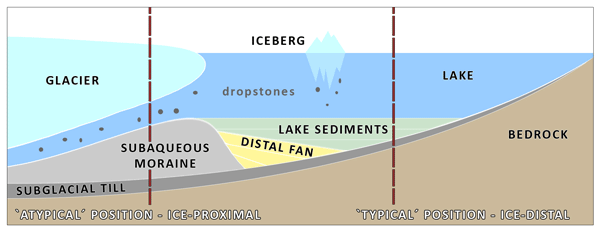
The research focuses on overdeepenings in the former Rhine glacier domain north from Lake Constance in southwestern Germany. We expand the current knowledge of the Quaternary stratigraphy of the Lake Constance Amphitheatre by revealing two new drill cores, both reaching the quaternary base of two different overdeepened basins. As a result, we show that our investigated sediment successions are quite atypical for alpine foreland overdeepenings.
Jonas Pyschik, Veronica Cordero, Jakob Wilk, Veronika Lechner, Emanuel Thoenes, Stefan Achleitner, Bernhard Kohl, Markus Weiler, and Stefan Hergarten
EGUsphere, https://doi.org/10.5194/egusphere-2026-4469, https://doi.org/10.5194/egusphere-2026-4469, 2026
Short summary
Short summary
When it rains, much of the water reaching a stream has been stored in the soil for a long time, but why was unclear. We sprinkled two forested slopes with labelled water and used electrical imaging to watch it move. Only a small share moved quickly to the slope base; most of the outflow was older water pushed out by the pressure of the new rain. Much of the new water stayed in the topsoil and was released weeks later, affecting how soils carry nutrients and pollutants to streams.
William McCreary, Venera May, Daniela Mueller, Elena Serra, and Frank Preusser
E&G Quaternary Sci. J., 75, 131–162, https://doi.org/10.5194/egqsj-75-131-2026, https://doi.org/10.5194/egqsj-75-131-2026, 2026
Short summary
Short summary
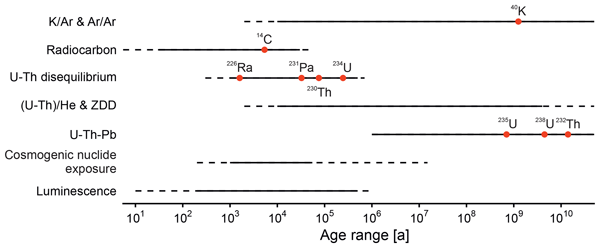
This paper provides a review of numeric dating methods for the Quaternary, which is unique in its focus on applications of the methods to volcanism. The methods included are K/Ar and Ar/Ar, radiocarbon, uranium series, cosmogenic nuclide exposure, and luminescence dating, each with a section on extra concerns for application to volcanic products. The paper’s objective is to serve as a resource for researchers using these methods or using dates produced by these methods for further research.
Stefan Hergarten and Menno Fraters
EGUsphere, https://doi.org/10.5194/egusphere-2026-2060, https://doi.org/10.5194/egusphere-2026-2060, 2026
Short summary
Short summary
Coupled models of geodynamics and landform evolution are receiving growing interest. Such coupled models, however, typically involve strong horizontal movement and deformation of the crust, which likely cause problems if landform evolution is simulated on a fixed grid. These problems are discussed in this note and potential solutions are presented.
Melanie Stammler, Jan Blöthe, Diego Cusicanqui, Simon Ebert, Rainer Bell, Xavier Bodin, and Lothar Schrott
The Cryosphere, 20, 2257–2277, https://doi.org/10.5194/tc-20-2257-2026, https://doi.org/10.5194/tc-20-2257-2026, 2026
Short summary
Short summary
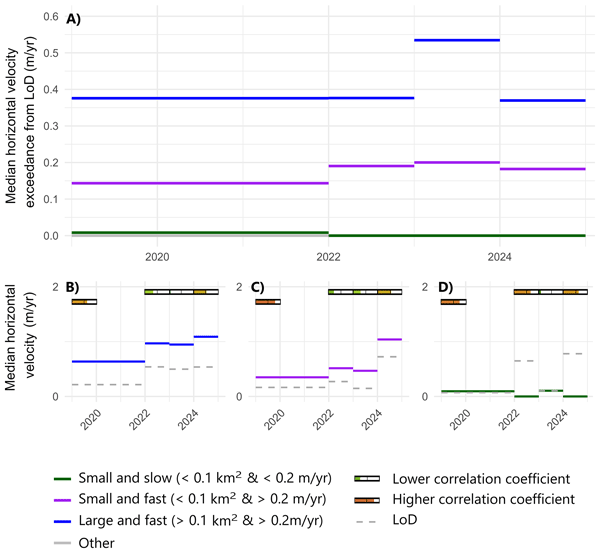
Dry Andean (debris-covered) glaciers and rock glaciers are essential to river runoff by contributing meltwaters in this extremely arid area. We quantify surface lowering for 19 glaciers and 3 debris-covered glaciers, and unchanged velocities for 47 rock glaciers in a ground-truthed and Pléiades satellite imagery based integrative glacier-permafrost study on catchment-scale for 2019-2025. For this period, our findings indicate glacial decline next to permafrost stability.
Stefan Hergarten
Geosci. Model Dev., 19, 2903–2917, https://doi.org/10.5194/gmd-19-2903-2026, https://doi.org/10.5194/gmd-19-2903-2026, 2026
Short summary
Short summary
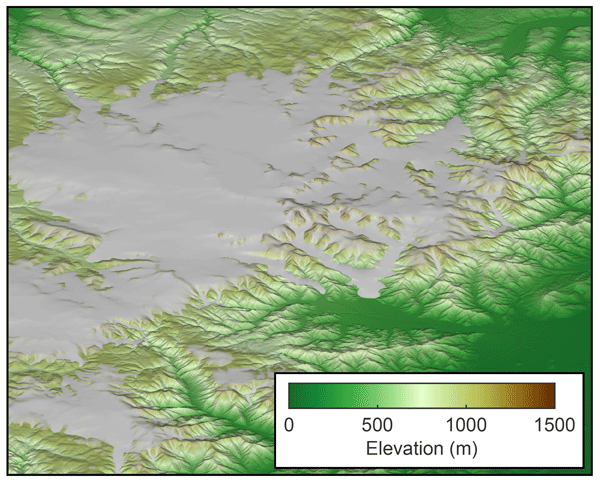
Numerical glacier and ice-sheet models have been widely used in the context of climate change and landform evolution. While simulations of ice flow were numerically expensive for a long time, their performance has recently been boosted to an unprecedented level by machine learning techniques. This paper aims at keeping classical numerics competitive by introducing a novel numerical scheme, which allows for simulations at spatial resolutions of 25 m or even finer on standard desktop PCs.
Anna Wirbel, Felix Oesterle, Guillaume Chambon, Thierry Faug, Johan Gaume, Julia Glaus, Stefan Hergarten, Dieter Issler, Yoichi Ito, Marco Martini, Martin Mergili, Matthias Rauter, Jörg Robl, Giorgio Rosatti, Kae Tsunematsu, Christian Tollinger, Hervé Vicari, Daniel Zugliani, and Jan-Thomas Fischer
EGUsphere, https://doi.org/10.5194/egusphere-2025-6053, https://doi.org/10.5194/egusphere-2025-6053, 2026
This preprint is open for discussion and under review for Geoscientific Model Development (GMD).
Short summary
Short summary
We present the first extended intercomparison of snow avalanche flow simulation tools. In this pilot-study, simulation results of mainly thickness/depth-integrated shallow flow models are compared for three simple test cases representative of standard applications. This analysis serves as a first quantitative assessment of the uncertainty introduced by the different implementation workflows (e.g., numerical schemes, ad-hoc treatments, geo-data handling, curvature treatment, etc.).
Annette Sophie Bösmeier and Jan Henrik Blöthe
E&G Quaternary Sci. J., 74, 301–324, https://doi.org/10.5194/egqsj-74-301-2025, https://doi.org/10.5194/egqsj-74-301-2025, 2025
Short summary
Short summary
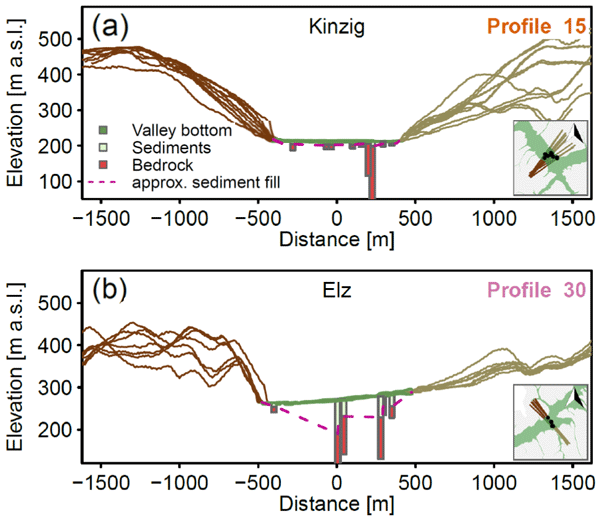
We estimated the thickness, spatial distribution, and volumes of alluvial valley fills in the southwestern Black Forest utilizing an extensive borehole database to compile local valley cross sections and model sediment depth above bedrock. Our results reveal considerable spatial heterogeneity and underscore the importance of tectonic boundary conditions on the valley infill in addition to further geologic, hydrologic, and climatologic conditions and processes interacting with fluvial dynamics.
Madhurima Marik, Elena Serra, Gilles Rixhon, and Frank Preusser
E&G Quaternary Sci. J., 74, 169–192, https://doi.org/10.5194/egqsj-74-169-2025, https://doi.org/10.5194/egqsj-74-169-2025, 2025
Short summary
Short summary
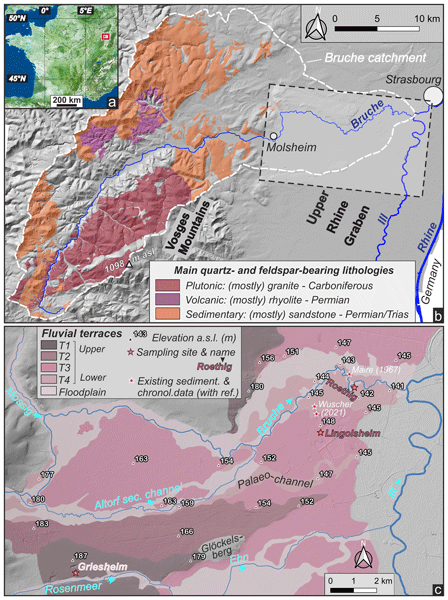
This study examines the evolution of the lower Bruche River valley in north-eastern France through its fluvial terraces, reflecting past river dynamics and environmental changes. Terrace formations are dated using luminescence to ~ 12–14 ka, ~ 27–35 ka, and at least 200 ka. Methodological improvements over conventional luminescence dating techniques are also discussed and refined in this study.
Theresa Blume, Peter Chifflard, Stefan Achleitner, Andreas Hartmann, Stefan Hergarten, Luisa Hopp, Bernhard Kohl, Florian Leese, Ilja van Meerveld, Christian Reinhardt-Imjela, and Markus Weiler
EGUsphere, https://doi.org/10.5194/egusphere-2025-4424, https://doi.org/10.5194/egusphere-2025-4424, 2025
Short summary
Short summary
Subsurface stormflow (SSF) is one of the least studied and therefore least understood runoff generation processes because detecting and quantifying SSF is extremely challenging. We present an ongoing concerted experimental effort to systematically investigate SSF across four catchments using a variety of methods covering different spatial scales. Centerpiece of this effort is the construction of 12 large trenches to capture and monitor SSF.
Jörg Robl, Fabian Dremel, Kurt Stüwe, Stefan Hergarten, Christoph von Hagke, and Derek Fabel
Earth Surf. Dynam., 13, 745–770, https://doi.org/10.5194/esurf-13-745-2025, https://doi.org/10.5194/esurf-13-745-2025, 2025
Short summary
Short summary
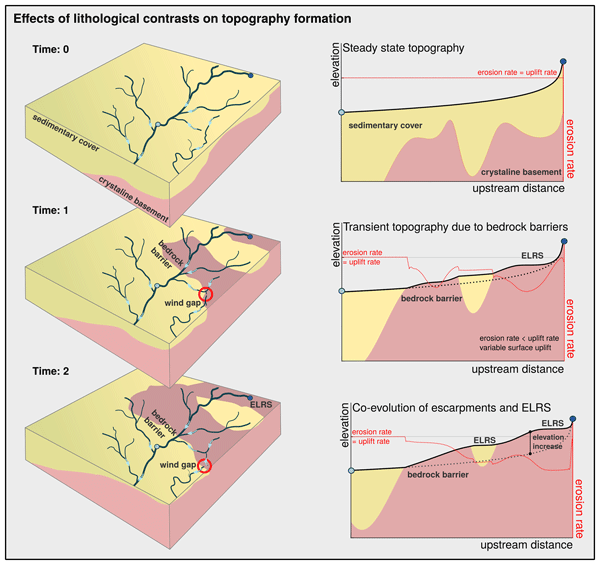
The Bohemian Massif is one of several low mountain ranges in Europe that rises more than 1 km above the surrounding lowlands. Landscape characteristics indicate relief rejuvenation due to recent surface uplift. To constrain the pace of relief formation, we determined erosion rates of 20 catchments that range from 22 to 51 m Myr-1. Correlating these rates with topographic properties reveals that contrasts in bedrock erodibility represent a critical control of landscape evolution.
Felix Martin Hofmann and Frank Preusser
E&G Quaternary Sci. J., 74, 1–35, https://doi.org/10.5194/egqsj-74-1-2025, https://doi.org/10.5194/egqsj-74-1-2025, 2025
Short summary
Short summary
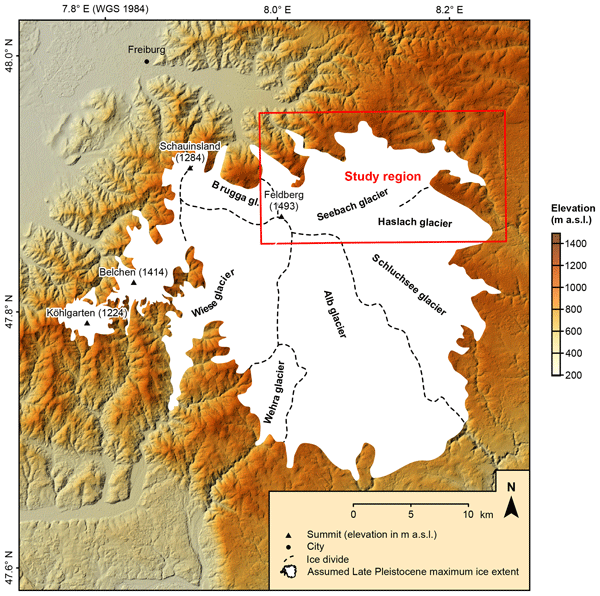
Previous reconstructions conclude that the southern Black Forest, south-west Germany, temporarily hosted four ice caps during the Late Pleistocene (129 000–11 700 years before present). This work reviews existing studies on glacial landforms north-east of its highest summit, Feldberg (1493 m above sea level), in the light of new observations. Whilst this study largely confirms previous work, we reject and newly describe several glacial landforms.
Stefan Hergarten
Earth Surf. Dynam., 12, 1315–1327, https://doi.org/10.5194/esurf-12-1315-2024, https://doi.org/10.5194/esurf-12-1315-2024, 2024
Short summary
Short summary
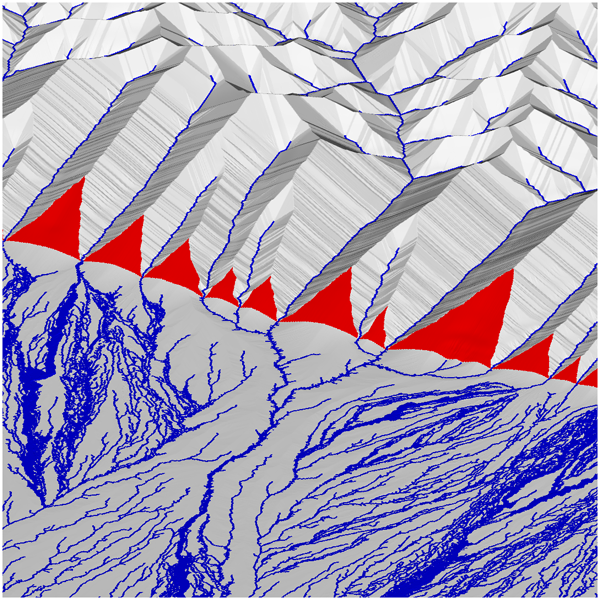
Faceted topographies are impressive footprints of active tectonics in geomorphology. This paper investigates the evolution of faceted topographies at normal faults and their interaction with a river network theoretically and numerically. As a main result beyond several relations for the geometry of facets, the horizontal displacement associated with normal faults is crucial for the dissection of initially polygonal facets into triangular facets bounded by almost parallel rivers.
Alexander Fülling, Hans Rudolf Graf, Felix Martin Hofmann, Daniela Mueller, and Frank Preusser
E&G Quaternary Sci. J., 73, 203–216, https://doi.org/10.5194/egqsj-73-203-2024, https://doi.org/10.5194/egqsj-73-203-2024, 2024
Short summary
Short summary
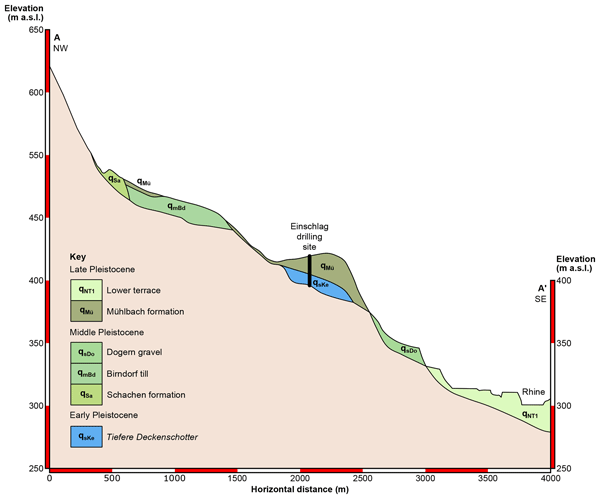
The Mühlbach series has been given as evidence for a Late Pliocene/Early Pleistocene Aare–Rhine fluvial system in northern Switzerland and southwest Germany. We show that these deposits represent a variety of different units. At the type location, luminescence dating indicates an age of 55 ka, and we interpret the deposits as slope reworking. Beside methodological implications, our studies recommend caution regarding the interpretation of stratigraphic units for which limited data are available.
Stefan Hergarten
Earth Surf. Dynam., 12, 1193–1203, https://doi.org/10.5194/esurf-12-1193-2024, https://doi.org/10.5194/esurf-12-1193-2024, 2024
Short summary
Short summary
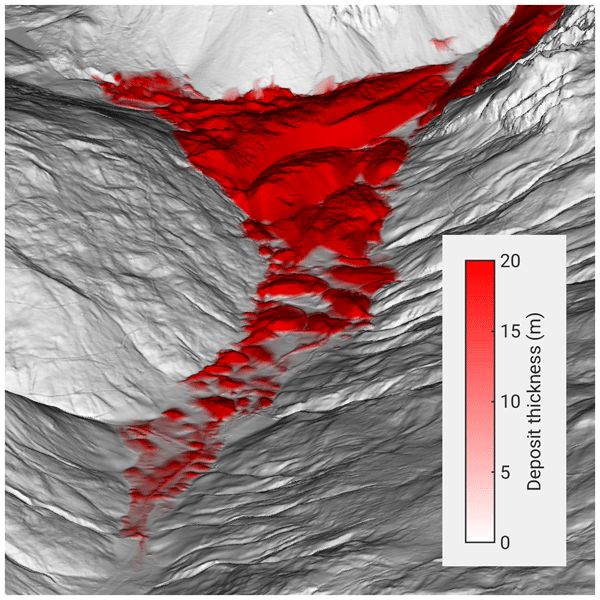
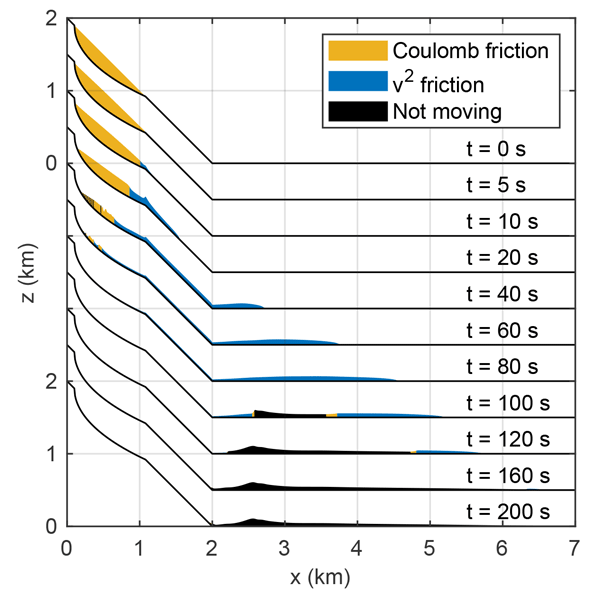
Toma hills are relatively isolated hills found in the deposits of rock avalanches, and their origin is still enigmatic. This paper presents the results of numerical simulations based on a modified version of a friction law that was originally introduced for snow avalanches. The model produces more or less isolated hills (which look much like toma hills) on the valley floor. The results provide, perhaps, the first explanation of the occurrence of toma hills based on a numerical model.
Bennet Schuster, Lukas Gegg, Sebastian Schaller, Marius W. Buechi, David C. Tanner, Ulrike Wielandt-Schuster, Flavio S. Anselmetti, and Frank Preusser
Sci. Dril., 33, 191–206, https://doi.org/10.5194/sd-33-191-2024, https://doi.org/10.5194/sd-33-191-2024, 2024
Short summary
Short summary
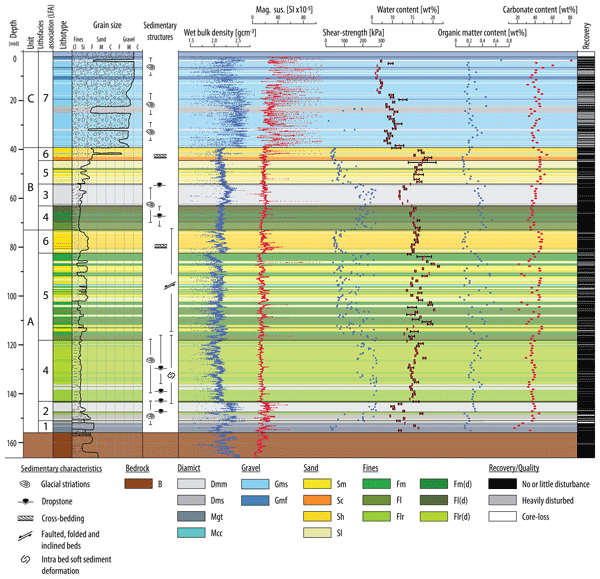
The Tannwald Basin, explored by drilling and formed by repeated advances of the Rhine Glacier, reveals key geological insights. Ice-contact sediments and evidence of deformation highlight gravitational and glaciotectonic processes. ICDP DOVE 5068_1_C core data define lithofacies associations, reflecting basin infill cycles, marking at least three distinct glacial advances. Integrating these findings aids understanding the broader glacial evolution of the Lake Constance amphitheater.
Felix Martin Hofmann, Claire Rambeau, Lukas Gegg, Melanie Schulz, Martin Steiner, Alexander Fülling, Laëtitia Léanni, Frank Preusser, and ASTER Team
Geochronology, 6, 147–174, https://doi.org/10.5194/gchron-6-147-2024, https://doi.org/10.5194/gchron-6-147-2024, 2024
Short summary
Short summary
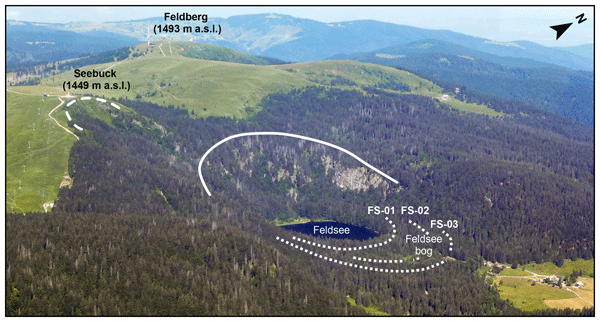
We determined 10Be concentrations in moraine boulder surfaces in the southern Black Forest, SW Germany. We applied three independent dating methods to younger lake sediments. With the aid of independent age datasets, we calculated the growth of 10Be concentrations in moraine boulder surfaces.
Stefan Hergarten
Geosci. Model Dev., 17, 781–794, https://doi.org/10.5194/gmd-17-781-2024, https://doi.org/10.5194/gmd-17-781-2024, 2024
Short summary
Short summary
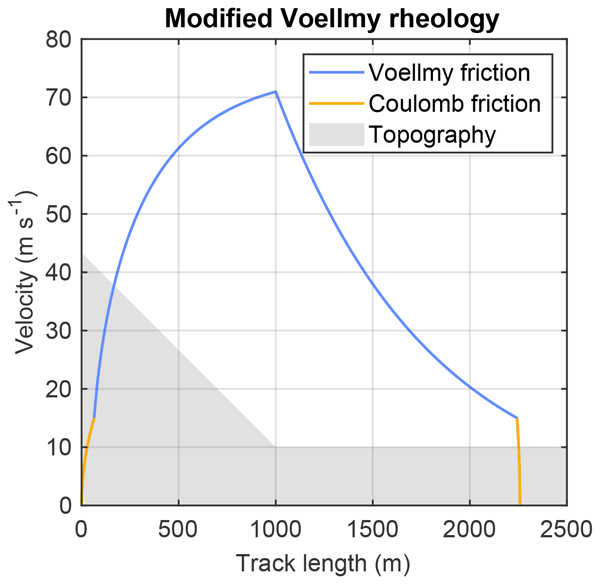
The Voellmy rheology has been widely used for simulating snow and rock avalanches. Recently, a modified version of this rheology was proposed, which turned out to be able to predict the observed long runout of large rock avalanches theoretically. The software MinVoellmy presented here is the first numerical implementation of the modified rheology. It consists of MATLAB and Python classes, where simplicity and parsimony were the design goals.
Stefan Hergarten
Earth Surf. Dynam., 12, 219–229, https://doi.org/10.5194/esurf-12-219-2024, https://doi.org/10.5194/esurf-12-219-2024, 2024
Short summary
Short summary
Large landslides turn into an avalanche-like mode of flow at high velocities, which allows for a much longer runout than predicted for a sliding solid body. In this study, the Voellmy rheology widely used in models for hazard assessment is reinterpreted and extended. The new approach predicts the increase in runout length with volume observed in nature quite well and may thus be a major step towards a more consistent modeling of rock avalanches and improved hazard assessment.
Stefan Hergarten
Nat. Hazards Earth Syst. Sci., 23, 3051–3063, https://doi.org/10.5194/nhess-23-3051-2023, https://doi.org/10.5194/nhess-23-3051-2023, 2023
Short summary
Short summary
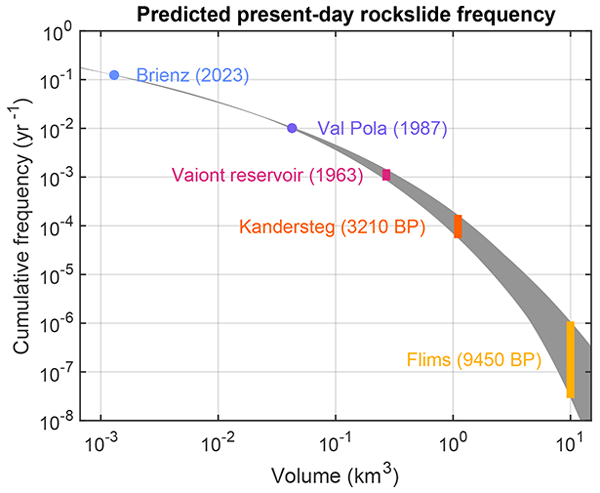
Rockslides are a major hazard in mountainous regions. In formerly glaciated regions, the disposition mainly arises from oversteepened topography and decreases through time. However, little is known about this decrease and thus about the present-day hazard of huge, potentially catastrophic rockslides. This paper presents a new theoretical framework that explains the decrease in maximum rockslide size through time and predicts the present-day frequency of large rockslides for the European Alps.
Jannick Strüven and Stefan Hergarten
Hydrol. Earth Syst. Sci., 27, 3041–3058, https://doi.org/10.5194/hess-27-3041-2023, https://doi.org/10.5194/hess-27-3041-2023, 2023
Short summary
Short summary
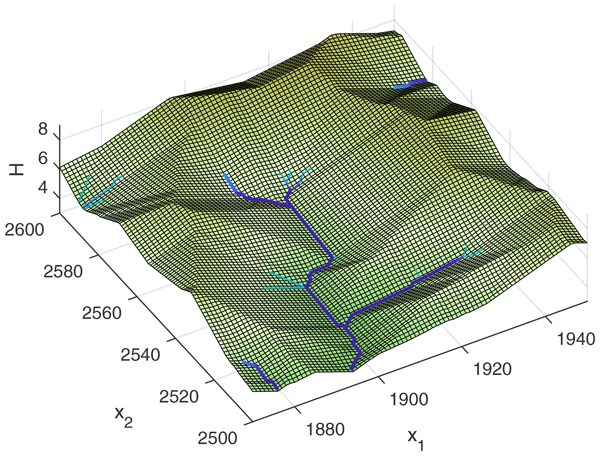
This study uses dendritic flow patterns to analyze the recession behavior of aquifer springs. The results show that the long-term recession becomes slower for large catchments. After a short recharge event, however, the short-term behavior differs strongly from the exponential recession that would be expected from a linear reservoir. The exponential component still accounts for more than 80 % of the total discharge, much more than typically assumed for karst aquifers.
Stefan Hergarten and Alexa Pietrek
Earth Surf. Dynam., 11, 741–755, https://doi.org/10.5194/esurf-11-741-2023, https://doi.org/10.5194/esurf-11-741-2023, 2023
Short summary
Short summary
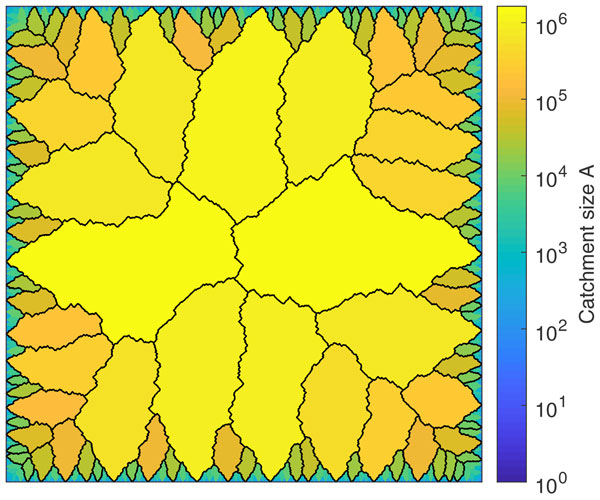
The transition from hillslopes to channelized flow is typically attributed to a threshold catchment size in landform evolution models. Here we propose an alternative concept directly based on topography. Using this concept, channels and hillslopes self-organize, whereby the catchment size of the channel heads varies over some range. Our numerical results suggest that this concept works better than the established idea of a strict threshold catchment size.
Johannes Buckel, Jan Mudler, Rainer Gardeweg, Christian Hauck, Christin Hilbich, Regula Frauenfelder, Christof Kneisel, Sebastian Buchelt, Jan Henrik Blöthe, Andreas Hördt, and Matthias Bücker
The Cryosphere, 17, 2919–2940, https://doi.org/10.5194/tc-17-2919-2023, https://doi.org/10.5194/tc-17-2919-2023, 2023
Short summary
Short summary
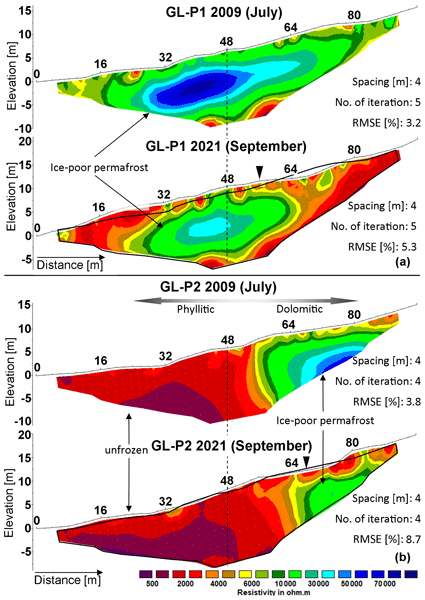
This study reveals permafrost degradation by repeating old geophysical measurements at three Alpine sites. The compared data indicate that ice-poor permafrost is highly affected by temperature warming. The melting of ice-rich permafrost could not be identified. However, complex geomorphic processes are responsible for this rather than external temperature change. We suspect permafrost degradation here as well. In addition, we introduce a new current injection method for data acquisition.
Thomas O. Hoffmann, Yannik Baulig, Stefan Vollmer, Jan H. Blöthe, Karl Auerswald, and Peter Fiener
Earth Surf. Dynam., 11, 287–303, https://doi.org/10.5194/esurf-11-287-2023, https://doi.org/10.5194/esurf-11-287-2023, 2023
Short summary
Short summary
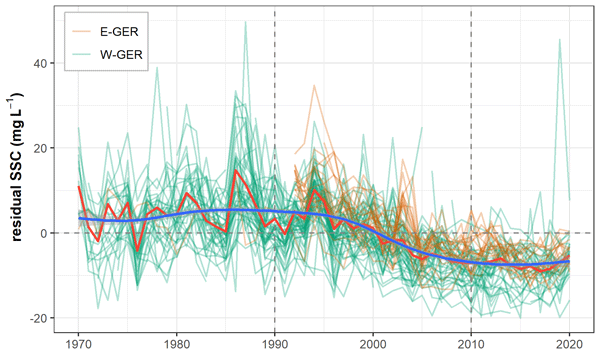
We analyzed more than 440 000 measurements from suspended sediment monitoring to show that suspended sediment concentration (SSC) in large rivers in Germany strongly declined by 50 % between 1990 and 2010. We argue that SSC is approaching the natural base level that was reached during the mid-Holocene. There is no simple explanation for this decline, but increased sediment retention in upstream headwaters is presumably the major reason for declining SSC in the large river channels studied.

Moritz Liebl, Jörg Robl, Stefan Hergarten, David Lundbek Egholm, and Kurt Stüwe
Geosci. Model Dev., 16, 1315–1343, https://doi.org/10.5194/gmd-16-1315-2023, https://doi.org/10.5194/gmd-16-1315-2023, 2023
Short summary
Short summary
In this study, we benchmark a topography-based model for glacier erosion (OpenLEM) with a well-established process-based model (iSOSIA). Our experiments show that large-scale erosion patterns and particularly the transformation of valley length geometry from fluvial to glacial conditions are very similar in both models. This finding enables the application of OpenLEM to study the influence of climate and tectonics on glaciated mountains with reasonable computational effort on standard PCs.
Lea Schwahn, Tabea Schulze, Alexander Fülling, Christian Zeeden, Frank Preusser, and Tobias Sprafke
E&G Quaternary Sci. J., 72, 1–21, https://doi.org/10.5194/egqsj-72-1-2023, https://doi.org/10.5194/egqsj-72-1-2023, 2023
Short summary
Short summary
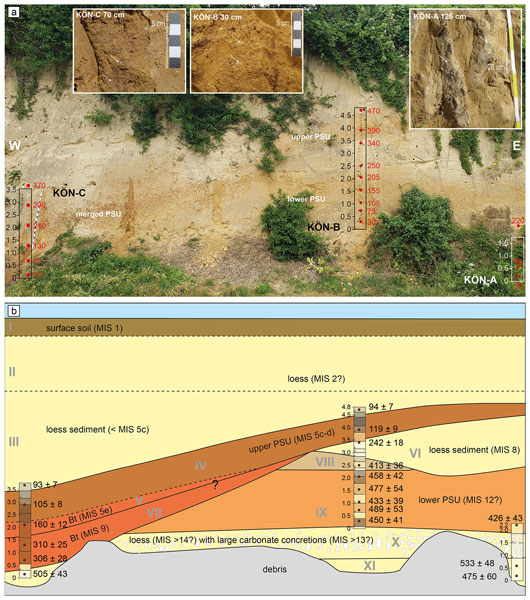
The loess sequence of Köndringen, Upper Rhine Graben, comprises several glacial–interglacial cycles. It has been investigated using a multi-method approach including the measurement of colour, grain size, organic matter, and carbonate content. The analyses reveal that the sequence comprises several fossil soils and layers of reworked soil material. According to luminescence dating, it reaches back more than 500 000 years.
Lukas Gegg and Frank Preusser
E&G Quaternary Sci. J., 72, 23–36, https://doi.org/10.5194/egqsj-72-23-2023, https://doi.org/10.5194/egqsj-72-23-2023, 2023
Short summary
Short summary
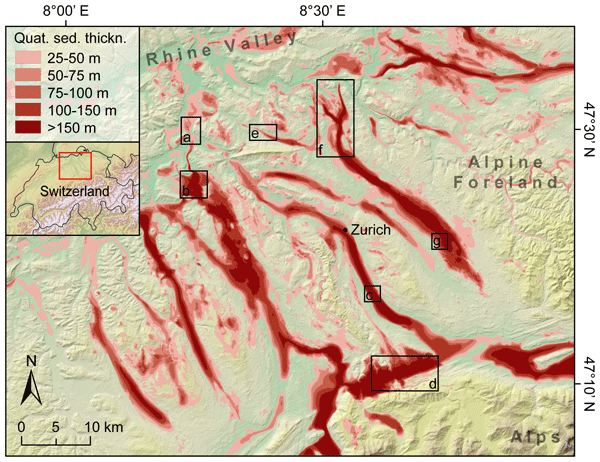
Erosion processes below glacier ice have carved large and deep basins in the landscapes surrounding mountain ranges as well as polar regions. With our comparison, we show that these two groups of basins are very similar in their shapes and sizes. However, open questions still remain especially regarding the sediments that later fill up these basins. We aim to stimulate future research and promote exchange between researchers working around the Alps and the northern central European lowlands.
Flavio S. Anselmetti, Milos Bavec, Christian Crouzet, Markus Fiebig, Gerald Gabriel, Frank Preusser, Cesare Ravazzi, and DOVE scientific team
Sci. Dril., 31, 51–70, https://doi.org/10.5194/sd-31-51-2022, https://doi.org/10.5194/sd-31-51-2022, 2022
Short summary
Short summary
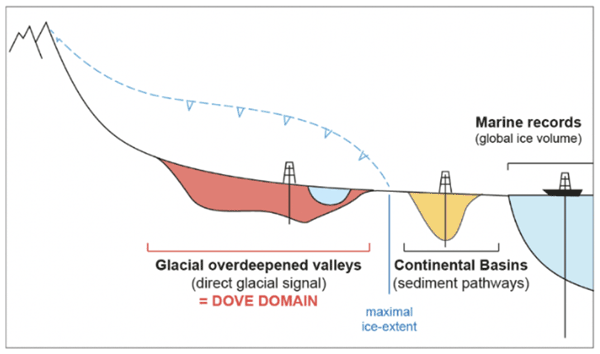
Previous glaciations eroded below the ice deep valleys in the Alpine foreland, which, with their sedimentary fillings, witness the timing and extent of these glacial advance–retreat cycles. Drilling such sedimentary sequences will thus provide well-needed evidence in order to reconstruct the (a)synchronicity of past ice advances in a trans-Alpine perspective. Eventually these data will document how the Alpine foreland was shaped and how the paleoclimate patterns varied along and across the Alps.
Mubarak Abdulkarim, Stoil Chapkanski, Damien Ertlen, Haider Mahmood, Edward Obioha, Frank Preusser, Claire Rambeau, Ferréol Salomon, Marco Schiemann, and Laurent Schmitt
E&G Quaternary Sci. J., 71, 191–212, https://doi.org/10.5194/egqsj-71-191-2022, https://doi.org/10.5194/egqsj-71-191-2022, 2022
Short summary
Short summary
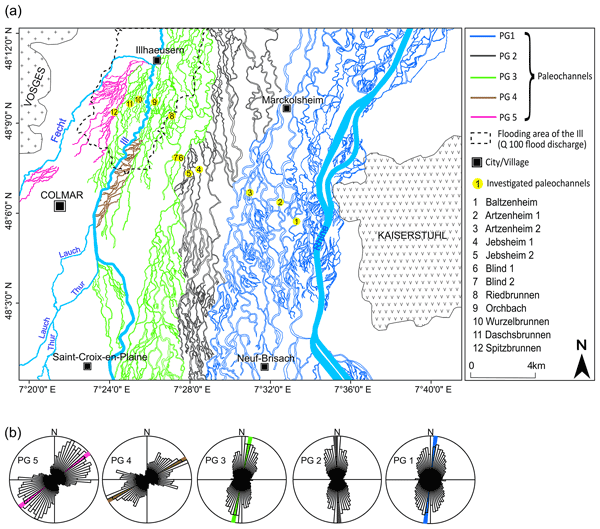
We used a combination of remote sensing, field investigations, and laboratory analysis to map and characterize abandoned river channels within the French Upper Rhine alluvial plain. Our results show five major paleochannel groups with significant differences in their pattern, morphological characteristics, and sediment filling. The formation of these paleochannel groups is attributed to significant changes in environmental processes in the area during the last ~ 11 700 years.
Tabea Schulze, Lea Schwahn, Alexander Fülling, Christian Zeeden, Frank Preusser, and Tobias Sprafke
E&G Quaternary Sci. J., 71, 145–162, https://doi.org/10.5194/egqsj-71-145-2022, https://doi.org/10.5194/egqsj-71-145-2022, 2022
Short summary
Short summary
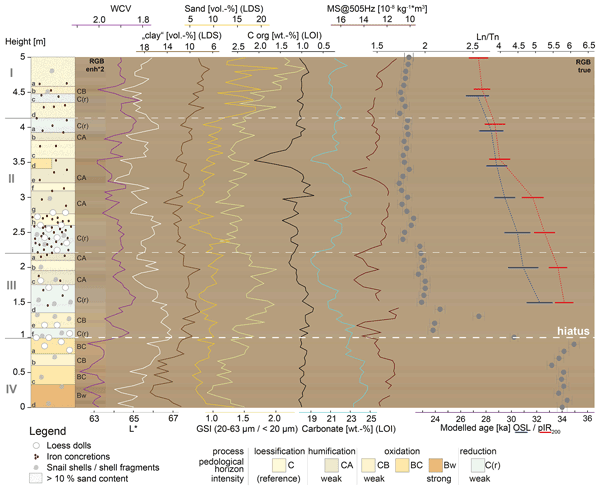
A loess sequence in SW Germany was investigated using a high-resolution multi-method approach. It dates to 34–27 ka and comprises layers of initial soil formation. Drier conditions and a different atmospheric circulation pattern during the time of deposition are expected as the soil layers are less strongly developed compared to similar horizons further north. Dust accumulation predates the last advance of Alpine glaciers, and no loess deposition is recorded for the time of maximum ice extent.
Stefan Hergarten
Earth Surf. Dynam., 10, 671–686, https://doi.org/10.5194/esurf-10-671-2022, https://doi.org/10.5194/esurf-10-671-2022, 2022
Short summary
Short summary
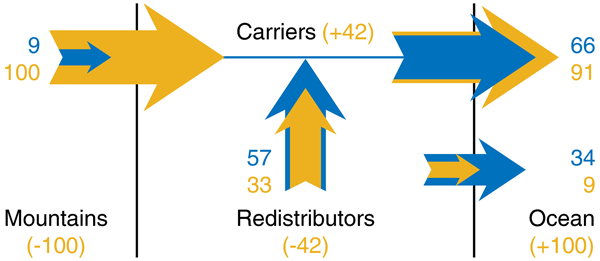
Many studies on modeling landform evolution have focused on mountain ranges, while large parts of Earth's surface are quite flat and alluvial plains have been preferred locations for human settlements. Conducting large-scale simulations of fluvial erosion and sediment transport, this study reveals that rivers in a tectonically inactive foreland are much more dynamic than rivers in a mountain range; the local redistribution of deposits in the foreland is the main driver of the dynamics.
Stefan Hergarten and Jörg Robl
Geosci. Model Dev., 15, 2063–2084, https://doi.org/10.5194/gmd-15-2063-2022, https://doi.org/10.5194/gmd-15-2063-2022, 2022
Short summary
Short summary
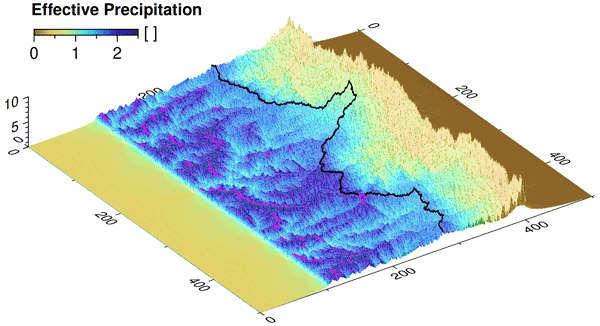
The influence of climate on landform evolution has attracted great interest over the past decades. This paper presents a simple model for simulating the influence of topography on precipitation and the decrease in precipitation over large continental areas. The approach can be included in numerical models of large-scale landform evolution and causes only a moderate increase in the numerical complexity. It opens a door to investigating feedbacks between climate and landform evolution.
Frank Preusser, Markus Fuchs, and Christine Thiel
DEUQUA Spec. Pub., 3, 1–3, https://doi.org/10.5194/deuquasp-3-1-2021, https://doi.org/10.5194/deuquasp-3-1-2021, 2021
Frank Preusser, Markus Fuchs, and Christine Thiel
E&G Quaternary Sci. J., 70, 201–203, https://doi.org/10.5194/egqsj-70-201-2021, https://doi.org/10.5194/egqsj-70-201-2021, 2021
Cited articles
Aarhus GeoSoftware: RES2DINVx64, https://www.aarhusgeosoftware.dk/download-resxdinv (last access: 23 January 2024), 2022.
Abdulkarim, M., Grema, H. M., Adamu, I. H., Mueller, D., Schulz, M., Ulbrich, M., Miocic, J. M., and Preusser, F.: Effect of using different chemical dispersing agents in grain size analyses of fluvial sediments via laser diffraction spectrometry, Methods and Protocols, 4, 44, https://doi.org/10.3390/mps4030044, 2021.
Abdulkarim, M., Schmitt, L., Fülling, A., Rambeau, C., Ertlen, D., Mueller, D., Chapkanski, S., and Preusser, F.: Late glacial to Holocene fluvial dynamics in the Upper Rhine alluvial plain, France, Quaternary Res., 121, 109–131, https://doi.org/10.1017/qua.2024.22, 2024.
Archie, G. E.: The Electrical Resistivity Log as an Aid in Determining Some Reservoir Characteristics, Transactions of the AIME, 146, 54–62, https://doi.org/10.2118/942054-G, 1941.
Barth, L.: Die Geschichte der Flößerei im Flußgebiet der oberen Kinzig – ein Beitrag zur Geschichte der Schwarzwälder Schifferschaften, dissertation, urn:nbn:de:bvb:12-bsb11539101-5, München, Univ., https://www.deutsche-digitale-bibliothek.de/item/BPFN57JJO5PBYZ5JY5AWZY3JFUJM6PDK (last access: 21 July 2023), 1895.
Belletti, B., de Leaniz, C. G., Jones, J., Bizzi, S., Börger, L., Segura, G., Castelletti, A., van de Bund, W., Aarestrup, K., Barry, J., Belka, K., Berkhuysen, A., Birnie-Gauvin, K., Bussettini, M., Carolli, M., Consuegra, S., Dopico, E., Feierfeil, T., Fernández, S., Garrido, P. F., Garcia-Vazquez, E., Garrido, S., Giannico, G., Gough, P., Jepsen, N., Jones, P. E., Kemp, P., Kerr, J., King, J., Łapińska, M., Lázaro, G., Lucas, M. C., Marcello, L., Martin, P., McGinnity, P., O'Hanley, J., del Amo, R. O., Parasiewicz, P., Pusch, M., Rincon, G., Rodriguez, C., Royte, J., Schneider, C. T., Tummers, J. S., Vallesi, S., Vowles, A., Verspoor, E., Wanningen, H., Wantzen, K. M., Wildman, L., and Zalewski, M.: More than one million barriers fragment Europe's rivers, Nature, 588, 436–441, https://doi.org/10.1038/s41586-020-3005-2, 2020.
Blanchy, G., Saneiyan, S., Boyd, J., McLachlan, P., and Binley, A.: ResIPy, an intuitive open source software for complex geoelectrical inversion/modeling, Computers and Geosciences, 137, 104423, https://doi.org/10.1016/j.cageo.2020.104423, 2020.
Bliedtner, M. and Martin, M.: Erz- und Minerallagerstätten des Mittleren Schwarzwaldes, dissertation, idn=880715510, https://d-nb.info/880715510 (last access: 21 August 2023), 1986.
Blott, S. J. and Pye, K.: Gradistat: A grain size distribution and statistics package for the analysis of unconsolidated sediments, Earth Surf. Proc. Land., 26, 1237–1248, https://doi.org/10.1002/esp.261, 2001.
Bork, H.-R.: Landschaftsentwicklung in Mitteleuropa: Wirkungen des Menschen auf Landschaften, Klett, ISBN 3-623-00849-4, 1998.
Bösmeier, A. S., Himmelsbach, I., and Seeger, S.: Reliability of flood marks and practical relevance for flood hazard assessment in southwestern Germany, Nat. Hazards Earth Syst. Sci., 22, 2963–2979, https://doi.org/10.5194/nhess-22-2963-2022, 2022.
Braun, G.: Beiträge zur Hydrographie des Grossherzogthums Baden – Karten zum Fünften Heft: Der Binnenflussbau im Grossherzogthum Baden, URN: urn:nbn:de:bvb:12-bsb11485971-2, 1887.
Bronk Ramsey, C.: Bayesian analysis of radiocarbon dates, Radiocarbon, 51, 337–360, https://doi.org/10.1017/s0033822200033865, 2009.
Broothaerts, N., Notebaert, B., Verstraeten, G., Kasse, C., Bohncke, S., and Vandenberghe, J.: Non-uniform and diachronous Holocene floodplain evolution: A case study from the Dijle catchment, Belgium, J. Quaternary Sci., 29, 351–360, https://doi.org/10.1002/jqs.2709, 2014.
Brown, A. G., Toms, P., Carey, C., and Rhodes, E.: Geomorphology of the Anthropocene: Time-transgressive discontinuities of human-induced alluviation, Anthropocene, 1, 3–13, https://doi.org/10.1016/j.ancene.2013.06.002, 2013.
Brown, A. G., Lespez, L., Sear, D. A., Macaire, J. J., Houben, P., Klimek, K., Brazier, R. E., Oost, K. V., and Pears, B.: Natural vs anthropogenic streams in Europe: History, ecology and implications for restoration, river-rewilding and riverine ecosystem services, Earth-Sci. Rev., 180, 185–205, https://doi.org/10.1016/j.earscirev.2018.02.001, 2018.
Bund/Länder-Arbeitsgemenschaft Bodemschutz (LABO): Hintergrundwerte für anorganische und organische Stoffe in Böden - Anhang: Tabellen der Hintergrundwerte für Böden, https://www.labo-deutschland.de/documents/LABO_HGW_Anhang_02_2017.pdf (last access: 30 September 2024), 2017.
Dambeck, R. and Thiemeyer, H.: Fluvial history of the northern Upper Rhine River (southwestern Germany) during the Lateglacial and Holocene times, Quatern. Int., 93–94, 53–63, https://doi.org/10.1016/S1040-6182(02)00006-X, 2002.
De Moor, J. J. W., Kasse, C., Van Balen, R., Vandenberghe, J., and Wallinga, J.: Human and climate impact on catchment development during the Holocene – Geul River, the Netherlands, Geomorphology, 98, 316–339, https://doi.org/10.1016/j.geomorph.2006.12.033, 2008.
Dix, A., Burggraaff, P., Kleefeld, K.-D., Küster, H., Schirmer, W., and Zimmermann, A.: Human impact and vegetation change, Erdkunde, 59, https://doi.org/10.3112/erdkunde.2005.03.06, 2005.
Dotterweich, M.: The history of soil erosion and fluvial deposits in small catchments of central Europe: Deciphering the long-term interaction between humans and the environment – A review, Geomorphology, 101, 192–208, https://doi.org/10.1016/j.geomorph.2008.05.023, 2008.
Elznicová, J., Kiss, T., von Suchodoletz, H., Bartyik, T., Sipos, G., Lenďáková, Z., Fačevicová, K., Pavlů, I., Kovárník, J., and Matys Grygar, T.: Was the termination of the Jizera River meandering during the Late Holocene caused by anthropogenic or climatic forcing?, Earth Surf. Proc. Land., 48, 669–686, https://doi.org/10.1002/esp.5509, 2023.
Erkens, G., Dambeck, R., Volleberg, K. P., Bouman, M. T., Bos, J. A., Cohen, K. M., Wallinga, J., and Hoek, W. Z.: Fluvial terrace formation in the northern Upper Rhine Graben during the last 20 000 years as a result of allogenic controls and autogenic evolution, Geomorphology, 103, 476–495, https://doi.org/10.1016/j.geomorph.2008.07.021, 2009.
Euzen, C., Chabaux, F., Rixhon, G., Preusser, F., Eyrolle, F., Chardon, V., Zander, A. M., Badariotti, D., and Schmitt, L.: Multi-method geochronological approach to reconstruct post-1800 floodplain sedimentation in the upper Rhine plain, France, Quat. Geochronol., 83, https://doi.org/10.1016/j.quageo.2024.101561, 2024.
Foellmer, A.: Schwermetalleinträge durch den Schwarzwälder Bergbau in die südliche Oberrheinebene zwischen Möhlin und Sulzbach, in: Freiburger Geowissenschaftliche Beiträge, Freiburg Geologisches Institut der Albert-Ludwigs-Universität Freiburg, ISSN 0936-6571, 1999.
Friedmann, A.: Die spät- und postglaziale Landschafts- und Vegetationsgeschichte des südlichen Oberrheintieflands und Schwarzwalds, Freiburger geographische Hefte, H. 62, https://portal.dnb.de/opac.htm?method=simpleSearch&cqlMode=true&query=idn=967481791 (last access: 16 September 2024), 2000.
Friedmann, A.: Holocene vegetation, land use and settlement in the Black Forest, Berichte Geographie und Landeskunde, 76, 187–205, https://www.researchgate.net/publication/289274094 (last access: 13 September 2024), 2002.
Fryirs, K.: (Dis)Connectivity in catchment sediment cascades: a fresh look at the sediment delivery problem. Earth Surf. Proc. Land., 38, 30–46, https://doi.org/10.1002/esp.3242, 2013.
Fuchs, M., Fischer, M., and Reverman, R.: Colluvial and alluvial sediment archives temporally resolved by OSL dating: Implications for reconstructing soil erosion, Quat. Geochronol., 5, 269–273, https://doi.org/10.1016/j.quageo.2009.01.006, 2010.
Fuchs, M., Will, M., Kunert, E., Kreutzer, S., Fischer, M., and Reverman, R.: The temporal and spatial quantification of Holocene sediment dynamics in a meso-scale catchment in northern Bavaria, Germany, The Holocene, 21, 1093–1104, https://doi.org/10.1177/0959683611400459, 2011.
Fuchs, M. C., Kreutzer, S., Burow, C., Dietze, M., Fischer, M., Schmidt, C., and Fuchs, M.: Data processing in luminescence dating analysis: An exemplary workflow using the R package 'Luminescence', Quatern. Int., 362, 8–13, https://doi.org/10.1016/j.quaint.2014.06.034, 2015.
Galbraith, R. F., Roberts, R. G., Laslett, G. M., Yoshida, H., and Olley, J. M.: Optical dating of single and multiple grains of quartz from Jinmium rock shelter, northern Australia: Part I, experimental design and statistical models, Archaeometry, 41, 339–364, https://doi.org/10.1111/j.1475-4754.1999.tb00987.x, 1999.
Galia, T.: Legacy of human impact on geomorphic processes in mountain headwater streams in the perspective of european cultural land scapes, Geosciences (Switzerland), 11, 253, https://doi.org/10.3390/geosciences11060253, 2021.
Gegg, L. and Gegg, J.: Poor Man's Line Scan – a simple tool for the acquisition of high-resolution, undistorted drill core photos, Sci. Dril., 32, 55–59, https://doi.org/10.5194/sd-32-55-2023, 2023.
Gibling, M. R.: River Systems and the Anthropocene: A Late Pleistocene and Holocene Timeline for Human Influence, Quaternary, 1, 21, https://doi.org/10.3390/quat1030021, 2018.
Glaser, R. and Riemann, D.: A thousand-year record of temperature variations for Germany and central Europe based on documentary data, J. Quaternary Sci., 24, 437–449, https://doi.org/10.1002/jqs.1302, 2009.
Grygar, T. M., Nováková, T., Bábek, O., Elznicová, J., and Vadinová, N.: Robust assessment of moderate heavy metal contamination levels in floodplain sediments: A case study on the Jizera River, Czech Republic, Sci. Total Environ., 452–453, 233–245, https://doi.org/10.1016/j.scitotenv.2013.02.085, 2013.
Harter, H.: Schiltacher Schiffer an Wutach, Hochrhein, Bodensee und Kinzig, Die Ortenau: Zeitschrift des Historischen Vereins für Mittelbaden, 91, 31–60, 2011.
Heidelberg, U.: Topographische Karte über das Grossherzogthum Baden: nach der allgemeinen Landesvermessung des Großherzoglichen militairisch topographischen Bureaus: Eberbach 1838–1849, https://doi.org/10.11588/diglit.24019#0002, 1849.
Heiri, O., Lotter, A. F., and Lemcke, G.: Loss on ignition as a method for estimating organic and carbonate content in sediments: Reproducibility and comparability of results, J. Paleolimnol., 25, 101–110, https://doi.org/10.1023/A:1008119611481, 2001.
Himmelsbach, I.: Erfahrung-Mentalität-Management Hochwasser und Hochwasserschutz an den nicht-schiffbaren Flüssen im Ober-Elsass und am Oberrhein (1480–2007), URN: urn:nbn:de:bsz:25-opus-89694, 2012.
Hoevers, R., Broothaerts, N., and Verstraeten, G.: Holocene geoecohydrological floodplain dynamics in NE Belgium: regional drivers of local change, J. Quaternary Sci., 39, 781–800, https://doi.org/10.1002/jqs.3621, 2024.
Hoffmann, T., Erkens, G., Cohen, K. M., Houben, P., Seidel, J., and Dikau, R.: Holocene floodplain sediment storage and hillslope erosion within the Rhine catchment, Holocene, 17, 105–118, https://doi.org/10.1177/0959683607073287, 2007a.
Hoffmann, T., Lang, A., and Dikau, R.: The challenge of reconstructing human impact on large river systems, PAGES news, 15, 21–23, https://doi.org/10.22498/pages.15.1.21, 2007b.
Hoffmann, T., Lang, A., and Dikau, R.: Holocene river activity: analysing 14C-dated fluvial and colluvial sediments from Germany, Quaternary Sci. Rev., 27, 2031–2040, https://doi.org/10.1016/j.quascirev.2008.06.014, 2008.
Hoffmann, T., Erkens, G., Gerlach, R., Klostermann, J., and Lang, A.: Trends and controls of Holocene floodplain sedimentation in the Rhine catchment, Catena, 77, 96–106, https://doi.org/10.1016/j.catena.2008.09.002, 2009.
Hohensinner, S., Grupe, S., Klasz, G., and Payer, T.: Long-term deposition of fine sediments in Vienna's Danube floodplain before and after channelization, Geomorphology, 398, 108038, https://doi.org/10.1016/j.geomorph.2021.108038, 2022.
Holzhauer, I., Kadereit, A., Schukraft, G., Kromer, B., and Bubenzer, O.: Spatially heterogeneous relief changes, soil formation and floodplain aggradation under human impact – geomorphological results from the Upper Rhine Graben (SW Germany), Zeitschrift fur Geomorphologie, 61, 121–158, https://doi.org/10.1127/zfg_suppl/2017/0357, 2017.
Houben, P.: Sediment budget for five millennia of tillage in the Rockenberg catchment (Wetterau loess basin, Germany), Quaternary Sci. Rev., 52, 12–23, https://doi.org/10.1016/j.quascirev.2012.07.011, 2012.
Houben, P., Hoffmann, T., Zimmermann, A., and Dikau, R.: Land use and climatic impacts on the Rhine system (RheinLUCIFS): Quantifying sediment fluxes and human impact with available data, Catena, 66, 42–52, https://doi.org/10.1016/j.catena.2005.07.009, 2006.
IRIS Instruments: Prosys III, v. 2.11, https://www.iris-instruments.com/download.html# (last access: 30 January 2024), 2024.
Jain, M., Murray, A. S., and Botter-Jensen, L.: Optically stimulated luminescence dating: how significant is incomplete light exposure in fluvial environments? [Datation par luminescence stimulée optiquement : quelle signification en cas de blanchiment incomplet des sédiments fluviatiles?], Quaternaire, 15, 143–157, https://doi.org/10.3406/quate.2004.1762, 2004.
James, L. A.: Legacy sediment: Definitions and processes of episodically produced anthropogenic sediment, Anthropocene, 2, 16–26, https://doi.org/10.1016/j.ancene.2013.04.001, 2013.
Kalis, A. J., Merkt, J., and Wunderlich, J.: Environmental changes during the Holocene climatic optimum in central Europe - human impact and natural causes, Quaternary Sci. Rev., 22, 33–79, https://doi.org/10.1016/S0277-3791(02)00181-6, 2003.
Kanianska, R., Varga, J., Benková, N., Kizeková, M., and Jančová, L.: Floodplain soils contamination assessment using the sequential extraction method of heavy metals from past mining activities, Scientific Reports, 12, https://doi.org/10.1038/s41598-022-06929-7, 2022.
Knausenberger, G.: Der Kinzigtäler Bergbau - eine Zusammenfassung über Gesichertes und Ungesichertes, Die Ortenau, ISSN 2698-4385, 2001.
Konold, W., Suchomel, C., and Hugelmann, M.: Riesen, Schwallungen, Flößerei - Eine Studie zur Kultur- und Baugeschichte der Holzbringungsanlagen im Einzugsgebiet der oberen Kinzig, Allemanisches Jahrbuch 2019/2020, https://doi.org/10.57962/regionalia-22661, 2019.
Lang, A.: Phases of soil erosion-derived colluviation in the loess hills of South Germany, Catena, 51, 209–221, https://doi.org/10.1016/S0341-8162(02)00166-2, 2003.
Lang, A. and Honscheidt, S.: Age and source of colluvial sediments at Vaihingen-Enz, Germany, Catena, 38, 89–107, 1999.
Lang, A., Bork, H. R., Mäckel, R., Preston, N., Wunderlich, J., and Dikau, R.: Changes in sediment flux and storage within a fluvial system: Some examples from the Rhine catchment, Hydrol. Process., 17, 3321–3334, https://doi.org/10.1002/hyp.1389, 2003.
Larsen, A., Bork, H. R., Fuelling, A., Fuchs, M., and Larsen, J. R.: The processes and timing of sediment delivery from headwaters to the trunk stream of a Central European mountain gully catchment, Geomorphology, 201, 215–226, https://doi.org/10.1016/j.geomorph.2013.06.022, 2013.
Lehmann, B.: Die Kinzig und die Flösserei, Flößerei- und Verkehrsmuseum Gengenbach, Huber Druck und Verlag, Offenburg, 2005.
LGRB: Landesamt für Geologie, Rohstoffe und Bergbau: Fachanwendungen und Fachthemen - Geologie - Geologische Übersichtskarte 1:300000 (GÜK300) - GÜK300: Geologische Einheiten, https://maps.lgrb-bw.de/ (last access: 8 February 2024), 2024.
Loke, M. H.: Tutorial: 2-D and 3-D electrical imaging surveys, http://www.geoelectrical.com (last access: 6 December 2024), 2004.
Longoni, R.: Floodplains through the letter – Land use and fluvial dynamics in the Upper Rhine area reconstructed from written sources, 1200-1700, in: Mittelalter, Interdisziplinäre Forschung und Rezeptionsgeschichte, 7, 41–45, https://doi.org/10.26012/mittelalter-34427, 2024.
LUBW: Landesanstalt für Umwelt Baden-Württemberg: Bodenzustandsbericht Ortenaukreis, https://pudi.lubw.de/detailseite/-/publication/85762/ (last access: 3 July 2025), 2014.
LUBW: Landesanstalt für Umwelt Baden-Württemberg: Hochwasservorhersagezentrale – HVZ-Pegelkarte, https://hvz.lubw.badenwuerttemberg.de/ (last access: 24 April 2024), 2024.
Ludemann, T.: Past fuel wood exploitation and natural forest vegetation in the Black Forest, the Vosges and neighbouring regions in western Central Europe, Palaeogeogr. Palaeocl., 291, 154–165, https://doi.org/10.1016/j.palaeo.2009.09.013, 2010.
Maaß, A. L., Schüttrumpf, H., and Lehmkuhl, F.: Human impact on fluvial systems in Europe with special regard to today's river restorations, Environmental Sciences Europe, 33, 119, https://doi.org/10.1186/s12302-021-00561-4, 2021.
Mäckel, R.: Naturraum und Relief, Ber. Naturf. Ges. Freiburg i. Br, 90, 9–28, https://www.zobodat.at/ (last access: 13 September 2024), 2000.
Mäckel, R. and Friedmann, A.: Holozäner Landschaftswandel im südlichen Oberrheintiefland und Schwarzwald, E&G Quaternary Sci. J., 49, 1–20, https://doi.org/10.3285/eg.49.1.01, 1999.
Mäckel, R. and Metz, B.: Spät- und postglaziale Fluss Aktivität im Schwarzwald und Oberrheintiefland, in: Schwarzwald und Oberrheintiefland: eine Einführung in das Exkursionsgebiet um Freiburg im Breisgau, Freiburger geographische Hefte, H. 36, 82–103, 1992.
Mäckel, R. and Thomas, U.: Die Oberflächenformung des Zartener Beckens im Spät-und Postglazial, Ber. Naturf. Ges. Freiburg i. Br, 99, 45–76, https://www.zobodat.at/ (last access: 3 October 2024), 2009.
Mäckel, R., Ries, J. B., and Friedmann, A. M.: Der Einfluß des Menschen auf die Auensedimentation im Schwarzwald und Oberrheintiefland, Berichte der naturforschenden Gesellschaft zu Freiburg im Breisgau, 86–87, 43–54, https://www.zobodat.at/pdf/Berichte-naturf-Ges-Freiburg-Br_86-87_0043-0054.pdf (last access: 3 October 2024), 1996.
Mäckel, R., Schneider, R., Friedmann, A., and Seidel, J.: Environmental Changes and Human Impact on the Relief Development in the Upper Rhine Valley and Black Forest (South-West Germany) during the Holocene, Zeitschrift für Geomorphologie, 128, 31–45, https://www.researchgate.net/publication/284183362 (last access: 13 September 2024), 2002.
Mäckel, R., Schneider, R., and Seidel, J.: Anthropogenic impact on the landscape of southern Badenia (Germany) during the Holocene – Documented by colluvial and alluvial sediments, Archaeometry, 45, 487–501, https://doi.org/10.1111/1475-4754.00123, 2003.
Mäckel, R., Friedmann, A., and Sudhaus, D.: Environmental changes and human impact on landscape development in the upper rhine region, Erdkunde, 63, 35–49, https://doi.org/10.3112/erdkunde.2009.01.03, 2009.
Macklin, M. G., Passmore, D. G., and Rumsby, B. T.: The use of overbank sediment for geochemical mapping and contamination assessment: results from selected English and Welsh floodplains, Appl. Geochem., 9, 689–700, https://doi.org/10.1016/0883-2927(94)90028-0, 1994.
Macklin, M. G., Jones, A. F., and Lewin, J.: River response to rapid Holocene environmental change: evidence and explanation in British catchments, Quaternary Sci. Rev., 29, 1555–1576, https://doi.org/10.1016/j.quascirev.2009.06.010, 2010.
Macklin, M. G., Thomas, C. J., Mudbhatkal, A., Brewer, P. A., Hudson-Edwards, K. A., Lewin, J., Scussolini, P., Eilander, D., Lechner, A., Owen, J., Bird, G., Kemp, D., and Mangalaa, K. R.: Impacts of metal mining on river systems: a global assessment, Science, 381, 1345–1350, https://doi.org/10.1126/science.adg6704, 2023.
Markl, G.: Mittlerer Schwarzwald – Lagerstätten und Mineralien aus vier Jahrhunderten, Bode, D., ISBN 978-3-942588-24-9, 2016.
Mathewes, R. W.: Plant macrofossils as indicators of vegetation and climate change in the Northern Black Forest of Germany during the last millennium – with focus on the Little Ice Age, Vegetation History and Archaeobotany, 32, 111–123, https://doi.org/10.1007/s00334-022-00885-y, 2023.
May, J. H., Preusser, F., and Gliganic, L. A.: Refining late Quaternary plunge pool chronologies in Australia's monsoonal 'Top End', Quat. Geochronol., 30, 328–333, https://doi.org/10.1016/j.quageo.2015.01.008, 2015.
Merz, W.: Böden, fluviale Morphodynamik und Talgeschichte in den Quelltälern der Schiltach, Mittlerer Schwarzwald, unpublished state exam, 1987.
Murray, A. S. and Wintle, A. G.: The single aliquot regenerative dose protocol: Potential for improvements in reliability, Radiation Measurements, 37, 377–381, https://doi.org/10.1016/S1350-4487(03)00053-2, 2003.
Notebaert, B. and Verstraeten, G.: Sensitivity of West and Central European river systems to environmental changes during the Holocene: A review, Earth-Sci. Rev., 103, 163–182, https://doi.org/10.1016/j.earscirev.2010.09.009, 2010.
Notebaert, B., Verstraeten, G., Ward, P., Renssen, H., and Van Rompaey, A.: Modeling the sensitivity of sediment and water runoff dynamics to Holocene climate and land use changes at the catchment scale, Geomorphology, 126, 18–31, https://doi.org/10.1016/j.geomorph.2010.08.016, 2011.
Notebaert, B., Broothaerts, N., and Verstraeten, G.: Evidence of anthropogenic tipping points in fluvial dynamics in Europe, Global Planet. Change, 164, 27–38, https://doi.org/10.1016/j.gloplacha.2018.02.008, 2018.
Pennock, D., Lefevre, C., and Vargas, R.: Soil erosion: the greatest challenge for sustainable soil management, FAO, 1st edn., ISBN 978-92-5-131426-5, 2019.
Preusser, F.: Characterisation and evolution of the River Rhine system, Geologie en Mijnbouw/Netherlands Journal of Geosciences, 87, 7–19, https://doi.org/10.1017/S0016774600024008, 2008.
Quandt, D., Busch, B., Greve, J., and Hilgers, C.: Rock characteristics and reservoir properties of Upper Carboniferous (Stephanian A–B) tight siliciclastic rocks from the Saar–Nahe basin (SW Germany), International Journal of Earth Sciences, 113, https://doi.org/10.1007/s00531-024-02394-x, 2024.
Reimann, C. and de Caritat, P.: Distinguishing between natural and anthropogenic sources for elements in the environment: Regional geochemical surveys versus enrichment factors, Sci. Total Environ., 337, 91–107, https://doi.org/10.1016/j.scitotenv.2004.06.011, 2005.
Reimer, P. J., Austin, W. E., Bard, E., Bayliss, A., Blackwell, P. G., Bronk Ramsey, C. B., Butzin, M., Cheng, H., Edwards, R. L., Friedrich, M., Grootes, P. M., Guilderson, T. P., Hajdas, I., Heaton, T. J., Hogg, A. G., Hughen, K. A., Kromer, B., Manning, S. W., Muscheler, R., Palmer, J. G., Pearson, C., Plicht, J. V. D., Reimer, R.W., Richards, D. A., Scott, E. M., Southon, J. R., Turney, C. S.,Wacker, L., Adolphi, F., Büntgen, U., Capano, M., Fahrni, S. M., Fogtmann-Schulz, A., Friedrich, R., Köhler, P., Kudsk, S., Miyake, F., Olsen, J., Reinig, F., Sakamoto, M., Sookdeo, A., and Talamo, S.: The IntCal20 Northern Hemisphere Radiocarbon Age Calibration Curve (0–55 cal kBP), Radiocarbon, 62, 725–757, https://doi.org/10.1017/RDC.2020.41, 2020.
Riezler, S.: Fürstenbergisches Urkundenbuch, 1. Quellen zur Geschichte der Grafen von Achalm, Urach und Fürstenberg bis zum Jahre 1299, Hauptarchiv in Donaueschingen, URN: urn:nbn:de:bvb:12-bsb11351515-5, https://www.digitale-sammlungen.de/de/details/bsb11351515 (last access: 10 September 2024), 1877.
Rommens, T., Verstraeten, G., Bogman, P., Peeters, I., Poesen, J., Govers, G., Rompaey, A. V., and Lang, A.: Holocene alluvial sediment storage in a small river catchment in the loess area of central Belgium, Geomorphology, 77, 187–201, https://doi.org/10.1016/j.geomorph.2006.01.028, 2006.
Rösch, M.: Pollenprofil Breitnau-Neuhof: Zum zeitlichen Verlauf der holozänen Vegetationsentwicklung im südlichen Schwarzwald, Carolinea - Beiträge zur naturkundlichen Forschung in Südwestdeutschland, Carolinea, 47, 15–24, 1989.
Rösch, M.: Abies alba and Homo sapiens in the Schwarzwald – a Difficult Story, Interdisciplinaria Archaeologica, 6, https://doi.org/10.24916/iansa.2015.1.4, 2015.
Rosgen, D. L.: A classification of natural rivers, CATENA, 22, 169–199, https://doi.org/10.1016/0341-8162(94)90001-9, 1994.
Schauenburg, G. v.: Der Holzhandel des badischen Schwarzwaldes zwischen Waldbesitzer und erstem Abnehmer, Springer, Berlin, 1899.
Scheifele, M.: Als die Wälder auf Reisen gingen: Wald - Holz - Flösserei in der Wirtschaftsgeschichte des Enz-Nagold-Gebiets, Der Kleine Buch Verlag, ISBN-10: 3765081647, 1995a.
Scheifele, M.: Die Murgschifferschaft - Geschichte des Floßhandels, des Waldes und der Holzindustrie im Murgtal, Katz, ISBN 3925825207, 1995b.
Schulze, T., Schwahn, L., Fülling, A., Zeeden, C., Preusser, F., and Sprafke, T.: Investigating the loess–palaeosol sequence of Bahlingen-Schönenberg (Kaiserstuhl), southwestern Germany, using a multi-methodological approach, E&G Quaternary Sci. J., 71, 145–162, https://doi.org/10.5194/egqsj-71-145-2022, 2022.
Schwahn, L., Schulze, T., Fülling, A., Zeeden, C., Preusser, F., and Sprafke, T.: Multi-method study of the Middle Pleistocene loess–palaeosol sequence of Köndringen, SW Germany, E&G Quaternary Sci. J., 72, 1–21, https://doi.org/10.5194/egqsj-72-1-2023, 2023.
Seidel, J.: Massenbilanzen holozäner Sedimente am südlichen und mittleren Oberrhein, PhD thesis, Department of Geography, Albert-Ludwigs-Universität Freiburg, 2004.
Sensors and Software Inc.: EKKO-Project, https://www.sensoft.ca/products/ekko-project/overview/ (last access: 2 May 2024), 2017.
Sloot, H. A. V. D. and Kosson, D. S.: Leaching assessment methodologies for disposal and use of bauxite residues, https://www.scribd.com/document/501077498/leaching- assessment-methodologies-for-disposal-and-use-of-bauxite-residue (last access: 27 October 2025), 2010.
Stalf, A.: Korrektion und Unterhaltung der Kinzig, Die Ortenau, URN: urn:nbn:de:bsz:25-digilib-69148, http://dl.ub.uni-freiburg.de/diglit/ortenau1932 (last access: 15 August 2023), 1932.
Starkel, L., Soja, R., and Michczyńska, D. J.: Past hydrological events reflected in Holocene history of Polish rivers, CATENA, 66, 24–33, https://doi.org/10.1016/j.catena.2005.07.008, 2006.
Steinle, A. and Herbener, M.: Die Floßbarmachung der Kinzig am Beispiel historischer Schwallungen: Auswirkungen auf die Gewässerökologie in Vergangenheit und Gegenwart sowie zukünftige Erhaltungs-und Nutzungspotentiale, https://www.zobodat.at/publikation_articles.php?id=310392 (last access: 21 June 2023), 2016.
Stolz, C., Grunert, J., and Fülling, A.: Quantification and dating of floodplain sedimentation in a medium-sized catchment of the German uplands: A case study from the Aar Valley in the southern Rhenish Massif, Germany, Die Erde, 144, 30–50, https://doi.org/10.12854/erde-144-3, 2013.
Straßburger, M.: Mining archaeology of Schnellingen at Haslach in the Kinzig valley, Central Black Forest, in: Vergessenes Wissen - historische Methoden und Technologien in der europäischen Montangeschichte, edited by: Silvertant, J., 12th Yearbook of the Institute Europa Subterranea 2016, Freiberg/Gulpen 2017, 6–45, 2017.
Sudhaus, D. and Friedmann, A.: Late-Glacial and Holocene Geomorphodynamics and Landscape Development in the Eastern Black Forest, Zeitschrift für Geomorphologie Supplementary Issues, 142, 195–205, https://www.researchgate.net/publication/284183528 (last access: 13 September 2024), 2006.
Sun, H., Nelson, M., Chen, F., and Husch, J.: Soil mineral structural water loss during loss on ignition analyses, Canadian Journal of Soil Science, 89, 603–610, https://doi.org/10.4141/CJSS09007, 2009.
Szabó, Z., Buró, B., Szabó, J., Tóth, C. A., Baranyai, E., Herman, P., Prokisch, J., Tomor, T., and Szabó, S.: Geomorphology as a driver of heavy metal accumulation patterns in a floodplain, Water (Switzerland), 12, 563, https://doi.org/10.3390/w12020563, 2020.
Tockner, K., Tonolla, D., Bremerich, V., Jähnig, S. C., Robinson, C. T., and Zarfl, C.: Introduction to European rivers, Elsevier, 1–26, https://doi.org/10.1016/B978-0-08-102612-0.00001-8, ISBN 9780081026120, 2022.
Trimble, S.: Decreased rates of alluvial sediment storage in the Coon Creek Basin, Wisconsin, 1975–93, Science, 285, 1244–1246, https://doi.org/10.1126/science.285.5431.1244, 1999.
Verstraeten, G., Broothaerts, N., Loo, M. V., Notebaert, B., D'Haen, K., Dusar, B., and Brue, H. D.: Variability in fluvial geomorphic response to anthropogenic disturbance, Geomorphology, 294, 20–39, https://doi.org/10.1016/j.geomorph.2017.03.027, 2017.
von Suchodoletz, H., Khosravichenar, A., Fütterer, P., Zielhofer, C., Schneider, B., Sprafke, T., Tinapp, C., Fülling, A., Werther, L., Stäuble, H., Hein, M., Veit, U., Ettel, P., Werban, U., and Miera, J.: Holocene overbank sedimentation in Central Europe between natural and human drivers - The Weiße Elster River (Central Germany), Geomorphology, 449, https://doi.org/10.1016/j.geomorph.2024.109067, 2024.
Wallinga, J.: Optically stimulated luminescence dating of fluvial deposits: a review, Boreas, 31, 303–322, https://doi.org/10.1111/j.1502-3885.2002.tb01076.x, 2002.
Walter, R. C. and Merritts, D. J.: Natural Streams and the Legacy of Water-Powered Mills, Science, 319, 299–304, https://doi.org/10.1126/science.1151716, 2008.
Weber, A. and Lehmkuhl, F.: Mixed response of trace element concentrations in fluvial sediments to a flash flood in a former mining area, Environmental Sciences Europe, 36, https://doi.org/10.1186/s12302-024-00926-5, 2024.
Werner, W. and Dennert, V.: Lagerstätten und Bergbau im Schwarzwald - Ein Führer unter besonderer Berücksichtigung der für die Öffentlichkeit zugänglichen Bergwerke, Landesamt für Geologie, Rohstoffe und Bergbau Baden-Württemberg, ISBN-10: 3000146369, 2004.
Werther, L., Mehler, N., Schenk, G. J., and Zielhofer, C.: On the way to the fluvial anthroposphere – current limitations and perspectives of multidisciplinary research, Water, 13, 2188, https://doi.org/10.3390/w13162188, 2021.
Wohl, E.: Legacy effects on sediments in river corridors, Earth-Sci. Rev., 147, 30–53, https://doi.org/10.1016/j.earscirev.2015.05.001, 2015.
Ziegler, P.: Cenozoic rift system of Western and Central Europe: an overview, Geologie en Mijnbouw, 73, 99–127, 1994.
Zolitschka, B., Behre, K.-E., and Schneider, J. U.: Human and climatic impact on the environment as derived from colluvial, fluvial and lacustrine archives – examples from the Bronze Age to the Migration period, Germany, Quaternary Sci. Rev., 22, 81–100, 2003.
Short summary
It is unclear since when and how meso-scale central European river systems have been dominated by human instead of natural influences. Here, the floodplain sediments of the Kinzig River, southwestern Germany, were studied as they recorded natural and human landscape changes. Sediment deposition phases were found, the modern phase of which coincides with increased deposition and heavy metal contaminations that correlate with mining records, indicating that the river system has shifted intensely over 1000 years.
It is unclear since when and how meso-scale central European river systems have been dominated...


Special issue