
Articles | Volume 75, issue 1
https://doi.org/10.5194/egqsj-75-49-2026
© Author(s) 2026. This work is distributed under
the Creative Commons Attribution 4.0 License.
the Creative Commons Attribution 4.0 License.
Special issue:
https://doi.org/10.5194/egqsj-75-49-2026
© Author(s) 2026. This work is distributed under
the Creative Commons Attribution 4.0 License.
the Creative Commons Attribution 4.0 License.
Research article
| 
26 Feb 2026
Research article |
| 26 Feb 2026
| 26 Feb 2026
The fluvial anthroposphere of the Wiesent River catchment, northern Bavaria, Germany: review and first results
Bastian E. W. W. Grimm
CORRESPONDING AUTHOR
Department of Geography, Justus Liebig University Giessen, Giessen, 35390, Germany
Alexander Voigt
Institute for Archaeology, Heritage Conservation Studies and Art History, Otto Friedrich University Bamberg, Bamberg, 96047, Germany
Institute for Geography, Otto Friedrich University Bamberg, Bamberg, 96047, Germany
Andreas Dix
Institute for Geography, Otto Friedrich University Bamberg, Bamberg, 96047, Germany
Rainer Schreg
Institute for Archaeology, Heritage Conservation Studies and Art History, Otto Friedrich University Bamberg, Bamberg, 96047, Germany
Markus Fuchs
Department of Geography, Justus Liebig University Giessen, Giessen, 35390, Germany
Related authors
No articles found.
Andreas Ruby, Taylor F. Schildgen, Fergus McNab, Andrew D. Wickert, Apolline Mariotti, Hella Wittmann, Bolot Moldobekov, Thomas Kolb, and Markus Fuchs
EGUsphere, https://doi.org/10.5194/egusphere-2026-3489, https://doi.org/10.5194/egusphere-2026-3489, 2026
Short summary
Short summary
River terraces host information about past environmental processes that formed them. However, these processes may act simultaneously, which can hinder their accurate interpretation. Here, we map, date and model terraces of such a complex location, the Naryn River in the Central Asian Tien Shan. We reveal spatially limited impacts of terrace formation in response the rapid drainage of a large landslide-dammed lake, while climatic variations represent a regional terrace formation driver.
Zakieh Rashidi Koochi, Christian Büdel, Janek Walk, Markus Fuchs, Mehdi Torabi, Alireza Karimi, Roland Baumhauer, and Georg Stauch
E&G Quaternary Sci. J., 74, 193–212, https://doi.org/10.5194/egqsj-74-193-2025, https://doi.org/10.5194/egqsj-74-193-2025, 2025
Short summary
Short summary
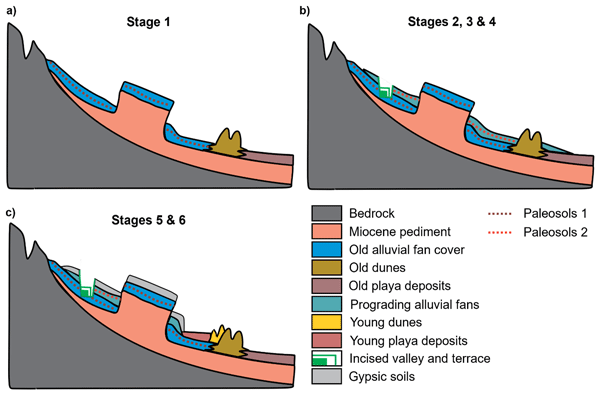
This study investigates the Khur Basin in central Iran, a crucial area for understanding landscape history, past environmental changes, and potential human migration. By analysing the sedimentary archives and mapping landforms, six stages of landscape development were identified, linked to the climate shifts over the late Quaternary period. The findings provide a detailed understanding of how a desert environment, including alluvial fans, dunes, and playas, developed in response to changing climates.
Mariana Sontag-González, Madhav K. Murari, Mayank Jain, Marine Frouin, and Markus Fuchs
Geochronology, 7, 289–308, https://doi.org/10.5194/gchron-7-289-2025, https://doi.org/10.5194/gchron-7-289-2025, 2025
Short summary
Short summary
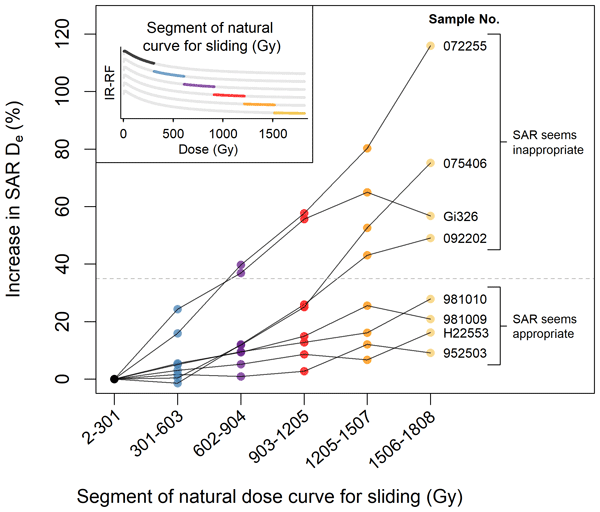
We tested the reliability of infrared radiofluorescence (IR-RF) dating of K-feldspar on samples of known age. We compare several measurement protocols and analysis variants and determine the most appropriate version. Additionally, we compare these results with those obtained using infrared photoluminescence (IRPL), an alternative dating method for K-feldspar, for the same samples. Our results confirm the dating potential of IR-RF and highlight similarities and differences to other methods.
Thomas Kolb, Konrad Tudyka, Annette Kadereit, Johanna Lomax, Grzegorz Poręba, Anja Zander, Lars Zipf, and Markus Fuchs
Geochronology, 4, 1–31, https://doi.org/10.5194/gchron-4-1-2022, https://doi.org/10.5194/gchron-4-1-2022, 2022
Short summary
Short summary
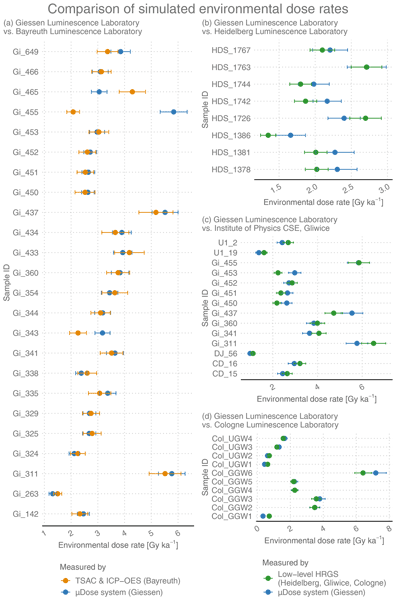
The µDose system is an innovative analytical instrument developed for the cost- and time-efficient determination of environmental radionuclide concentrations required for the calculation of sedimentation ages in palaeo-environmental and geo-archaeological research. The results of our study suggest that accuracy and precision of µDose measurements are comparable to those of well-established methods and that the new approach shows the potential to become a standard tool in environmental dosimetry.
Dominik Faust and Markus Fuchs
E&G Quaternary Sci. J., 70, 243–246, https://doi.org/10.5194/egqsj-70-243-2021, https://doi.org/10.5194/egqsj-70-243-2021, 2021
Frank Preusser, Markus Fuchs, and Christine Thiel
E&G Quaternary Sci. J., 70, 201–203, https://doi.org/10.5194/egqsj-70-201-2021, https://doi.org/10.5194/egqsj-70-201-2021, 2021
Frank Preusser, Markus Fuchs, and Christine Thiel
DEUQUA Spec. Pub., 3, 1–3, https://doi.org/10.5194/deuquasp-3-1-2021, https://doi.org/10.5194/deuquasp-3-1-2021, 2021
Cited articles
Aarhus GeoSoftware: Aarhus GeoSoftware ResDInv x64, Konrad Theiss, 2022.
Abella, S. R. and Zimmer, B. W.: Estimating Organic Carbon from Loss-On-Ignition in Northern Arizona Forest Soils, Soil Sci. Soc. Am. J., 71, 545–550, https://doi.org/10.2136/sssaj2006.0136, 2007.
Abels, B.-U.: Archäologischer Führer Oberfranken, Schweizerbart, https://doi.org/10.20378/irb-59034, 2023.
Ad-hoc-AG Boden: Bodenkundliche Kartieranleitung (KA5), 5th Ed., Schweizerbart, Hannover, 438 pp., Historischer Verein Landkreis Haßberge, 2005.
Andraschke, J.: “Das Land ist von Wald bedeckt und Slawen hausen dort”: slawische Orts-, Wüstungs- und Flurnamen im Main- und Regnitzgebiet, 1st Ed., edited by: Historischer Verein Landkreis Haßberge, Haßfurt, 256 pp., 2020.
Baumann, A.: On the vegetation history of calcareous grasslands in the Franconian Jura (Germany) since the Bronze Age, Borntrager, Berlin, Stuttgart, 194 pp., https://www.schweizerbart.de/publications/detail/isbn/9783443643171/On_the_Vegetation_History_of_Calcareous_Grasslands_in_the_Franconian_Jura_Germany_since_the_Bronze_Age (last access: 20 February 2026), 2006.
Bayerisches Landesamt für Umwelt: Gewässerkundlicher Dienst Bayern. Abfluss. Statistik Hollfeld/Wiesent, https://www.gkd.bayern.de/de/fluesse/abfluss/regnitz/hollfeld-24240503/statistik (last access: 25 February 2025), 2015a.
Bayerisches Landesamt für Umwelt: Gewässerkundlicher Dienst Bayern. Abfluss. Statistik Muggendorf / Wiesent, https://www.gkd.bayern.de/de/fluesse/abfluss/regnitz/muggendorf-24242000/statistik (last access: 25 February 2025), 2015b.
Bender, O., Boehmer, H. J., Jens, D., and Schumacher, K. P.: Analysis of land-use change in a sector of Upper Franconia (Bavaria, Germany) since 1850 using land register records, Landsc. Ecol., 20, 149–163, https://doi.org/10.1007/s10980-003-1506-7, 2005.
Blume, H.-P., Stahr, K., and Leinweber, P.: Bodenkundliches Praktikum: eine Einführung in pedologisches Arbeiten für Ökologen, insbesondere Land- und Forstwirte, und für Geowissenschaftler, 3., neubearb. Aufl., Spektrum, Akad. Verl, Heidelberg, 255 pp., https://doi.org/10.1007/978-3-8274-2733-5, 2011.
Bogaard, A.: Neolithic Farming in Central Europe. An Archaeobotanical Study of Crop Husbandry Practices, 1st Ed., Routledge, London, 224 pp., https://doi.org/10.4324/9780203358009, 2004.
Böhmer, H. J.: Die Halbtrockenrasen der Fränkischen Alb - Strukturen, Prozesse, Erhaltung, Mitteilungen Fränkischen Geogr. Ges., 41, 323–344, 1994.
Böhmer, H. J. and Bender, O.: Die Entwicklung der Wacholderheiden auf der nördlichen Frankenalb, Bamberger Geogr. Schriften Sonderfolge, 6, 169–189, 2000.
Brather, S.: Einführung. Die Dukate des Merowingerreiches, in: Die Dukate des Merowingerreiches, edited by: Brather, S., De Gruyter, 1–8, https://doi.org/10.1515/9783111128818-001, 2023.
Brázdil, R., Glaser, R., Pfister, C., Dobrovolný, P., Antoine, J.-M., Barriendos, M., Camuffo, D., Deutsch, M., Enzi, S., Guidoboni, E., Kotyza, O., and Rodrigo, F. S.: Flood Events of Selected European Rivers in the Sixteenth Century, in: Climatic Variability in Sixteenth-Century Europe and Its Social Dimension, edited by: Pfister, C., Brázdil, R., and Glaser, R., Springer Netherlands, Dordrecht, 239–285, https://doi.org/10.1007/978-94-015-9259-8_9, 1999.
Broothaerts, N., Verstraeten, G., Notebaert, B., Assendelft, R., Kasse, C., Bohncke, S., and Vandenberghe, J.: Sensitivity of floodplain geoecology to human impact: A Holocene perspective for the headwaters of the Dijle catchment, central Belgium, The Holocene, 23, 1403–1414, https://doi.org/10.1177/0959683613489583, 2013.
Broothaerts, N., Verstraeten, G., Kasse, C., Bohncke, S., Notebaert, B., and Vandenberghe, J.: From natural to human-dominated floodplain geoecology – A Holocene perspective for the Dijle catchment, Belgium, Anthropocene, 8, 46–58, https://doi.org/10.1016/j.ancene.2014.12.001, 2014a.
Broothaerts, N., Notebaert, B., Verstraeten, G., Kasse, C., Bohncke, S., and Vandenberghe, J.: Non-uniform and diachronous Holocene floodplain evolution: a case study from the Dijle catchment, Belgium, J. Quat. Sci., 29, 351–360, https://doi.org/10.1002/jqs.2709, 2014b.
Broothaerts, N., Verstraeten, G., Kasse, C., Bohncke, S., Notebaert, B., and Vandenberghe, J.: Reconstruction and semi-quantification of human impact in the Dijle catchment, central Belgium: a palynological and statistical approach, Quat. Sci. Rev., 102, 96–110, https://doi.org/10.1016/j.quascirev.2014.08.006, 2014c.
Brown, A., Toms, P., Carey, C., and Rhodes, E.: Geomorphology of the Anthropocene: Time-transgressive discontinuities of human-induced alluviation, Anthropocene, 1, 3–13, https://doi.org/10.1016/j.ancene.2013.06.002, 2013.
Brown, A. G., Lespez, L., Sear, D. A., Macaire, J.-J., Houben, P., Klimek, K., Brazier, R. E., Van Oost, K., and Pears, B.: Natural vs anthropogenic streams in Europe: History, ecology and implications for restoration, river-rewilding and riverine ecosystem services, Earth-Sci. Rev., 180, 185–205, https://doi.org/10.1016/j.earscirev.2018.02.001, 2018.
Brunnacker, K.: Erläuterungen zur Geologischen Karte von Bayern 1:25000. Blatt Nr. 6034 Mistelgau, edited by: Bayerisches Geologisches Landesamt, München, 62 pp., https://www.bestellen.bayern.de/11003 (last access: 20th February 2026), 1955.
De Moor, J. J. W., Kasse, C., Van Balen, R., Vandenberghe, J., and Wallinga, J.: Human and climate impact on catchment development during the Holocene — Geul River, the Netherlands, Geomorphology, 98, 316–339, https://doi.org/10.1016/j.geomorph.2006.12.033, 2008.
Deutscher Wetterdienst: Lufttemperatur: vieljährige Mittelwerte 1991–2020, https://www.dwd.de/DE/leistungen/klimadatendeutschland/mittelwerte/temp_9120_SV_html.html?view=nasPublication&nn=16102 (last access: 11 November 2024), 2021a.
Deutscher Wetterdienst: Niederschlag: vieljährige Mittelwerte 1991-2020, https://www.dwd.de/DE/leistungen/klimadatendeutschland/mittelwerte/nieder_9120_SV_html.html?view=nasPublication&nn=16102 (last access: 11 November 2024), 2021b.
Deutsches Institut für Normung: DIN ISO 11277:2002-08 Bodenbeschaffenheit – Bestimmung der Partikelgrößenverteilung in Mineralböden – Verfahren mittels Siebung und Sedimentation (ISO 11277:1998 + ISO 11277:1998 Corrigendum 1:2002), https://doi.org/10.31030/9283499, 2002.
Deutsches Institut für Normung: DIN EN 15935:2021-10, Boden, Abfall, behandelter Bioabfall und Schlamm- Bestimmung des Glühverlusts, https://doi.org/10.31030/3252125, 2021.
Dotterweich, M.: Land Use and Soil Erosion in northern Bavaria during the last 5000 Years, in: Long Term Hillslope and Fluvial System Modelling, edited by: Lang, A., Dikau, R., and Hennrich, K., Springer Berlin Heidelberg, Berlin, Heidelberg, Vol. 101, 201–229, https://doi.org/10.1007/3-540-36606-7_11, 2003.
Dotterweich, M.: High-resolution reconstruction of a 1300 year old gully system in northern Bavaria, Germany: a basis for modelling long-term human-induced landscape evolution, The Holocene, 15, 994–1005, https://doi.org/10.1191/0959683605hl873ra, 2005.
Dotterweich, M.: The history of soil erosion and fluvial deposits in small catchments of central Europe: Deciphering the long-term interaction between humans and the environment – A review, Geomorphology, 101, 192–208, https://doi.org/10.1016/j.geomorph.2008.05.023, 2008.
Dotterweich, M.: The history of human-induced soil erosion: Geomorphic legacies, early descriptions and research, and the development of soil conservation – A global synopsis, Geomorphology, 201, 1–34, https://doi.org/10.1016/j.geomorph.2013.07.021, 2013.
Dotterweich, M. and Bork, H.-R.: Jahrtausendflut 1342, Archäol. Dtschl., 4, 38–40, 2007.
Dreibrodt, S., Langan, C. C. M., Fuchs, M., and Bork, H.-R.: Anthropogenic impact on erosion, pedogenesis and fluvial processes in the central European landscapes of the eastern Harz mountains forelands (Germany), Quat. Sci. Rev., 303, 107980, https://doi.org/10.1016/j.quascirev.2023.107980, 2023.
Ebersbach, R.: Von Bauern und Rinden. Eine Ökosystemanalyse zur Bedeutung der Rinderhaltung in bäuerlichen Gesellschaften zur Modellbildung im Neolithikum., Basel, 263 pp., 2002.
Eberts, A.: Structural inventory and tectonic activity of the western Bohemian Massif and the adjacent Franconian Basin: new insights from lineament analysis and tectonic geomorphology, Ph.D. thesis, Friedrich-Alexander-Universität Erlangen-Nürnberg, Germany, Erlangen, 196 pp., https://open.fau.de/handle/openfau/20895 (last access: 1st December 2024), 2022.
Elznicová, J., Kiss, T., von Suchodoletz, H., Bartyik, T., Sipos, G., Lenďáková, Z., Fačevicová, K., Pavlů, I., Kovárník, J., and Matys Grygar, T.: Was the termination of the Jizera River meandering during the Late Holocene caused by anthropogenic or climatic forcing?, Earth Surf. Process. Landf., 48, 669–686, https://doi.org/10.1002/esp.5509, 2023.
Fastnacht, D.: Ebermannstadt: ehemaliger Landkreis Ebermannstadt, 1st Ed., edited by: Kommission für Bayerische Landesgeschichte, München, 577 pp., 2000.
Fryirs, K.: (Dis)Connectivity in catchment sediment cascades: a fresh look at the sediment delivery problem, Earth Surf. Process. Landf., 38, 30–46, https://doi.org/10.1002/esp.3242, 2013.
Fryirs, K. A., Brierley, G. J., Preston, N. J., and Kasai, M.: Buffers, barriers and blankets: The (dis)connectivity of catchment-scale sediment cascades, Catena, 70, 49–67, https://doi.org/10.1016/j.catena.2006.07.007, 2007.
Fuchs, M., Fischer, M., and Zöller, L.: Rekonstruktion der Bodenerosion im Umfeld der urgeschichtlichen Siedlung Wattendorf- Motzenstein, Oberfranken, in: Endneolithische Siedlungsstrukturen in Oberfranken II, edited by: Müller, J. and Seregély, T., Habelt, Bonn, 121–127, 2008.
Fuchs, M., Fischer, M., and Reverman, R.: Colluvial and alluvial sediment archives temporally resolved by OSL dating: Implications for reconstructing soil erosion, Quat. Geochronol., 5, 269–273, https://doi.org/10.1016/j.quageo.2009.01.006, 2010.
Fuchs, M., Will, M., Kunert, E., Kreutzer, S., Fischer, M., and Reverman, R.: The temporal and spatial quantification of Holocene sediment dynamics in a meso-scale catchment in northern Bavaria, Germany, The Holocene, 21, 1093–1104, https://doi.org/10.1177/0959683611400459, 2011.
George, D.: Lichtenfels: der Altlandkreis, 1st Ed., edited by: Kommission für Bayerische Landesgeschichte, München, 278 pp., 2008.
Geyer, G. and Schmidt-Kaler, H.: Den Main entlang durchs Fränkische Schichtstufenland, Dr. Friedrich Pfeil, München, 208 pp., 2009.
Glaser, R. and Hagedorn, H.: The climate of Lower Franconia since 1500, Theor. Appl. Climatol., 43, 101–104, https://doi.org/10.1007/BF00867466, 1991.
Glaser, R., Riemann, D., Schönbein, J., Barriendos, M., Brázdil, R., Bertolin, C., Camuffo, D., Deutsch, M., Dobrovolný, P., Van Engelen, A., Enzi, S., Halíčková, M., Koenig, S. J., Kotyza, O., Limanówka, D., Macková, J., Sghedoni, M., Martin, B., and Himmelsbach, I.: The variability of European floods since AD 1500, Clim. Change, 101, 235–256, https://doi.org/10.1007/s10584-010-9816-7, 2010.
Guttenberg, E. F. von: Land- und Stadtkreis Kulmbach, 1st Ed., edited by: Kommission für Bayerische Landesgeschichte, München, 262 pp., 1952.
Haas, J. N., Richoz, I., Tinner, W., and Wick, L.: Synchronous Holocene climatic oscillations recorded on the Swiss Plateau and at timberline in the Alps, The Holocene, 8, 301–309, https://doi.org/10.1191/095968398675491173, 1998.
Haberstroh, J. and Faßbinder, J.: Der Reisberg bei Scheßlitz-Burgellern in der Völkerwanderungszeit. Überlegungen zum 5. Jahrhundert n.Chr. in Nordbayern, Germania, 81, 201–262, https://doi.org/10.11588/ger.2003.92919, 2003.
Haversath, J.-B.: Mühlen in der Fränkischen Schweiz, Erlangen, 219 pp., 1987.
Heiri, O., Lotter, A. F., and Lemcke, G.: Loss on ignition as a method for estimating organic and carbonate content in sediments: reproducibility and comparability of results, J. Paleolimnol., 101–110, 2001.
Hinderer, M.: From gullies to mountain belts: A review of sediment budgets at various scales, Sediment. Geol., 280, 21–59, https://doi.org/10.1016/j.sedgeo.2012.03.009, 2012.
Hoevers, R., Broothaerts, N., and Verstraeten, G.: Holocene geoecohydrological floodplain dynamics in NE Belgium: regional drivers of local change, J. Quat. Sci., 39, 781–800, https://doi.org/10.1002/jqs.3621, 2024.
Hoffmann, M.: Die Früh- und Hochmittelalterlichen Siedlungsspuren im Innenhof des ehemaligen Klosters St. Anton in Forchheim, in: Forchheim – Älter als der Rest?! Begleitheft zur Ausstellung im Pfalzmuseum Forchheim vom 19.07. – 28.10.2018, edited by: Hoffmann, M., Bamberg, pp. 49–55, 2018.
Hoffmann, T., Erkens, G., Gerlach, R., Klostermann, J., and Lang, A.: Trends and controls of Holocene floodplain sedimentation in the Rhine catchment, CATENA, 77, 96–106, https://doi.org/10.1016/j.catena.2008.09.002, 2009.
Hoffmann, T., Thorndycraft, V. R., Brown, A. G., Coulthard, T. J., Damnati, B., Kale, V. S., Middelkoop, H., Notebaert, B., and Walling, D. E.: Human impact on fluvial regimes and sediment flux during the Holocene: Review and future research agenda, Glob. Planet. Change, 72, 87–98, https://doi.org/10.1016/j.gloplacha.2010.04.008, 2010.
Hornberger, T.: Die kulturgeographische Bedeutung der Wanderschäferei in Süddeutschland: süddeutsche Transhumanz, Selbstverlag der Bundesanstalt für Landeskunde, Remagen, 173 pp., 1959.
Houben, P.: Spatio-temporally variable response of fluvial systems to Late Pleistocene climate change: a case study from central Germany, Quat. Sci. Rev., 22, 2125–2140, https://doi.org/10.1016/S0277-3791(03)00181-1, 2003.
Houben, P., Schmidt, M., Mauz, B., Stobbe, A., and Lang, A.: Asynchronous Holocene colluvial and alluvial aggradation: A matter of hydrosedimentary connectivity, The Holocene, 23, 544–555, https://doi.org/10.1177/0959683612463105, 2013.
Hütteroth, W.: Bergrutsche an der nördlichen Fränkischen Alb, Mitteilungen Fränkischen Geogr. Ges., 41, 182–204, 1994.
Jäger, D., Sandmeier, C., Schwindt, D., and Terhorst, B.: Geomorphological and geophysical analyses in a landslide area near Ebermannstadt, Northern Bavaria, E&G Quaternary Sci. J., 62, 150–161, https://doi.org/10.3285/eg.62.2.06, 2013.
Janka, W.: Remotivierung bei Orts- und Personennamen slawischer Herkunft in Nordbayern, in: Remotivierung in der Sprache, edited by: Bülow, L., Koch, G., Krieg-Holz, U., and Trost, I., Springer Berlin Heidelberg, Berlin, Heidelberg, 129–143, https://doi.org/10.1007/978-3-662-65799-7_7, 2023.
Kadlec, J., Grygar, T., Svétlík, I., Ettler, V., Mihaljevič, M., Diehl, J. F., Beske-Diehl, S., and Svitavská-Svobodová, H.: Morava River floodplain development during the last millennium, Strážnické Pomoraví, Czech Republic, The Holocene, 19, 499–509, https://doi.org/10.1177/0959683608101398, 2009.
Kaiser, K., Kasprzak, M., Adameková, K., Błaś, M., De Boer, A.-M., Derner, K., Duma, P., Kočár, P., Latocha-Wites, A., Opała-Owczarek, M., Owczarek, P., Petr, L., Petřík, J., Tábořík, P., Van Der Maaten, E., and Van Der Maaten-Theunissen, M.: Deciphering Sudetic landscape history by using alluvial geoarchives: Holocene environmental changes at Hala Izerska, SW Poland, Catena, 254, 108943, https://doi.org/10.1016/j.catena.2025.108943, 2025.
Kalis, A. J., Merkt, J., and Wunderlich, J.: Environmental changes during the Holocene climatic optimum in central Europe – human impact and natural causes, Quat. Sci. Rev., 22, 33–79, https://doi.org/10.1016/S0277-3791(02)00181-6, 2003.
Kirchner, A., Zielhofer, C., Werther, L., Schneider, M., Linzen, S., Wilken, D., Wunderlich, T., Rabbel, W., Meyer, C., Schmidt, J., Schneider, B., Berg-Hobohm, S., and Ettel, P.: A multidisciplinary approach in wetland geoarchaeology: Survey of the missing southern canal connection of the Fossa Carolina (SW Germany), Quat. Int., 473, 3–20, https://doi.org/10.1016/j.quaint.2017.12.021, 2018.
Kirchner, A., Karaschewski, J., Schulte, P., Wunderlich, T., and Lauer, T.: Latest Pleistocene and Holocene Floodplain Evolution in Central Europe – Insights from the Upper Unstrut Catchment (NW-Thuringia/Germany), Geosciences, 12, 310, https://doi.org/10.3390/geosciences12080310, 2022.
Klír, T.: Sociální kontext slovansko-německého jazykového kontaktu: severovýchodní Bavorsko a Chebsko v raném středověku, Archaeol. Hist., 301–337, https://doi.org/10.5817/AH2016-1-17, 2016.
Kluge, T., Holz, P., Neumann, T., Eiche, E., Schuh, M., Frank, N., Friedrich, R., Land, A., Trieloff, M., and Schmitt, A. K.: Assessment of climate extremes at the regional scale during the last millennium using an annually resolved stalagmite record, Earth Planet. Sci. Lett., 624, 118458, https://doi.org/10.1016/j.epsl.2023.118458, 2023.
Kneisel, C.: Electrical resistivity tomography as a tool for geomorphological investigations – some case studies, Z. f. Geomorphol. Suppl. Issues, 132, 37–49, 2003.
Koch, U.: Die ersten Franken zwischen Main und Altmühl – das Problem der Datierung archäologischer Quellen, in: Aspekte der Archäologie des Mittelalters und der Neuzeit. Festschrift für Walter Sage., edited by: Ericsson, I. and Losert, H., Bonn, 247–259, 2003.
Köhn, M.: Korngrößenbestimmung mittels Pipettenanalyse, Tonind.-Ztg., 53, 729–732, 1929.
Kothieringer, K., Seregély, T., and Lambers, K.: Settlement and Landscape History of the Northern Franconian Jura during the Bronze and Iron Ages, Archäol. Korresp., 48, 57–69, https://doi.org/10.11588/ak.2018.1.75218, 2018.
Kothieringer, K., Seregély, T., Jansen, D., Steup, R., Schäfer, A., Lambers, K., and Fuchs, M.: Mid- to Late Holocene landscape dynamics and rural settlement in the uplands of northern Bavaria, Germany, Geoarchaeology, 38, 220–245, https://doi.org/10.1002/gea.21952, 2022.
Lang, A.: Phases of soil erosion-derived colluviation in the loess hills of South Germany, Catena, 51, 209–221, https://doi.org/10.1016/S0341-8162(02)00166-2, 2003.
Lespez, L., Clet-Pellerin, M., Limondin-Lozouet, N., Pastre, J., and Fontugne, M.: Discontinuités longitudinales des dynamiques sédimentaires holocènes dans les petites vallées de l'Ouest du Bassin Parisien, l'exemple de la Mue (Basse Normandie), Quaternaire, 273–298, https://doi.org/10.4000/quaternaire.482, 2005.
Lespez, L., Clet-Pellerin, M., Limondin-Lozouet, N., Pastre, J.-F., Fontugne, M., and Marcigny, C.: Fluvial system evolution and environmental changes during the Holocene in the Mue valley (Western France), Geomorphology, 98, 55–70, https://doi.org/10.1016/j.geomorph.2007.02.029, 2008.
Lespez, L., Viel, V., Rollet, A. J., and Delahaye, D.: The anthropogenic nature of present-day low energy rivers in western France and implications for current restoration projects, Geomorphology, 251, 64–76, https://doi.org/10.1016/j.geomorph.2015.05.015, 2015.
Losert, H.: Die früh- bis hochmittelalterliche Keramik in Oberfranken, Rheinland-Verlag, Köln, 221 pp., 1993.
Macklin, M. G., Johnstone, E., and Lewin, J.: Pervasive and long-term forcing of Holocene river instability and flooding in Great Britain by centennial-scale climate change, The Holocene, 15, 937–943, https://doi.org/10.1191/0959683605hl867ft, 2005.
Meyer, R. K. F. and Schmidt-Kaler, H.: Durch die Fränkische Schweiz, Dr. Friedrich Pfeil, München, 166 pp., 1992.
Miall, A. D.: The Geology of Fluvial Deposits. Sedimentary Facies, Basin Analysis, and Petroleum Geology, Springer, Berlin Heidelberg New York, 582 pp., https://doi.org/10.1007/978-3-662-03237-4, 1996.
Müller, J. and Seregély, T.: Die schnurkeramische Siedlungsweise in Mitteleuropa, in: Wattendorf-Motzenstein: Eine schnurkeramische Siedlung auf der Nördlichen Frankenalb. Naturwissenschaftliche Ergebnisse und Rekonstruktion des schnurkeramischen Siedlungswesens in Mitteleuropa, edited by: Müller, J. and Seregély, T., Bonn, 175–188, 2008.
Müller, K. W.: Erläuterungen zur Geologischen Karte von Bayern 1:25000. Blatt Nr. 6233 Ebermannstadt., edited by: Bayerisches Geologisches Landesamt, München, 58 pp., https://www.bestellen.bayern.de/11020 (last access: 20th February 2026), 1959.
Munsell Color Laboratory: Munsell Soil Color Chart, New Windsor, 2000.
Notebaert, B. and Verstraeten, G.: Sensitivity of West and Central European river systems to environmental changes during the Holocene: A review, Earth-Sci. Rev., 103, 163–182, https://doi.org/10.1016/j.earscirev.2010.09.009, 2010.
Notebaert, B., Verstraeten, G., Vandenberghe, D., Marinova, E., Poesen, J., and Govers, G.: Changing hillslope and fluvial Holocene sediment dynamics in a Belgian loess catchment: Fluvial Holocene sediment dynamics in a Belgian loess catchment, J. Quat. Sci., 26, 44–58, https://doi.org/10.1002/jqs.1425, 2011a.
Notebaert, B., Houbrechts, G., Verstraeten, G., Broothaerts, N., Haeckx, J., Reynders, M., Govers, G., Petit, F., and Poesen, J.: Fluvial architecture of Belgian river systems in contrasting environments: implications for reconstructing the sedimentation history, Neth. J. Geosci. - Geol. En Mijnb., 90, 31–50, https://doi.org/10.1017/S0016774600000652, 2011b.
Notebaert, B., Verstraeten, G., Houbrechts, G., and Petit, F.: Holocene floodplain deposition and scale effects in a typical European upland catchment: A case study from the Amblève catchment, Ardennes (Belgium), The Holocene, 23, 1184–1197, https://doi.org/10.1177/0959683613483626, 2013.
Notebaert, B., Berger, J.-F., and Brochier, J. L.: Characterization and quantification of Holocene colluvial and alluvial sediments in the Valdaine Region (southern France), The Holocene, 24, 1320–1335, https://doi.org/10.1177/0959683614540946, 2014.
Notebaert, B., Broothaerts, N., and Verstraeten, G.: Evidence of anthropogenic tipping points in fluvial dynamics in Europe, Glob. Planet. Change, 164, 27–38, https://doi.org/10.1016/j.gloplacha.2018.02.008, 2018.
Peterek, A. and Schröder, B.: Geomorphologic evolution of the cuesta landscapes around the Northern Franconian Alb review and synthesis, Z. Für Geomorphol., 54, 305–345, https://doi.org/10.1127/0372-8854/2010/0054-0037, 2010.
Pfanner, J.: Landkreis Pegnitz, 1st Ed., edited by: Kommission für Bayerische Landesgeschichte, München, 76 pp., 1965.
Pfeffer, K. H.: The karst landforms of the Northern Franconian Jura between the rivers Pegnitz and Vils, in: Landforms and landform evolution in West Germany, edited by: Ahnert, F., 253–260, 1989.
Pye, K. and Blott, S. J.: Particle size analysis of sediments, soils and related particulate materials for forensic purposes using laser granulometry, Forensic Sci. Int., 144, 19–27, https://doi.org/10.1016/j.forsciint.2004.02.028, 2004.
Raab, T., Hürkamp, K., and Völkel, J.: Stratigraphy and Chronology of Late Quaternary Floodplain Sediments in a Historic Mining Area, Vils River Valley, East Bavaria, Germany, Phys. Geogr., 31, 357–384, https://doi.org/10.2747/0272-3646.31.4.357, 2010.
Rittweger, H.: The “Black Floodplain Soil” in the Amöneburger Becken, Germany: a lower Holocene marker horizon and indicator of an upper Atlantic to Subboreal dry period in Central Europe?, Catena, 41, 143–164, https://doi.org/10.1016/S0341-8162(00)00113-2, 2000.
Rösch, M., Ehrmann, O., Goldammer, J. G., Herrmann, L., Page, H., Schulz, E., Hall, M., Bogenrieder, A., and Schier, W.: Slash-and-Burn Experiments to Reconstruct Late Neolithic Shifting Cultivation, Int. For. Fire News, 30, 70–74, 2004.
Schielein, P., Schellmann, G., and Lomax, J.: Stratigraphy of Late Quaternary fluvial terraces at the confluence of the Lech and Danube valleys, EG Quat. Sci. J., 60, 414–424, https://doi.org/10.3285/eg.60.4.02, 2011.
Schiener, A.: Kleine Geschichte Frankens, 7th Ed., Friedrich Pustet, Regensburg, 200 pp., 2022.
Schier, W.: Extensiver Brandfeldbau und die Ausbreitung der neolithischen Wirtschaftsweise in Mitteleuropa und Südskandinavien am Ende des 5. Jahrtausends v. Chr., Praehistorische Z., 84, 15–43, https://doi.org/10.1515/pz.2009.002, 2009.
Schirmer, W.: Malm und postjurassische Landschafts- und Flußgeschichte auf der Obermain- und Wiesentalb (Exkursion F am 13. April 1985), Jahresber. Mitteilungen Oberrheinischen Geol. Ver. NF, 67, pp. 91–106, https://doi.org/10.1127/jmogv/67/1985/91, 1985.
Schirmer, W.: Taleintiefung in der Nördlichen Frankenalb in den letzten 200.000 Jahren, Geol. Bl. Für Nord.-Bayern, 60, 229–250, 2010.
Schirmer, W.: Drei Täler der Aufseß, Fränkische Schweiz, 2014, 17–20, 2014.
Schmidt, W. and Scheibner, H.: Zur Bestimmung des Gehaltes an organischer Substanz von Torfen und Mudden, Arch. Acker- Pflanzenbau Bodenkd., 32, 423–433, 1988.
Schmitt, R.: Wird die Fränkische Alb zum Fränkischen Wald?, Mitteilungen Fränkischen Geogr. Ges., 45, 165–176, 1998.
Schoenbein, J., Land, A., Friedrich, M., Glaser, R., and Kueppers, M.: Seasonal Reconstruction of Summer Precipitation Variability and Dating of Flood Events for the Millennium Between 3250 and 2250 Years BC for the Main Region, Southern Germany, in: Integrated Analysis of Interglacial Climate Dynamics (INTERDYNAMIC), edited by: Schulz, M. and Paul, A., Springer International Publishing, Cham, 127–131, https://doi.org/10.1007/978-3-319-00693-2_21, 2015.
Schreg, R.: Dorfgenese in Südwestdeutschland: Das Renninger Becken im Mittelalter, edited by: Landesamt für Denkmalpflege im Regierungspräsidium Stuttgart, Stuttgart, 655 pp., http://bvbr.bib-bvb.de:8991/F?func=service&doc_library=BVB01&doc_number=015414005&line_number=0001&func_code=DB_RECORDS&service_type=MEDIA (last access: 18 December 2024), 2006.
Schreg, R.: Siedlungen in der Peripherie des Dorfes. Ein archäologischer Forschungsbericht zur Frage der Dorfgenese in Südbayern, Ber. Bayer. Bodendenkmalpfl., 50, 293–317, 2009.
Schreg, R.: Rinder und Schafe – Akteure mittelalterlicher Umweltgeschichte, in: Kult, Kunst, Konsum: Tiere in alten Kulturen., edited by: Pommerening, T. and Althoff, J., Philipp von Zabern, Darmstadt, 75–89, https://fis.uni-bamberg.de/handle/uniba/43976 (last access: 14 January 2025), 2018.
Schreg, R.: Plague and Desertion – A Consequence of Anthropogenic Landscape Change? Archaeological Studies in Southern Germany, in: The Crisis of the 14th Century, Vol. 13, edited by: Bauch, M. and Schenk, G. J., De Gruyter, 221–246, https://doi.org/10.1515/9783110660784-011, 2019.
Schreg, R.: Archäologische Wüstungsforschung in Franken. Probleme und Perspektiven, in: Von der Mittelalter- und Neuzeitarchäologie zur Historischen Archäologie. Festschrift für Claudia Theune zum 65. Geburtstag., Vol. 2024, edited by: Hausmair, B., Kersting, T., Kühtreiber, T., Mehler, N., and Müller, U., 2024.
Schröder, B.: Zur Morphogenese im Ostteil der Süddeutschen Scholle, Geol. Rundsch., 58, 16–38, https://doi.org/10.1007/BF01820590, 1968.
Schröder, B.: Daten und Probleme der Flußgeschichte und Morphogenese in Ostfranken, Mitteilungen Fränkischen Geogr. Ges., 18, 163–181, 1971.
Schröder, B.: Fränkische Schweiz und Vorland, 3rd Ed., Borntrager, Stuttgart, 86 pp., 1978.
Schumm, S. A.: The Fluvial System, Blackburn Press, 338 pp., 1977.
Schwarz, E.: Sprache und Siedlung in Nordostbayern, Hans Carl, Nürnberg, 465 pp., 1960.
Seregély, T., Kothieringer, K., Jansen, D., Fuchs, M., Kolb, T., and Schäfer, A.: Long-term Rural Settlement Continuity and Land Use during the Bronze and Iron Ages in the Northern Franconian Low Mountain Range, Eur. J. Archaeol., 27, 170–191, https://doi.org/10.1017/eaa.2024.2, 2024.
Spurk, M., Leuschner, H. H., Baillie, M. G. L., Briffa, K. R., and Friedrich, M.: Depositional frequency of German subfossil oaks: climatically and non-climatically induced fluctuations in the Holocene, The Holocene, 12, 707–715, https://doi.org/10.1191/0959683602hl583rp, 2002.
Stolz, C., Grunert, J., and Fülling, A.: Quantification and dating of floodplain sedimentation in a medium-sized catchment of the German uplands: a case study from the Aar Valley in the southern Rhenish Massif, Germany, ERDE - J. Geogr. Soc. Berl., 144, 30–50, https://doi.org/10.12854/erde-144-3, 2013.
Störmer, W.: Franken von der Völkerwanderungszeit bis 1268: Dokumente zur Geschichte von Staat und Gesellschaft in Bayern, C. H. Beck, München, 429 pp., 1999.
Strohmeier, P. and Bruckner, G.: Sedimentmanagement in Einzugsgebieten von Fließgewässern am Beispiel des Ökosystems Wiesent, edited by: Bezirk Oberfranken, Fachberatung für Fischerei, Bayreuth, 221 pp., 2013.
Theune, C.: Reallexikon der Germanischen Altertumskunde, in: Thüringer, vol. 30, edited by: Müller, R., De Gruyter, Berlin, Boston, pp. 519–544, 2005.
Tinapp, C., Heinrich, S., Herbig, C., Schneider, B., Stäuble, H., Miera, J., and von Suchodoletz, H.: Holocene floodplain evolution in a central European loess landscape – geoarchaeological investigations of the lower Pleiße valley in NW Saxony, E&G Quaternary Sci. J., 68, 95–105, https://doi.org/10.5194/egqsj-68-95-2019, 2019.
Tinapp, C., Selzer, J., Döhlert-Albani, N., Fischer, B., Heinrich, S., Herbig, C., Kreienbrink, F., Lauer, T., Schneider, B., and Stäuble, H.: Late Weichselian–Holocene valley development of the Elbe valley near Dresden – linking sedimentation, soil formation and archaeology, E&G Quaternary Sci. J., 72, 95–111, https://doi.org/10.5194/egqsj-72-95-2023, 2023.
Trimble, S. W.: Decreased Rates of Alluvial Sediment Storage in the Coon Creek Basin, Wisconsin, 1975-93, Science, 285, 1244–1246, https://doi.org/10.1126/science.285.5431.1244, 1999.
Van Zon, M., Hoevers, R., Swinnen, W., Simons, B., Vanmontfort, B., and Verstraeten, G.: Holocene Floodplain Transformation Through Catchment-Scale Human-Environment Interactions: An Interdisciplinary Case Study of the Gete Catchment (Belgium), Geoarchaeology, 40, 26, https://doi.org/10.1002/gea.22026, 2024.
Vayssière, A., Rué, M., Recq, C., Gardère, P., Thamó-Bozsó, E., Castanet, C., Virmoux, C., and Gautier, E.: Lateglacial changes in river morphologies of northwestern Europe: An example of a smooth response to climate forcing (Cher River, France), Geomorphology, 342, 20–36, https://doi.org/10.1016/j.geomorph.2019.05.019, 2019.
Verstraeten, G., Broothaerts, N., Van Loo, M., Notebaert, B., D'Haen, K., Dusar, B., and De Brue, H.: Variability in fluvial geomorphic response to anthropogenic disturbance, Geomorphology, 294, 20–39, https://doi.org/10.1016/j.geomorph.2017.03.027, 2017.
Viel, V., Delahaye, D., and Reulier, R.: Evaluation of slopes delivery to catchment sediment budget for a low-energy water system: a case study from the Lingèvres catchment (Normandy, western France), Geogr. Ann. Ser. Phys. Geogr., 96, 431–627, https://doi.org/10.1111/geoa.12071, 2014.
Viel, V., Lespez, L., Delahaye, D., and Notebaert, B.: Holocene sediment budget for the Thue and the Mue catchments (NW France): European comparison and methodological issues, Catena, 244, 108247, https://doi.org/10.1016/j.catena.2024.108247, 2024.
Voit, G., Kaulich, B., and Rüfer, W.: Vom Land im Gebirg zur Fränkischen Schweiz: Eine Landschaft wird entdeckt, edited by: Arbeitskreis Heimatkunde im Fränkische-Schweiz-Verein, Palm und Enke, 416 pp., 1992.
Von Suchodoletz, H., Pohle, M., Khosravichenar, A., Ulrich, M., Hein, M., Tinapp, C., Schultz, J., Ballasus, H., Veit, U., Ettel, P., Werther, L., Zielhofer, C., and Werban, U.: The fluvial architecture of buried floodplain sediments of the Weiße Elster River (Germany) revealed by a novel method combination of drill cores with two-dimensional and spatially resolved geophysical measurements, Earth Surf. Process. Landf., 47, 955–976, https://doi.org/10.1002/esp.5296, 2022.
Von Suchodoletz, H., Khosravichenar, A., Fütterer, P., Zielhofer, C., Schneider, B., Sprafke, T., Tinapp, C., Fülling, A., Werther, L., Stäuble, H., Hein, M., Veit, U., Ettel, P., Werban, U., and Miera, J.: Holocene overbank sedimentation in Central Europe between natural and human drivers - The Weiße Elster River (Central Germany), Geomorphology, 449, 109067, https://doi.org/10.1016/j.geomorph.2024.109067, 2024.
Weisel, H.: Die Bewaldung der nördlichen Frankenalb. Ihre Veränderungen seit der Mitte des 19. Jahrhunderts, Erlangen, 72 pp., 1971.
Werther, L.: Kirche – Friedhof – Siedlung. Archäologische Studien zur Entwicklung von Seußling (Oberfranken) zwischen Völkerwanderungszeit und Spätmittelalter, Ber. Bayer. Bodendenkmalpfl., 52, 181–371, 2011.
Werther, L., Mehler, N., Schenk, G. J., and Zielhofer, C.: On the Way to the Fluvial Anthroposphere—Current Limitations and Perspectives of Multidisciplinary Research, Water, 13, 2188, https://doi.org/10.3390/w13162188, 2021.
Wipf, A.: Gletschergeschichtliche Untersuchungen im spät- und postglazialen Bereich des Hinteren Lauterbrunnentals (Berner Oberland, Schweiz), Geogr. Helvetica, 56, 133–144, https://doi.org/10.5194/gh-56-133-2001, 2001.
Wippern, J.: Erläuterungen zur Geologischen Karte von Bayern 1:25000. Blatt Nr. 6134 Waischenfeld, edited by: Bayerisches Geologisches Landesamt, München, 47 pp., https://www.bestellen.bayern.de/11005 (last access: 20th February 2026), 1955.
Short summary
People have shaped rivers and floodplains in central Europe for thousands of years, but these changes are often hard to trace. We studied the Wiesent River in southern Germany to understand how farming, forest clearing, and river management transformed a natural wetland into a human-shaped landscape. By combining historical sources with field measurements and sediment samples, we show that human land use has strongly controlled floodplain development since medieval times.
People have shaped rivers and floodplains in central Europe for thousands of years, but these...


Special issue