
Articles | Volume 75, issue 1
https://doi.org/10.5194/egqsj-75-1-2026
© Author(s) 2026. This work is distributed under
the Creative Commons Attribution 4.0 License.
the Creative Commons Attribution 4.0 License.
Special issue:
https://doi.org/10.5194/egqsj-75-1-2026
© Author(s) 2026. This work is distributed under
the Creative Commons Attribution 4.0 License.
the Creative Commons Attribution 4.0 License.
Research article
| 
13 Jan 2026
Research article |
| 13 Jan 2026
| 13 Jan 2026
The geomorphological and sedimentological legacy of the historical Lake Lorsch within the Weschnitz floodplain (northeastern Upper Rhine Graben, Germany)
Felix Henselowsky
CORRESPONDING AUTHOR

Institute of Geography, Johannes Gutenberg University Mainz, Johannes-Joachim-Becher-Weg 21, 55099 Mainz, Germany
Peter Fischer
Institute of Geography, Johannes Gutenberg University Mainz, Johannes-Joachim-Becher-Weg 21, 55099 Mainz, Germany
Elena Appel
Institute of Geography, Johannes Gutenberg University Mainz, Johannes-Joachim-Becher-Weg 21, 55099 Mainz, Germany
Barbara Jäger
Institute of Geography, Heidelberg University, Im Neuenheimer Feld 348, 69120 Heidelberg, Germany
Nicolai Hillmus
Institute of History, History of the Middle Ages, Technical University of Darmstadt, 64295 Darmstadt, Germany
Helen Sandbrink
Institute of Geography, Heidelberg University, Im Neuenheimer Feld 348, 69120 Heidelberg, Germany
Thomas Becker
Hessian State Office for Monuments and Sites, Archaeological Unit (HessenARCHÄOLOGIE), Field office Darmstadt, 64295 Darmstadt, Germany
Roland Prien
Hessian State Office for Monuments and Sites, Archaeological Unit (HessenARCHÄOLOGIE), Field office Darmstadt, 64295 Darmstadt, Germany
Gerrit Jasper Schenk
Institute of History, History of the Middle Ages, Technical University of Darmstadt, 64295 Darmstadt, Germany
Bertil Mächtle
Institute of Geography, Heidelberg University, Im Neuenheimer Feld 348, 69120 Heidelberg, Germany
Udo Recker
Hessian State Office for Monuments and Sites, Schloss Biebrich, 65203 Wiesbaden, Germany
Olaf Bubenzer
Institute of Geography, Heidelberg University, Im Neuenheimer Feld 348, 69120 Heidelberg, Germany
Andreas Vött
Institute of Geography, Johannes Gutenberg University Mainz, Johannes-Joachim-Becher-Weg 21, 55099 Mainz, Germany
Related authors
Felix Henselowsky, Annette Kadereit, Manuel Herzog, Barbara Tuczek, Heinrich Thiemeyer, Olaf Bubenzer, and Max Engel
E&G Quaternary Sci. J., 75, 33–47, https://doi.org/10.5194/egqsj-75-33-2026, https://doi.org/10.5194/egqsj-75-33-2026, 2026
Short summary
Short summary
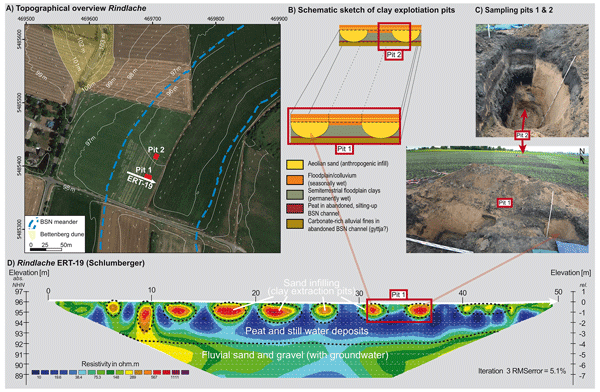
The marshy, silted-up channel of the Late Glacial Bergstraßenneckar near Mannheim provided a rare source of clay in the sand- and gravel-dominated environment of the Rhine river. Based on satellite images, sedimentological, geophysical, and historical data, as well as optical dating, we identify a plot of sand-filled trenches where clay was mined around 1865 CE, which was only possible after groundwater lowering resulting from large-scale river regulation starting in the early 19th century.
Max Engel, Felix Henselowsky, Fabian Roth, Annette Kadereit, Manuel Herzog, Stefan Hecht, Susanne Lindauer, Olaf Bubenzer, and Gerd Schukraft
E&G Quaternary Sci. J., 71, 213–226, https://doi.org/10.5194/egqsj-71-213-2022, https://doi.org/10.5194/egqsj-71-213-2022, 2022
Short summary
Short summary
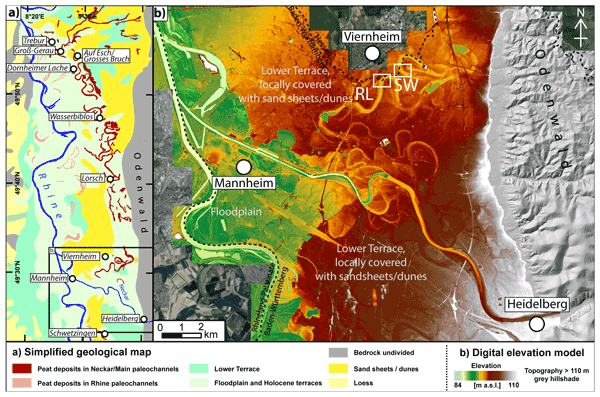
The late-glacial Bergstraßenneckar is a former course of the Neckar River in the Upper Rhine Graben of southwest Germany at a time when the confluence with the Rhine river was 50 km further to the north. The former river bends are still visible in topographic maps and satellite imagery. Sediment cores and geophysical measurements from the former river channels let us reconstruct the shift from a running river to silting-up meanders and permit us to date this to ca. 11 000 to 10 500 years ago.
Robin Schweikert, Ron Eric Stein, Neil Bogs, Olaf Bubenzer, Camilo del Río, Dörte Harpke, Simon Matthias May, Alexander Siegmund, Alexandra Stoll, Dietmar Quandt, and Marcus A. Koch
EGUsphere, https://doi.org/10.64898/2026.02.23.707457, https://doi.org/10.64898/2026.02.23.707457, 2026
Short summary
Short summary
We exemplify unimodal regional wind systems facilitating sand transport toward Tillandsiales. Tillandsiales show a low-energy wind system allowing sand accumulation of predominant grain sizes available at each site. Thereby Tillandsia landbeckii modifies and maintains its own microenvironment. Genomic data reveal high clonality and excess of heterozygosity promoting fitness in a hyperarid environment, and abiotic factors drive the selection of diverse and adaptive Tillandsia phenotypes.
Felix Henselowsky, Annette Kadereit, Manuel Herzog, Barbara Tuczek, Heinrich Thiemeyer, Olaf Bubenzer, and Max Engel
E&G Quaternary Sci. J., 75, 33–47, https://doi.org/10.5194/egqsj-75-33-2026, https://doi.org/10.5194/egqsj-75-33-2026, 2026
Short summary
Short summary
The marshy, silted-up channel of the Late Glacial Bergstraßenneckar near Mannheim provided a rare source of clay in the sand- and gravel-dominated environment of the Rhine river. Based on satellite images, sedimentological, geophysical, and historical data, as well as optical dating, we identify a plot of sand-filled trenches where clay was mined around 1865 CE, which was only possible after groundwater lowering resulting from large-scale river regulation starting in the early 19th century.
Antonia Reiß, Hanna Hadler, Dennis Wilken, Bente S. Majchczack, Ruth Blankenfeldt, Sarah Bäumler, Ulf Ickerodt, Stefanie Klooß, Timo Willershäuser, Wolfgang Rabbel, and Andreas Vött
E&G Quaternary Sci. J., 74, 37–57, https://doi.org/10.5194/egqsj-74-37-2025, https://doi.org/10.5194/egqsj-74-37-2025, 2025
Short summary
Short summary
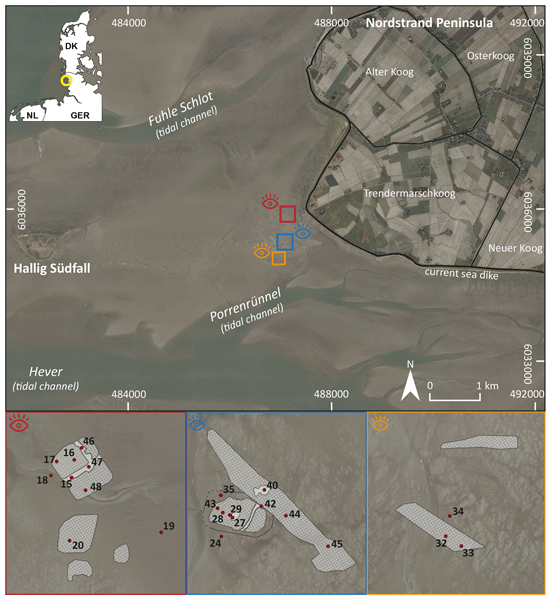
This study combines different geophysical and geomorphological methods to estimate how and to what extent human–environment interactions have shaped the coastal region of the Trendermarsch since the High Middle Ages. Our results reveal a drowned, formerly cultivated marshland with different phases of settlement from medieval times onwards and thus presumably illustrate storm-flood-induced reactions in cultivation patterns.
Elena Appel, Thomas Becker, Dennis Wilken, Peter Fischer, Timo Willershäuser, Lea Obrocki, Henrik Schäfer, Markus Scholz, Olaf Bubenzer, Bertil Mächtle, and Andreas Vött
E&G Quaternary Sci. J., 73, 179–202, https://doi.org/10.5194/egqsj-73-179-2024, https://doi.org/10.5194/egqsj-73-179-2024, 2024
Short summary
Short summary
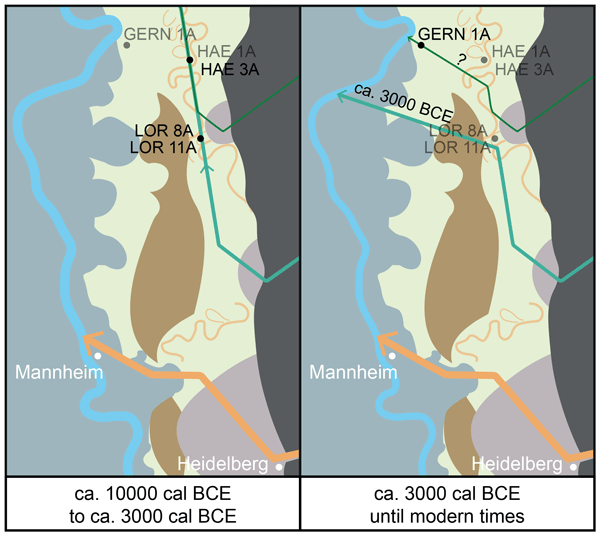
Human intervention in the natural drainage system of the Hessische Ried (Germany) resulted in the transformation of a large wetland into a cultural landscape. In this study, we reconstruct the river network that was used by Romans for transportation and security. We found that the Romans collected water from several smaller rivers to establish the river Landgraben as a navigable waterway. Unexpectedly, larger rivers did not contribute any water to the Landgraben system during Roman times.
Fernando Leceta, Christoph Binder, Christian Mader, Bertil Mächtle, Erik Marsh, Laura Dietrich, Markus Reindel, Bernhard Eitel, and Julia Meister
SOIL, 10, 727–761, https://doi.org/10.5194/soil-10-727-2024, https://doi.org/10.5194/soil-10-727-2024, 2024
Short summary
Short summary
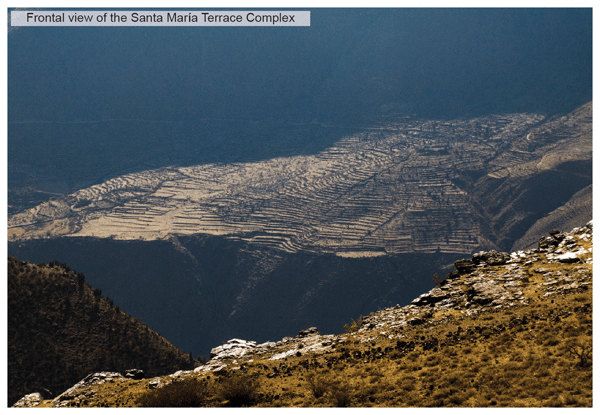
This study explores pre-Hispanic terrace agriculture in the southern Peruvian Andes, focusing on soil development and agricultural impacts. It examines soil types and properties, as well as agricultural practices, and traces the region's agricultural development over four phases, highlighting the resilience of ancient communities. The abandonment of terraces was not due to soil degradation, emphasizing the sustainability of pre-Hispanic practices and the adaptation to environmental change.
Mathias Vinnepand, Peter Fischer, Ulrich Hambach, Olaf Jöris, Carol-Ann Craig, Christian Zeeden, Barry Thornton, Thomas Tütken, Charlotte Prud'homme, Philipp Schulte, Olivier Moine, Kathryn E. Fitzsimmons, Christian Laag, Frank Lehmkuhl, Wolfgang Schirmer, and Andreas Vött
E&G Quaternary Sci. J., 72, 163–184, https://doi.org/10.5194/egqsj-72-163-2023, https://doi.org/10.5194/egqsj-72-163-2023, 2023
Short summary
Short summary
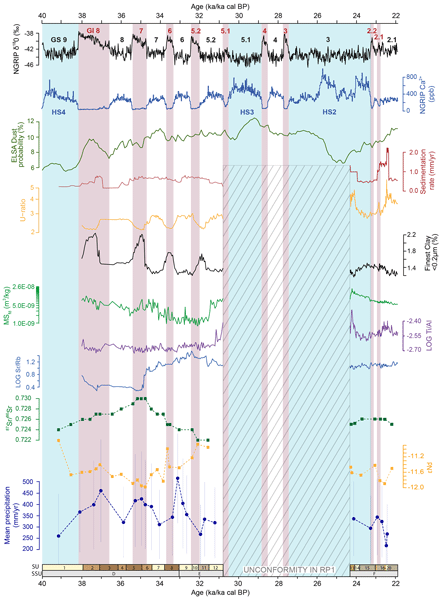
Loess–palaeosol sequences (LPSs) represent continental and non-aquatic archives providing detailed information on Quaternary environmental and climate changes. We present an integrative approach combining sedimentological, rock magnetic, and bulk geochemical data, as well as information on Sr and Nd isotope composition. The approach adds to a comprehensive understanding of LPS formation including changes in dust composition and associated circulation patterns during Quaternary climate changes.
Max Engel, Felix Henselowsky, Fabian Roth, Annette Kadereit, Manuel Herzog, Stefan Hecht, Susanne Lindauer, Olaf Bubenzer, and Gerd Schukraft
E&G Quaternary Sci. J., 71, 213–226, https://doi.org/10.5194/egqsj-71-213-2022, https://doi.org/10.5194/egqsj-71-213-2022, 2022
Short summary
Short summary
The late-glacial Bergstraßenneckar is a former course of the Neckar River in the Upper Rhine Graben of southwest Germany at a time when the confluence with the Rhine river was 50 km further to the north. The former river bends are still visible in topographic maps and satellite imagery. Sediment cores and geophysical measurements from the former river channels let us reconstruct the shift from a running river to silting-up meanders and permit us to date this to ca. 11 000 to 10 500 years ago.
Cited articles
Ad-hoc AG Boden: Bodenkundliche Kartieranleitung, 5th edn., Schweizerbart, Hannover, 438 pp., ISBN 978-3-510-95920-4, 2005.
Appel, E., Becker, T., Wilken, D., Obrocki, L., Fischer, P., Willershäuser, T., Henselowsky, F., and Vött, A.: The Roman burgus at Trebur-Astheim and its relation to the Schwarzbach/Landgraben watercourse (Hessisches Ried, Germany) based on geophysical and geoarchaeological investigations, Zeitschrift für Geomorphologie, 20 pp., https://doi.org/10.1127/zfg/2024/0791, 2024a.
Appel, E., Becker, T., Wilken, D., Fischer, P., Willershäuser, T., Obrocki, L., Schäfer, H., Scholz, M., Bubenzer, O., Mächtle, B., and Vött, A.: The Holocene evolution of the fluvial system of the southern Hessische Ried (Upper Rhine Graben, Germany) and its role for the use of the river Landgraben as a waterway during Roman times, E&G Quaternary Sci. J., 73, 179–202, https://doi.org/10.5194/egqsj-73-179-2024, 2024b.
Barsch, D. and Mäusbacher, R.: Zur fluvialen Dynamik beim Aufbau des Neckarschwemmfächers, Berlin. Geogr. Abh., 47, 119–128, https://doi.org/10.23689/fidgeo-3194, 1988.
Bertrand, S., Tjallingii, R., Kylander, M. E., Wilhelm, B., Roberts, S. J., Arnaud, F., Brown, E., and Bindler, R.: Inorganic geochemistry of lake sediments: A review of analytical techniques and guidelines for data interpretation, Earth Sci. Rev., 249, 104639, https://doi.org/10.1016/j.earscirev.2023.104639, 2024.
Blume, H.-P., Stahr, K., and Leinweber, P.: Bodenkundliches Praktikum: eine Einführung in pedologisches Arbeiten für Ökologen, insbesondere Land- und Forstwirte, und für Geowissenschaftler, 3rd edn., Spektrum Akademischer Verlag, Heidelberg, 255 pp., ISBN 978-3-8274-1553-0, 2011.
Bohncke, S. J. P. and Hoek, W. Z.: Multiple oscillations during the Preboreal as recorded in a calcareous gyttja, Kingbeekdal, The Netherlands, Quaternary Sci. Rev., 26, 1965–1974, https://doi.org/10.1016/j.quascirev.2007.02.017, 2007.
Bos, J. A. A., Dambeck, R., Kalis, A. J., Schweizer, A., and Thiemeyer, H.: Palaeoenvironmental changes and vegetation history of the northern Upper Rhine Graben (southwestern Germany) since the Lateglacial, Neth. J. Geosci., 87, 67–90, https://doi.org/10.1017/S0016774600024057, 2008.
Brown, A. G., Lespez, L., Sear, D.A., Macaire, J.-J., Houben, P., Klimek, K., Brazier, R. E., Van Oost, K., and Pears, B.: Natural vs anthropogenic streams in Europe: History, ecology and implications for restoration, river-rewilding and riverine ecosystem services, Earth-Science Reviews, 180, 185–205, https://doi.org/10.1016/j.earscirev.2018.02.001, 2018.
Büttner, A. and Kautz, M.: From a dispersed medieval collection to one international library: the virtual reconstruction of the monastic library of Lorsch', Art Libraries Journal, 40, 11–20, https://doi.org/10.1017/S0307472200000304, 2015.
Choinski, A., Ptak, M., and Strzelczak, A.: Examples of lake disappearance as an effect of reclamation works in Poland, Limnological Review, 12, 161–167, 2012.
Clifford, C., Bieroza, M., Clarke, S., Pickard, A., Michael J. Stratigos, M. J., Hill, M. J., Raheem, N., Tatariw, C., Wood, P. J., Arismendi, I., Audet, J., Aviles, D., Bergman, J. N., Brown, A. G., Burns, E. A. Connolly, J., Cook, S., Crabot, J., Cross, W. F., Dean, J. F., Evans, C. D., Fenton, O., Friday, L., Gething, K. J., Guillermo Giannico, G., Wahaj Habib, W., Eliza Maher Hasselquist, E. M., Nathaniel, M., Heili, N. M., van der Knaap, J., Kosten, S., Law, A., van der Lee, G. H., Mathers, K. L., Morgan, J. E., Rahimi, H., Sayer, C. D., Schepers, M., Shaw, R. F., Smiley Jr., P. C., Speir, S. L., Strock, J. S., Struik, Q., Tank, J. L., Wang, H., Webb, J. R., Webster, A. J., Yan, Z., Zivec, P., and Peacock, M.: Lines in the landscape, Commun. Earth Environ., 6, 693, https://doi.org/10.1038/s43247-025-02699-y, 2025.
Codex Laureshamensis, edited by: Glöckner, K., Karl Glöckner, 3 Vol. (Darmstadt 1929/1933/1936).
Dambeck, R.: Beiträge zur spät- und postglazialen Fluss- und Landschaftsgeschichte im nördlichen Oberrheingraben, PhD thesis, University of Frankfurt/Main, Germany, urn:nbn:de:hebis:30-0000009080, 2005.
Dambeck, R. and Bos, J. A. A.: Lateglacial and Early Holocene landscape evolution of the northern Upper Rhine River valley, south-western Germany, Z. Geomorph. Suppl., 128, 101–127, 2002.
Dambeck, R. and Thiemeyer, H.: Fluvial history of the northern Upper Rhine River (southwestern Germany) during the Lateglacial and Holocene times, Quaternary Int., 93–94, 53–63, https://doi.org/10.1016/S1040-6182(02)00006-X, 2002.
Daniell, K. A. and Barreteau, O.: Water governance across competing scales: Coupling land and water management, Journal of Hydrology, 519, https://doi.org/10.1016/j.jhydrol.2014.10.055, 2014.
Di Baldassarre, G., Kooy, M., Kemerink, J. S., and Brandimarte, L.: Towards understanding the dynamic behaviour of floodplains as human-water systems, Hydrol. Earth Syst. Sci., 17, 3235–3244, https://doi.org/10.5194/hess-17-3235-2013, 2013.
DIN ISO 11277: Bodenbeschaffenheit – Bestimmung der Partikelgrößenverteilung in Mineralböden – Verfahren mittels Siebung und Sedimentation, 38 pp., https://doi.org/10.31030/9283499, 2002.
Dister, E., Gomer, D., Obrdlik, P., Petermann, P., and Schneider, E.: Water management and ecological perspectives of the upper Rhine's floodplains, Regul. River., 5, 1–15, https://doi.org/10.1002/rrr.3450050102, 1990.
Engel, M., Henselowsky, F., Roth, F., Kadereit, A., Herzog, M., Hecht, S., Lindauer, S., Bubenzer, O., and Schukraft, G.: Fluvial activity of the late-glacial to Holocene “Bergstraßenneckar” in the Upper Rhine Graben near Heidelberg, Germany – first results, E&G Quaternary Sci. J., 71, 213–226, https://doi.org/10.5194/egqsj-71-213-2022, 2022.
Evans, M. and Hellers, F.: Environmental Magnetism Principles and Applications of Enviromagnetics, International Geophysics Volume 86, Academic Press/Elsevier Science & Technology, 299 pp., ISBN 0122438515, 2003.
Fecher, M.: Die Namen der Gemarkungen Kleinhausen und Seehof (Hessisches Flurnamenbuch Band 24), Elwert, Gießen, 79 pp., 1942.
Fischer, P., Hilgers, A., Protze, J., Kels, H., Lehmkuhl, F., and Gerlach, R.: Formation and geochronology of Last Interglacial to Lower Weichselian loess/palaeosol sequences – case studies from the Lower Rhine Embayment, Germany, E&G Quaternary Sci. J., 61, 48–63, https://doi.org/10.3285/eg.61.1.04, 2012.
Fischer, P., Wunderlich, T., Rabbel, W., Vött, A., Willershäuser, T., Baika, K., Rigakou, D., and Metallinou, G.: Combined Electrical Resistivity Tomography (ERT), Direct-Push Electrical Conductivity (DP-EC) Logging and Coring – A New Methodological Approach in Geoarchaeological Research, Archaeological Prosepction, 23, 213–228, https://doi.org/10.1002/arp.1542, 2016.
Gegg, L., Jacob, L., Moine, O., Nelson, E., Penkman, K. E. H., Schwahn, F., Stojakowits, P., White, D., Ulrike Wielandt-Schuster, U., and Preusser, F.: Climatic and tectonic controls on deposition in the Heidelberg Basin, Upper Rhine Graben, Germany, Quat. Sci. Rev., 345, https://doi.org/10.1016/j.quascirev.2024.109018, 2024.
Geoprobe Systems: Geoprobe Hydraulic Profiling Tool (HPT) System, Standard Operating Procedure, Tech. Bull., MK3137, 22 pp., 2015.
Gibling, M. R.: River Systems and the Anthropocene: A Late Pleistocene and Holocene Timeline for Human Influence, Quaternary, 1, 21, https://doi.org/10.3390/quat1030021, 2018.
Hanel, N.: Ein römischer Kanal zwischen dem Rhein und Groß-Gerau?, Archäologisches Korrespondenzblatt, 25, 107–116, 1995.
Heising, A.: Der Schiffslände-Burgus von Trebur-Astheim: Schicksal einer Kleinfestung in Spätantike und frühem Mittelalter, in: Das Gebaute und das Gedachte: Siedlungsform, Architektur und Gesellschaft in prähistorischen und antiken Kulturen, edited by: Raeck, W. and Steuernagel, D., Verlag Dr. Rudolf Habelt, Bonn, 151–166, 2012.
Helfert, M.: Die Weschnitz und die ecclesia sancti Petri. Zur Gründung des Klosters in Lorsch im frühen Mittelalter und zur topographischen Lage des sogenannten Altenmünsters, in: Lege artis: Festschrift für Hans-Markus von Kaenel, edited by: Kemmers, F., Maurer, T., and Rabe, B., Verlag Dr. R. Habelt GmbH, Bonn, 99–117, 2014.
Henselowsky, F., Becker, T., Bubenzer, O., Mächtle, B., Schenk, G. J., and Vött, A.: Wechselbeziehungen zwischen der Flusslandschaft der Weschnitz und dem Kloster Lorsch, in: HessenArchäologie. Jahrbuch Für Archäologie und Paläontologie in Hessen, edited by: Recker, U., 294–299, ISBN 978-89822-254-6, 2024.
Hessisches Landesamt für Naturschutz, Umwelt und Geologie (HLNUG): Lorsch Weschnitz Gewässerdurchfluss Tagesmittelwerte, Messstellennummer 23942300, https://www.hlnug.de/static/pegel/wiskiweb3/webpublic/#/overview/Wasserstand/station/41276/Lorsch/download (last access: 4 June 2025), 2025.
Hessisches Ministerium für Umwelt, ländlichen Raum und Verbraucherschutz (Ed.): Das Hessische Ried. Zwischen Vernässung und Trockenheit: eine komplexe wasserwirtschaftliche Problematik, Wiesbaden, 70 pp., https://doi.org/10.1201/b10158, 2005.
Hillmus, N.: Kunde für den Landesherren. Berichte von Kosten und Nutzen menschlicher Eingriffe in Flusslandschaften zu Gedeih und Verderb der Anwohner des Lorscher Sees in der frühneuzeitlichen Kurpfalz, in: Flusslandschaften im Wandel. Kleine multidisziplinäre Quellenkunde der Fluvialen Anthroposphäre, edited by: Schenk, G. J. and Hillmus, N., TUprints, Darmstadt, 212–221, https://doi.org/10.26083/tuprints-00030117, 2025.
Holzhauer, I., Kadereit, A., Schukraft, G., Kromer, B., and Bubenzer, O.: Spatially heterogeneous relief changes, soil formation and floodplain aggradation under human impact – geomorphological results from the Upper Rhine Graben (SW Germany), Z. Geomorph., 61, 121–158, https://doi.org/10.1127/zfg_suppl/2017/0357, 2017.
Hoselmann, C.: The Pliocene and Pleistocene fluvial evolution in the northern Upper Rhine Graben based on results of the research borehole at Viernheim (Hessen, Germany), E&G Quaternary Sci. J., 57, 286–314, https://doi.org/10.3285/eg.57.3-4.2, 2009.
Jenny, L., Koirala, S., Gregory-Eaves, I., Francus, P., Niemann, C., Ahrens, B., Brovkin, V., Baud, A., Ojala, A. E. K., Normandeau, A., Zolitschka, B., and Carvalhais, N.: Human and climate global-scale imprint on sediment transfer during the Holocene, Proc. Natl. Acad. Sci. USA, 116, 22972–22976, https://doi.org/10.1073/pnas.1908179116, 2019.
Kabata-Pendias, A.: Trace Elements in Soils and Plants, 4th edn., CRC Press, Boca Raton, 520 pp., 2010.
Kneisel, C.: Electrical resistivity tomography as a tool for geomorphological investigations – some case studies, Z. Geomorph. Suppl., 132, 37–49, 2003.
Köhn, M.: Korngrößenbestimmung mittels Pipettanalyse, Tonind.-Ztg., 55, 729–731, 1929.
Koob, F.: Die Weschnitz und ihre Probleme in den vergangenen Jahrhunderten, Verlag der Südhessischen Post, Heppenheim, 83 pp., 1956.
Lepper, C.: Seehof. Geschichte eines verschwundenen Dorfes, Verlag Stadtbibliothek, Worms, 105 pp., 1938.
Loke, M. H. and Barker, R. D.: Rapid Least-Squares Inversion of apparent resistivity pseudosections by a quasi-Newton method, Geophys. Prospect., 44, 131–152, 1996.
Maaß, AL., Schüttrumpf, H., and Lehmkuhl, F.: Human impact on fluvial systems in Europe with special regard to today's river restorations, Environ. Sci. Eur., 33, 119, https://doi.org/10.1186/s12302-021-00561-4, 2021.
Mangold, A.: Die alten Neckarbetten in der Rheinebene, Abh. Großherzogl. Hess. Geol. Landesanst. Darmstadt, 2, 75–114, 1892.
McCall, W.: Application of the Geoprobe HPT Logging System for Geo-Environmental Investigations, Geoprobe Tech. Bull., MK3184, 1–36, 2011.
Noack, W.: Landgraf Georg I. von Hessen und die Obergrafschaft Katzenelnbogen (1567–1596), Historischer Verein für Hessen, Darmstadt, 242 pp., 1966.
Olson, P. L., Legg, N. T., Abbe, T. B., Reinhart, M. A., and Radloff, J. K.: A Methodology for Delineating Planning-Level Channel Migration Zones, Washington State Department of Ecology, Publication no. 14-06-025, 83 pp., 2014.
Oyugi, D. O., Cucherousset, J., Baker, D. J., and Britton, J. R.: Effects of temperature on the foraging and growth rate of juvenile common carp, Cyprinus carpio, Journal of Thermal Biology, 37, 89–94, https://doi.org/10.1016/j.jtherbio.2011.11.005, 2012.
Pflanz, D., Kunz, A., Hornung, J., and Hinderer, M.: New insights into the age of aeolian sand deposition in the northern Upper Rhine Graben (Germany), Quaternary Int., 625, 1–13, https://doi.org/10.1016/j.quaint.2022.03.019, 2022.
Platz, M. M.: Von Römern, Turmschädeln und Klosterruinen. Befunde und Funde vom Seehof, in: Kloster Lorsch. Vom Reichskloster Karls des Großen zum Weltkulturerbe der Menschheit, edited by: Zeeb, A., Pinsker, B., zu Erbach-Schönberg, M., and Untermann, M., 126–133, 2011.
Prien, R., Appel, E., Becker, T., Bubenzer, O., Fischer, F., Mächtle, B., Willershäuser, T., and Vött, A.: A Roman Fortlet and Medieval Lowland Castle in the Upper Rhine Graben (Germany): Archaeological and Geoarchaeological Research on the Zullestein Site and the Fluvioscape of Lorsch Abbey, Heritage, 8, 180, https://doi.org/10.3390/heritage8050180, 2025.
Profe, J., Zolitschka, B., Schirmer, W., Frechen, M., and Ohlendorf, C.: Geochemistry unravels MIS 3/2 paleoenvironmental dynamics at the loess–paleosol sequence Schwalbenberg II Germany, Palaeogeogr. Palaeoclimatol. Palaeoecol., 459, 537–551, https://doi.org/10.1016/j.palaeo.2016.07.022, 2016.
Rabiger-Völlmer, J., Schmidt, J., Linzen, S. Schneider, M., Werban, U., Dietrich, P., Wilken, D., Wunderlich, T., Fediuk, A., Berg, S., Werther, L., and Zielhofer, C.: Non-invasive prospection techniques and direct push sensing as high-resolution validation tools in wetland geoarchaeology – Artificial water supply at a Carolingian canal in South Germany?, Journal of Applied Geophysics, 173, 103928, https://doi.org/10.1016/j.jappgeo.2019.103928, 2020.
Rösch, N.: Die Rheinbegradigung durch Johann Gottfried Tulla, Zfv – Zeitschrift für Geodäsie Geoinformation und Landmanagement, 4, 242–248, 2009.
Schefers, H.: Das Kloster Lorsch, in: Die geistlichen Territorien und die Reichsstädte, Handbuch der hessischen Geschichte 7, edited by: Gräf, H. T. and Jendorff, A., Marburg, 191–266, ISBN 978-3942225571, 2023.
Schenk, G. J.: Lorsch und das Wasser, in: Laureshamensia. Forschungsberichte des Experimentalarchäologischen Freilichtlabors Karolingischer Herrenhof Lauresham, 3, 34–57, ISSN 3053-5700, 2021.
Schenk, G. J.: Lorsch and the Weschnitz Floodplain. Questions about the Long History of Resource Use and Conflicts of Use on the Way to a “Fluvial Anthroposphere” (8th–18th century), in: Conflicts over Water Management and Water Rights from the end of Antiquity to Industrialisation, edited by: Campopiano, M. and Schenk, G. J., 159–187, ISBN 978-3-515-13724-9, 2024.
Slaughter, S. L. and Hubert, I. J.: Geomorphic Mapping of the Chehalis River Floodplain, Cosmopolis to Pe Ell, Grays Harbor, Thurston, and Lewis Counties, Circular 118, 59 pp. map book, scale 1 : 28 000 and 2 pp. text, Washington Division of Geology and Earth Resources Information, Washington, 2014.
Tarolli, P., Cao, W., Sofia, G., Evans, D., and Ellis, E.: From features to fingerprints: A general diagnostic framework for anthropogenic geomorphology, Progress in Physical Geography, 43, 95–128, https://doi.org/10.1177/0309133318825284, 2019.
Tegel, W., Seim, A., Skiadaresis, G., Ljungqvist, F. C., Kahle, H.-P., Land, A., Muigg, B., Nicolussi, K., and Büntgen, U.: Higher groundwater levels in western Europe characterize warm periods in the Common Era, Sci. Rep., 10, 16284, https://doi.org/10.1038/s41598-020-73383-8, 2020.
Wang, J.-S., Grimley, D. A., Yu, C., and Dawson, J. O.: Soil magnetic susceptibility reflects soil moisture regimes and the adaptability of tree species to these regimes, Forest Ecology and Management, 255, 1664–1673, https://doi.org/10.1016/j.foreco.2007.11.034, 2018.
Weltje, G. J. and Tjallingii, R.: Calibration of XRF core scanners for quantitative geochemical logging of sediment cores: Theory and application, Easrt and Planetary Science Letters, 274, 423–438, https://doi.org/10.1016/j.epsl.2008.07.054, 2008.
Werther, L., Mehler, N., Schenk, G. J., and Zielhofer, C.: On the way to the Fluvial Anthroposphere – Current limitations and perspectives of multidisciplinary research, Water, 13, 2188, https://doi.org/10.3390/w13162188, 2021.
Wirsing, G. and Luz, A.: Hydrogeologischer Bau und Aquifereigenschaften der Lockergesteine im Oberrheingraben (Baden-Württemberg), vol. 19, LGRB Informationen, 2007.
Short summary
The historical Lake Lorsch in the Upper Rhine Graben (Germany) is a good example of how humans have changed the fluvial and hydrological systems in the area for at least 500 years. Interdisciplinary research from geomorphology and historical sciences have reconstructed the history based on old maps, digital elevation models and drillings. The results show a sophisticated system of artificial in- and outflows, which partly still exist today, and represent long-term changes in the Weschnitz floodplain.
The historical Lake Lorsch in the Upper Rhine Graben (Germany) is a good example of how humans...


Special issue